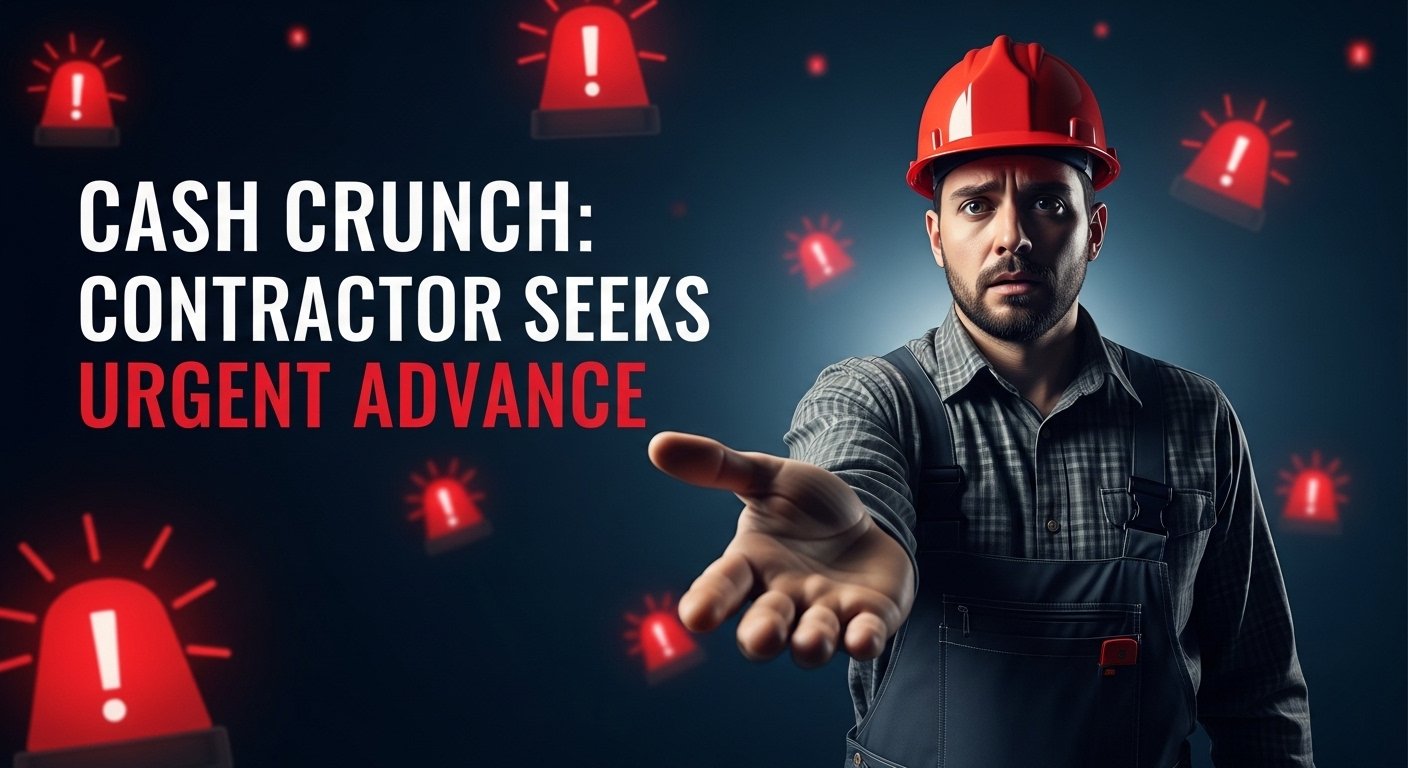
Planning a roofing project is a significant investment, and one of the first financial decisions you’ll face is how much deposit to pay your contractor. Whether you’re scheduling a full roof replacement or a targeted roofing repair, knowing what’s reasonable versus what’s a red flag can save you thousands of dollars and protect you from potential scams. This comprehensive guide will help you navigate deposit requirements, understand your legal rights, and ensure you’re working with a reputable contractor.

Understanding Roofing Deposits: What Every Homeowner Needs to Know
What is a Roofing Deposit and Why Do Contractors Require It?
A roofing deposit is an upfront payment made to secure your contractor’s services and reserve a spot on their schedule. Think of it as a commitment from both parties—you’re committing to use their services, and they’re committing to prioritize your project. This initial payment typically covers preliminary expenses such as materials ordering, permit fees, and project preparation.
Contractors request deposits for several legitimate reasons. First, they need to purchase materials specifically for your project. Roofing materials are expensive, and contractors can’t afford to buy thousands of dollars worth of shingles, underlayment, and supplies without some financial assurance. Second, the deposit helps prevent homeowners from canceling at the last minute after the contractor has already turned away other work to accommodate your project.
What Deposit Money Actually Covers
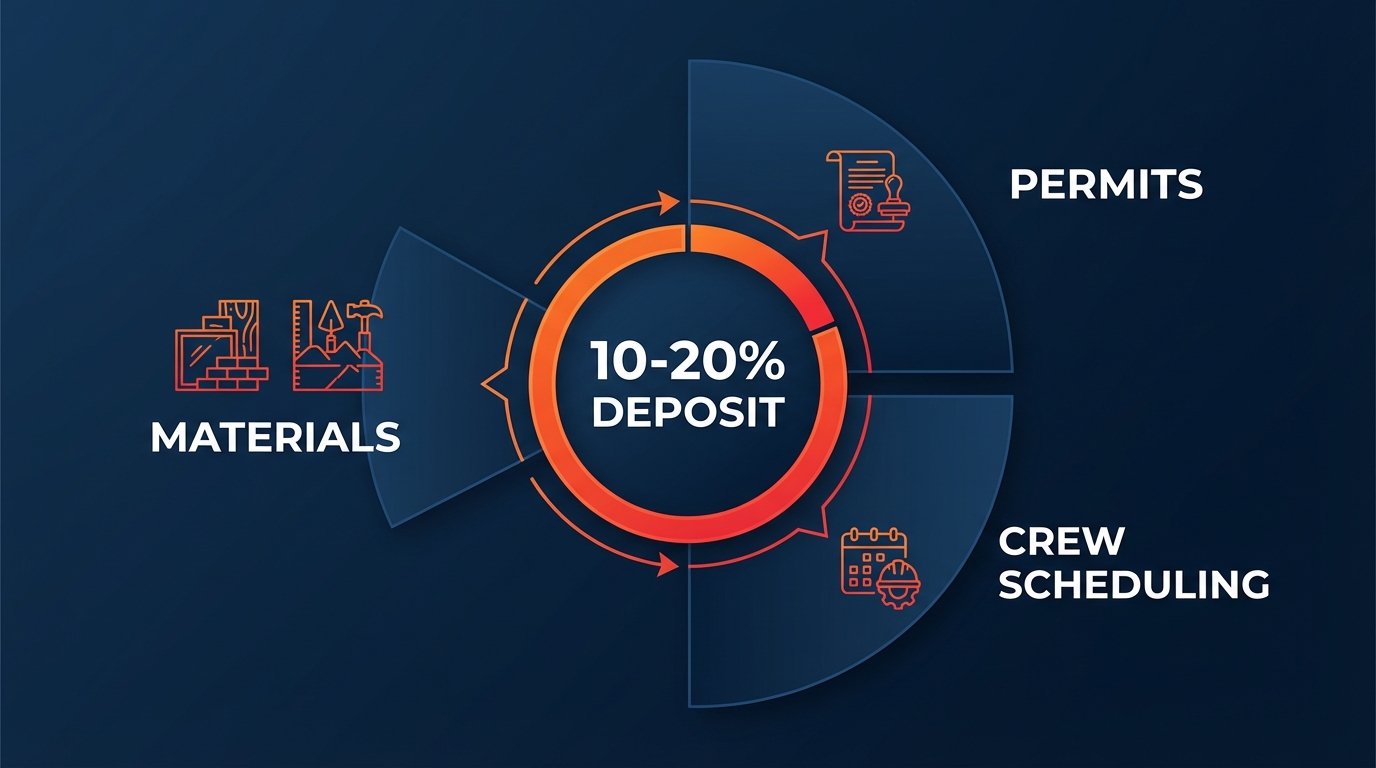
Your deposit doesn’t just sit in the contractor’s bank account. It’s actively used to move your project forward. Typically, deposit funds cover material procurement, securing necessary building permits, scheduling inspections, and reserving crew availability. Some contractors may also use a portion to order custom or special materials that can’t be returned if you cancel. Understanding where your money goes helps you evaluate whether the deposit amount is reasonable for your specific project.
Industry Standard: How Much Should a Roofing Deposit Be?
Typical Deposit Range: 10% to 20% of Total Project Cost
The industry standard for roofing deposits typically falls between 10% and 20% of the total project cost. For example, on a $10,000 roofing project, you should expect to pay between $1,000 and $2,000 as a deposit. This range is considered reasonable because it’s enough to cover the contractor’s initial costs without putting the homeowner at significant financial risk.
Most reputable contractors work within this range, though the exact percentage may vary based on factors like project size, material costs, and local market conditions. A 10% deposit is often sufficient for straightforward asphalt shingle replacements, while 20% might be requested for more complex projects involving specialty materials or extensive repairs.
Why Some Contractors Ask for 30% or More
While 10-20% is standard, there are legitimate scenarios where contractors might request 30% or slightly more. This typically occurs when your project requires custom or special-order materials that the contractor must purchase upfront and cannot easily return or reuse on other projects. For instance, if you’re installing a tile roof, metal roofing, or slate materials, the contractor may need to place significant special orders. You can get a better sense of material costs by reviewing how much a pack of shingles costs before negotiating your deposit.
However, any request above 30% should be carefully scrutinized. Even with expensive materials, reputable contractors understand that asking for too much upfront creates unnecessary risk for the homeowner. If a contractor demands 40%, 50%, or more, this is a significant red flag that warrants further investigation or consideration of other contractors.
State-by-State Deposit Regulations and Legal Limits
Many states have specific laws limiting how much contractors can request as deposits. These consumer protection laws vary significantly by location, so it’s crucial to understand your state’s requirements.
California: Maximum $1,000 or 10% (Whichever is Less)
California has some of the strictest deposit limitations in the country. Under California law, home improvement contractors cannot require or accept a down payment exceeding $1,000 or 10% of the contract price, whichever is less. This means even on a $20,000 roofing project, the maximum legal deposit in California is $1,000. Any contractor asking for more is violating state law.
Other State Regulations
New York prohibits contractors from collecting any deposit at all on roofing work covered by insurance claims. This protects homeowners from unscrupulous contractors who might take deposits and disappear before filing claims. Ohio limits deposits to 10% of the total contract price for home improvement contracts exceeding $25,000. Texas requires deposits over $5,000 to be placed in a construction account, providing additional consumer protection.
Florida, Pennsylvania, and many other states have their own specific regulations. Before paying any deposit, research your state’s contractor laws or consult with your state’s contractor licensing board to understand what protections you have.
Red Flags: When a Deposit Request Is a Scam
Unfortunately, the roofing industry attracts its share of fraudsters. Knowing the warning signs can protect you from losing your hard-earned money to scammers.
Demanding 50% to 100% Payment Upfront
No legitimate roofing contractor needs half or all of the project cost before starting work. Requests for 50% or more upfront are almost always scams. Reputable contractors have established credit with suppliers and don’t need your money to buy materials. If someone insists on 50% or more before lifting a hammer, walk away immediately.
Cash-Only Payment Requests
Any contractor who insists on cash-only payments is waving a giant red flag. Legitimate businesses accept checks, credit cards, or bank transfers because they maintain proper business records and pay taxes. Cash payments leave no paper trail, making it nearly impossible to recover your money if the contractor disappears or does shoddy work. The “discount for cash” pitch is a classic scam tactic designed to make the deal seem attractive while eliminating your ability to dispute charges or track the transaction.
Pressure Tactics and Limited-Time Offers
Scammers create artificial urgency to prevent you from thinking clearly or getting second opinions. Phrases like “this price is only good today,” “we’re in the area and can start tomorrow if you pay now,” or “the materials price increase happens Monday” are designed to rush your decision. Reputable contractors understand that roofing is a major investment requiring careful consideration. They’ll give you time to review contracts, check references, and compare quotes.
Storm Chasers and Door-to-Door Solicitors
After major storms or severe weather events, “storm chasers” flood affected areas, going door-to-door offering roofing services. While not all traveling contractors are scammers, many are. They collect deposits from multiple homeowners, do shoddy work or no work at all, then leave town before anyone can hold them accountable. Be extremely cautious of any contractor who shows up unsolicited, especially one with out-of-state license plates or no local business address.
What Should Be in Writing Before Paying Any Deposit
Never pay a deposit without a comprehensive written contract. A proper roofing contract protects both you and the contractor by clearly defining expectations, timelines, and payment terms.
Essential Contract Elements
Your contract must include a detailed scope of work specifying exactly what will be done. This means specific roofing materials (manufacturer, model, color), the number of layers to be removed, any wood repair or replacement included, ventilation improvements, and cleanup procedures. Vague terms like “install new roof” aren’t sufficient—you need specifics.
The total project cost should be clearly broken down. You should see line items for labor, materials, permits, dumpster rental, and any other charges. The payment schedule must be detailed, showing the deposit amount, when additional payments are due, and what work must be completed before each payment. Most importantly, the contract should specify start and completion dates with reasonable allowances for weather delays.
Warranty information is crucial. The contract should clearly state what workmanship warranty the contractor provides (typically 1-10 years) and what manufacturer’s warranty covers the materials. Additionally, the contract must explain deposit refund terms—under what circumstances can you get your deposit back if you cancel, and how much notice do you need to provide?
Verifying Your Contractor Before Paying a Deposit
Before handing over any money, thoroughly vet your contractor. This due diligence can save you from costly mistakes and potential fraud.
License and Insurance Verification
First, verify that your contractor holds a valid license in your state. Most states have online databases where you can check contractor licenses, view complaint histories, and confirm the license is current and in good standing. Don’t just accept a copy of their license—independently verify it through your state’s licensing board.
Insurance is equally critical. Request certificates of insurance for both general liability insurance and workers’ compensation coverage. Then call the insurance companies directly to confirm the policies are active and in force. If a worker is injured on your property and the contractor doesn’t have workers’ comp insurance, you could be held liable for medical bills and lost wages.
Research Reputation and Reviews
Check the Better Business Bureau for the contractor’s rating and any complaints. Review online feedback on Google, Yelp, and Angi. Look for patterns in reviews, one negative review might be an outlier, but multiple complaints about similar issues suggest real problems. Ask the contractor for references from recent projects in your area, then actually contact those references and ask about their experience, the quality of work, and whether the project stayed on budget and schedule.
Payment Milestones: Structuring Payments Throughout the Project
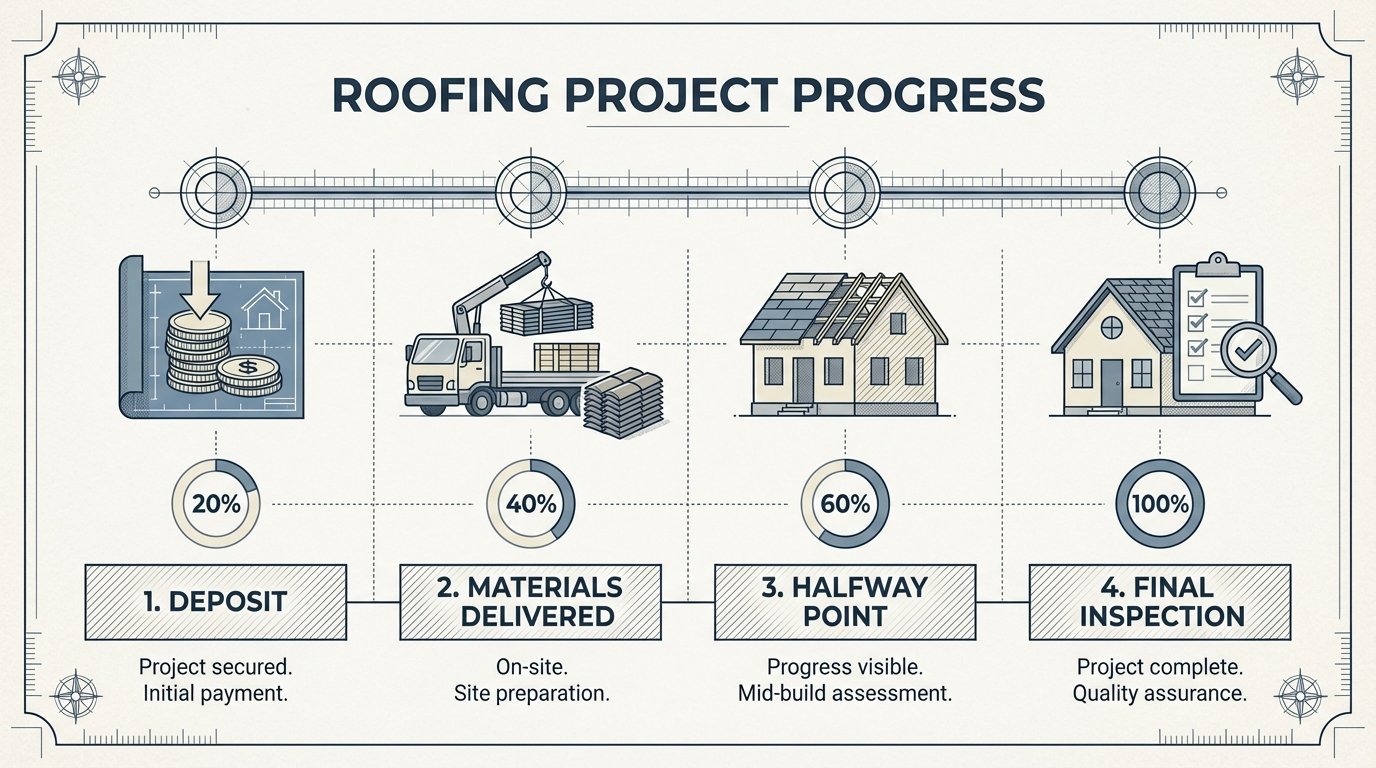
Rather than paying a large deposit and then the balance upon completion, consider structuring payments around project milestones. This approach protects you by ensuring the contractor stays motivated throughout the project and gives you leverage if problems arise.
A typical payment structure might look like this: 10-15% deposit at contract signing, 30-40% when materials are delivered to your property, 25-30% at the halfway point when tear-off is complete and new roofing installation is progressing, and the final 20-25% only after you’ve inspected the completed work and are satisfied with the quality.
Some homeowners choose to hold back 10% retainage for 30 days after project completion. This gives you time to ensure everything is working properly and the contractor has addressed any final punch-list items. Scheduling a professional roofing inspection during this window is a smart way to catch any issues before releasing final payment. While not all contractors agree to retainage, it’s a reasonable request that reputable contractors often accommodate.
Safe Payment Methods for Roofing Deposits
How you pay your deposit matters almost as much as how much you pay. Different payment methods offer varying levels of protection.
Credit Cards: Maximum Protection
Credit cards offer the best consumer protection through chargeback rights. If your contractor fails to perform or commits fraud, you can dispute the charge with your credit card company and potentially recover your money. Many credit cards also extend warranty protection and purchase protection. The downside is that some contractors add a processing fee (typically 2-3%) for credit card payments, but the added protection is often worth the small extra cost.
Checks and Bank Transfers
Paying by check creates an important paper trail. Your bank records show exactly when and how much you paid, which becomes crucial evidence if disputes arise. Bank transfers and ACH payments offer similar documentation benefits. Never pay cash—it provides no proof of payment and makes recovering your money virtually impossible if problems occur.
Escrow Accounts for Large Projects
For very large deposits or high-value projects, consider using an escrow service. The money sits in a neutral third-party account and is only released when specific milestones are met. While this adds complexity and a small fee, it provides maximum protection for both parties and is particularly valuable when dealing with contractors you haven’t worked with before. If budget is a concern for your roofing project, it’s also worth exploring roofing financing options that allow you to manage payments more comfortably.
Your Legal Rights and Protections
Three-Day Right to Cancel
Under the Federal Trade Commission’s Home Solicitation Sales Rule (also known as the Cooling-Off Rule), you have the right to cancel certain contracts signed at your home within three business days. This applies to contracts signed at your home, workplace, dormitory, or at facilities rented by the seller for the purpose of making sales. The contractor must inform you of this right and provide cancellation forms. If you decide to cancel within this period, you’re entitled to a full refund of any deposit paid.
State Consumer Protection Laws
Beyond federal protections, most states have additional consumer protection laws specifically for home improvement contracts. Some states maintain contractor guaranty funds that may reimburse homeowners if a licensed contractor fails to complete work or perform properly. Contact your state’s Attorney General’s office or Department of Consumer Affairs to understand your specific state protections.
Conclusion: Protecting Yourself While Moving Forward
Paying a roofing deposit doesn’t have to be risky if you follow smart practices. Remember that 10-20% is the standard range, with anything above 30% requiring extra scrutiny. Always get everything in writing before paying anything, verify your contractor’s credentials independently, and use payment methods that offer protection and create paper trails.
Trust your instincts—if something feels wrong, it probably is. Reputable contractors understand that roofing is a major investment and will be patient, transparent, and professional throughout the process. They won’t pressure you, won’t demand cash, and won’t ask for unreasonable upfront payments.
By taking time to research, asking the right questions, and protecting yourself with proper contracts and payment structures, you can confidently move forward with your roofing project knowing your deposit is safe and your contractor is trustworthy. A new roof is one of the most important investments you’ll make in your home, make sure you’re working with someone who deserves your trust and your business. To explore your options, visit our residential roofing services page or contact us for a transparent, no-pressure quote.