Key Takeaways
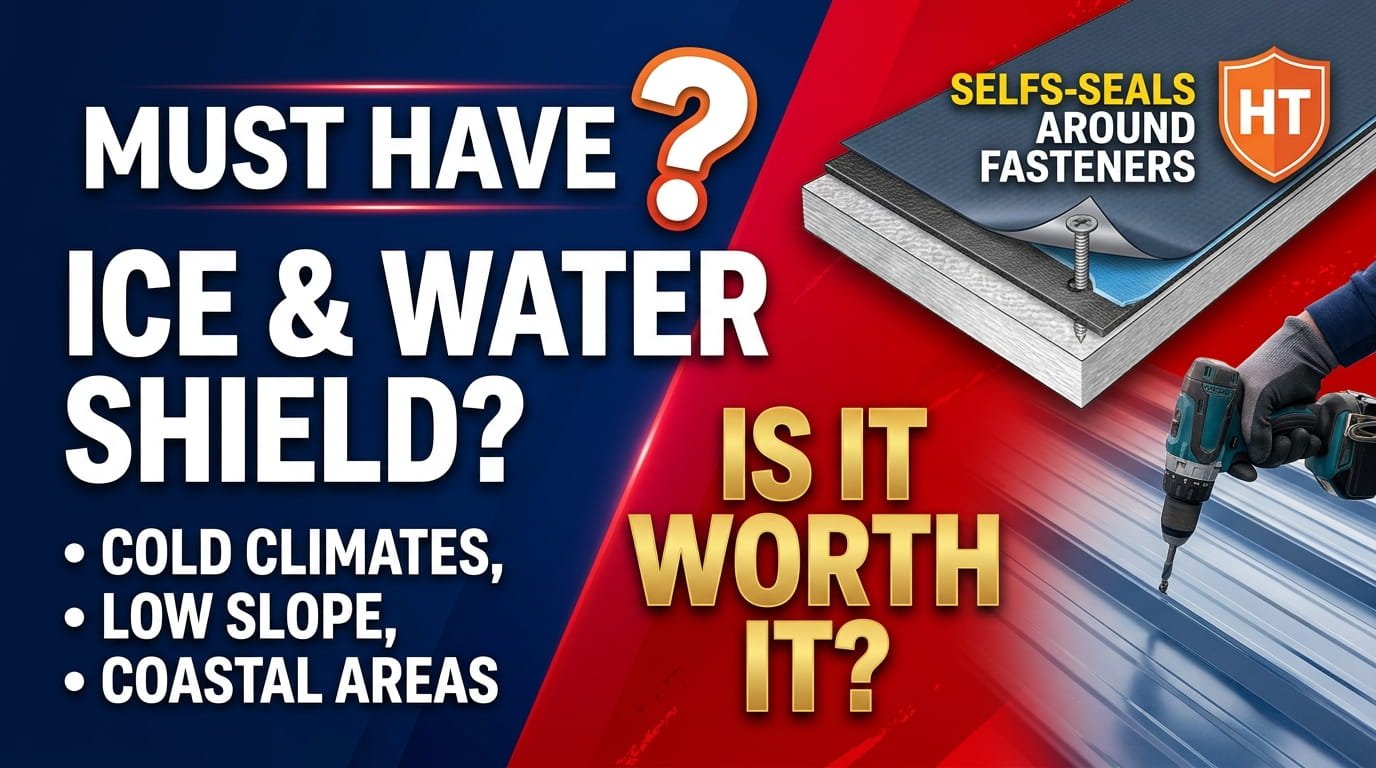
- Yes, you do need something under a metal roof because the panels alone do not create a complete moisture protection system.
- Ice and water shielding is strongly recommended under metal roofing in cold climates, low slope roofs, coastal areas, and roofs with many penetrations.
- Ice and water shield is not the same as standard underlayment because it is fully waterproof and self seals around fasteners.
- Synthetic underlayment works well on many metal roofs, but the best protection often comes from combining it with ice and water shields at high risk areas.
- Under metal roofing, always use a high temperature rated ice and water shield because standard products may soften or fail under extreme heat.
- Skipping underlayment can lead to hidden moisture damage, roof deck rot, mold growth, warranty issues, and much higher repair costs later.
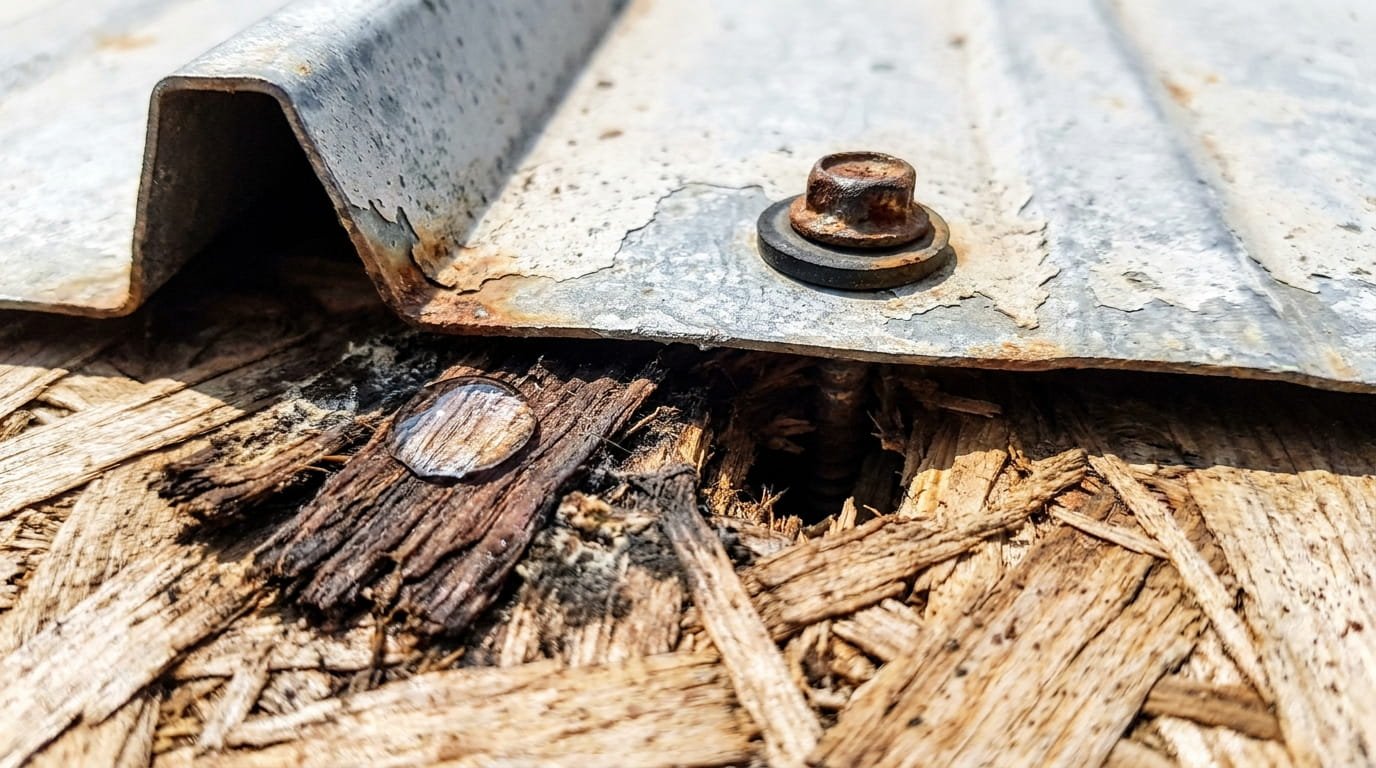
Metal roofs are known for lasting decades, which is exactly why they are often seen as one of the smartest long term investments a homeowner can make. The metal panel roofs often last 40 years and beyond, with some systems reaching at least 60 years. But here is the part many homeowners miss: the first layer to fail is often not the metal itself. It is the system underneath, and that hidden weak point can turn a premium roof into a costly moisture problem far sooner than expected.
Most people focus on the visible choices like panel profile, finish, and color. Very few ask what should go under the metal, even though that layer plays a major role in water control, durability, and code compliance. In this article, you will know exactly whether you need ice & water shield under metal roofing, whether any underlayment is required at all, what a moisture barrier really does, and whether snow guards belong on your list too.
Do You Need Anything Under a Metal Roof?
Let us answer this one head on: yes, you absolutely need something under a metal roof. Metal panels alone do not make a complete roofing system, and treating them as if they do is one of the most expensive mistakes you can make as a homeowner.
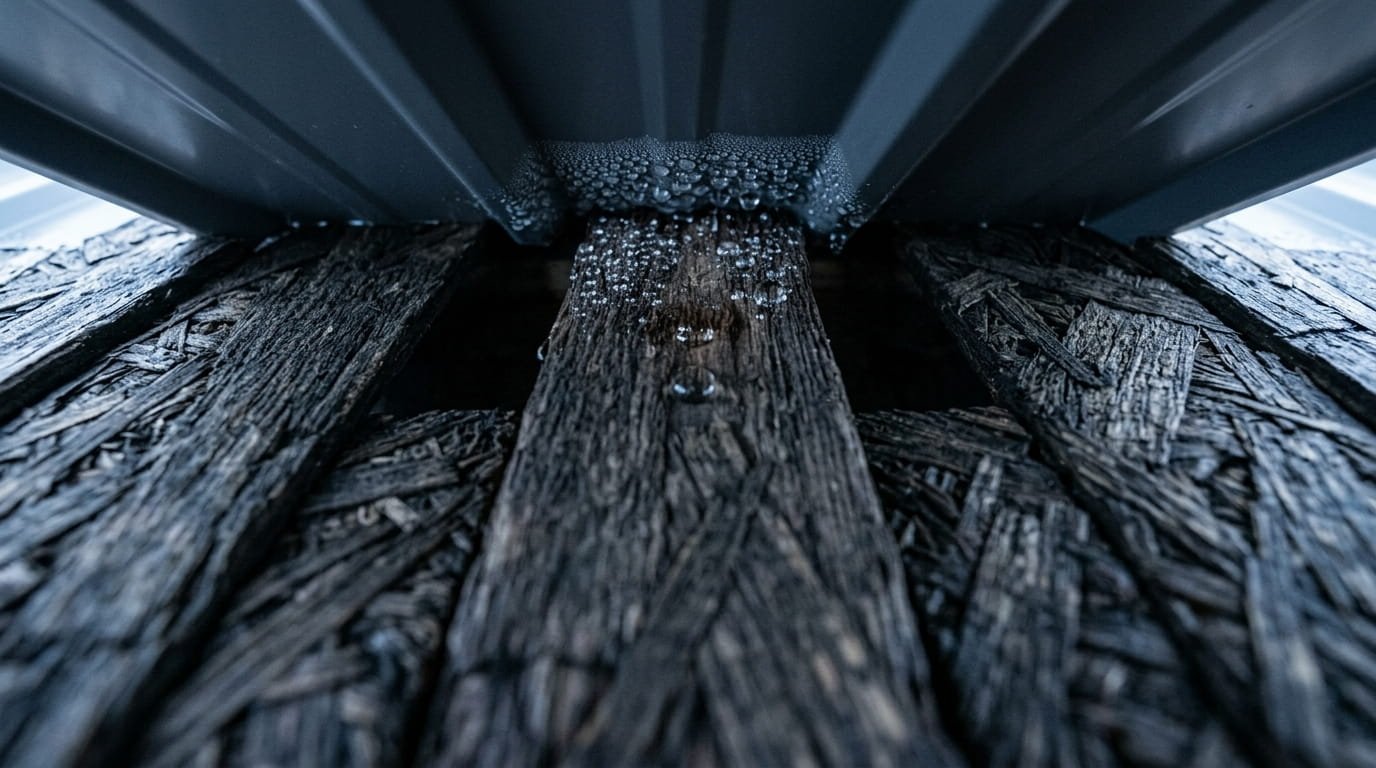
Metal panels are excellent at shedding water when everything performs as designed. But real world roofs have to deal with condensation forming on the underside of panels, wind driven rain pushing water upward through fastener penetrations, and the constant thermal expansion and contraction that gradually opens tiny gaps in the system. Without a protective layer beneath the panels, all of that moisture has a clear path to your roof deck.
When asking do you need anything under a metal roof, the answer is a firm yes. What actually goes under a metal roof falls into three key categories, and each one serves a distinct purpose:
- Underlayment (felt paper, synthetic, or peel and stick ice and water shield): Functions as the secondary water barrier when moisture gets past the metal panels.
- Ventilation gap: Used in specific panel systems to allow air movement beneath the metal and reduce condensation buildup underneath.
- Vapor barrier: Required in certain climates to control the movement of moisture vapor from inside the home up into the roof assembly.
What Is Ice and Water Shield?
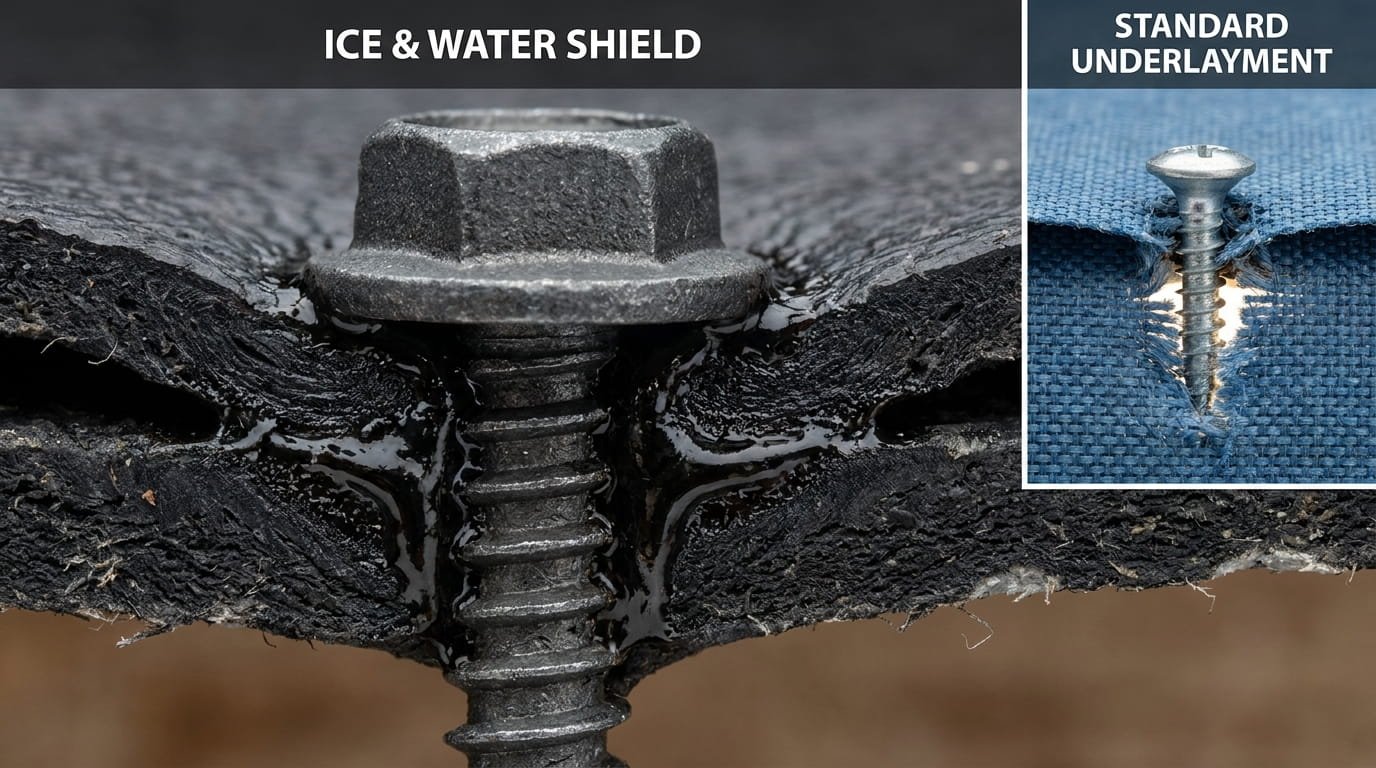
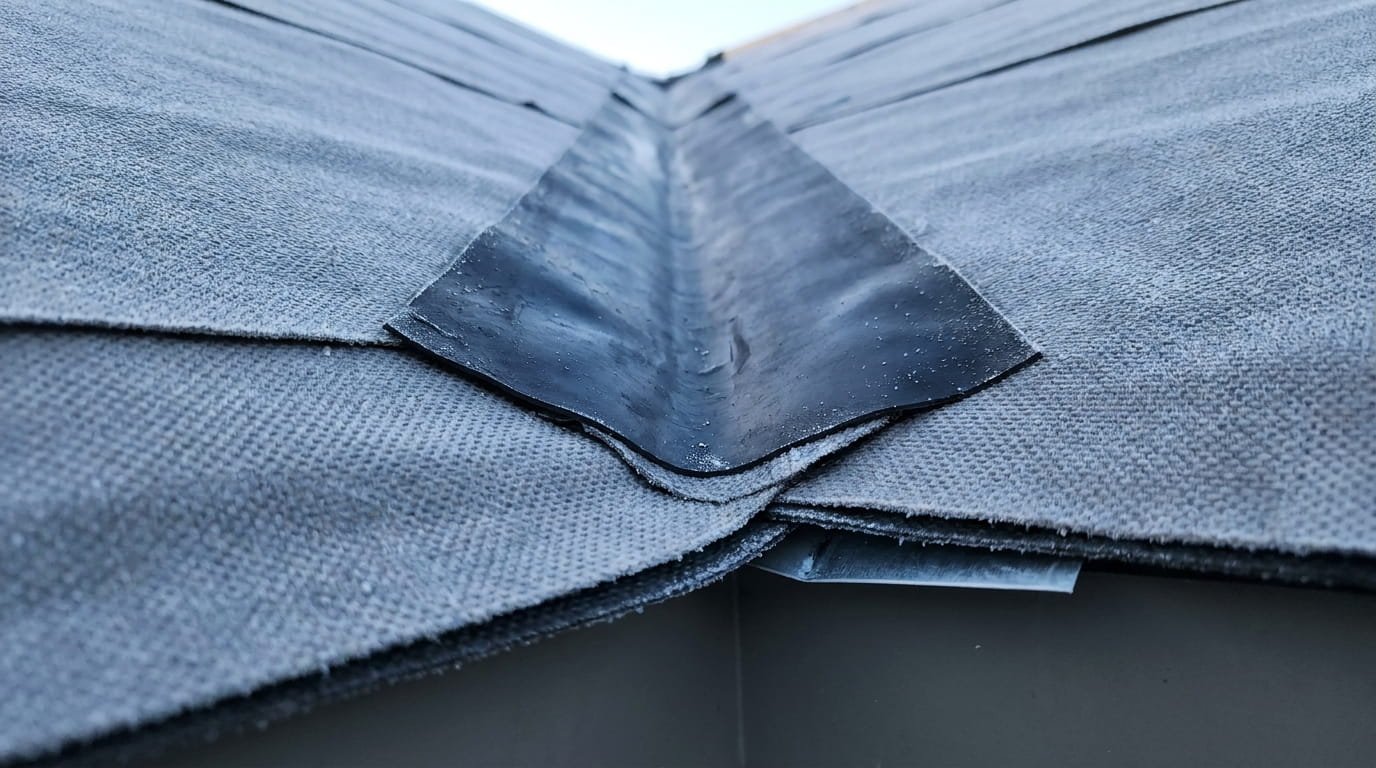
Ice and water shield is a self adhering rubberized asphalt membrane, the kind you peel and stick directly onto the roof deck. It is a fundamentally different product from felt paper or synthetic underlayment, and that difference has serious implications for how well your roof performs over time.
Ice and water shields are primarily used at the highest risk zones on any roof. These include:
- Eaves and overhangs, where ice dams are most likely to form in cold climates
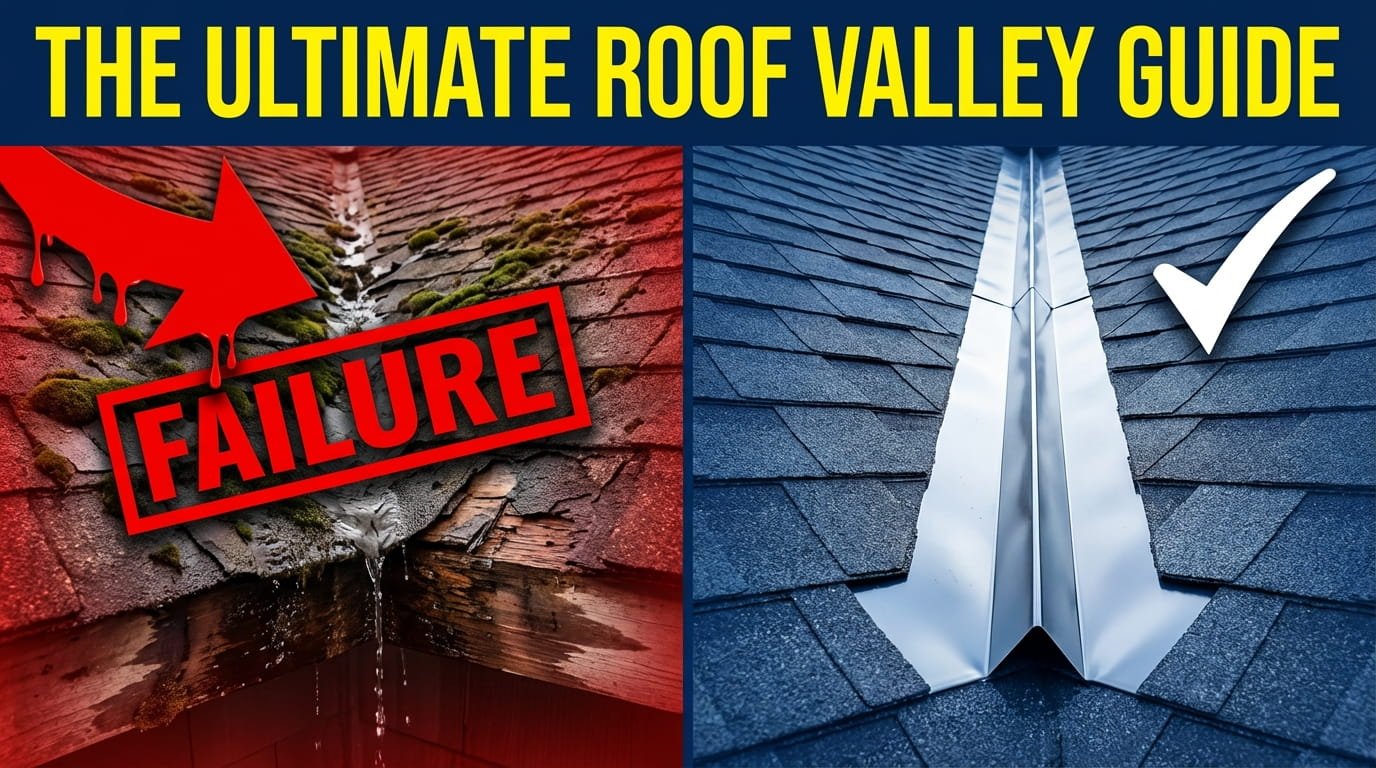
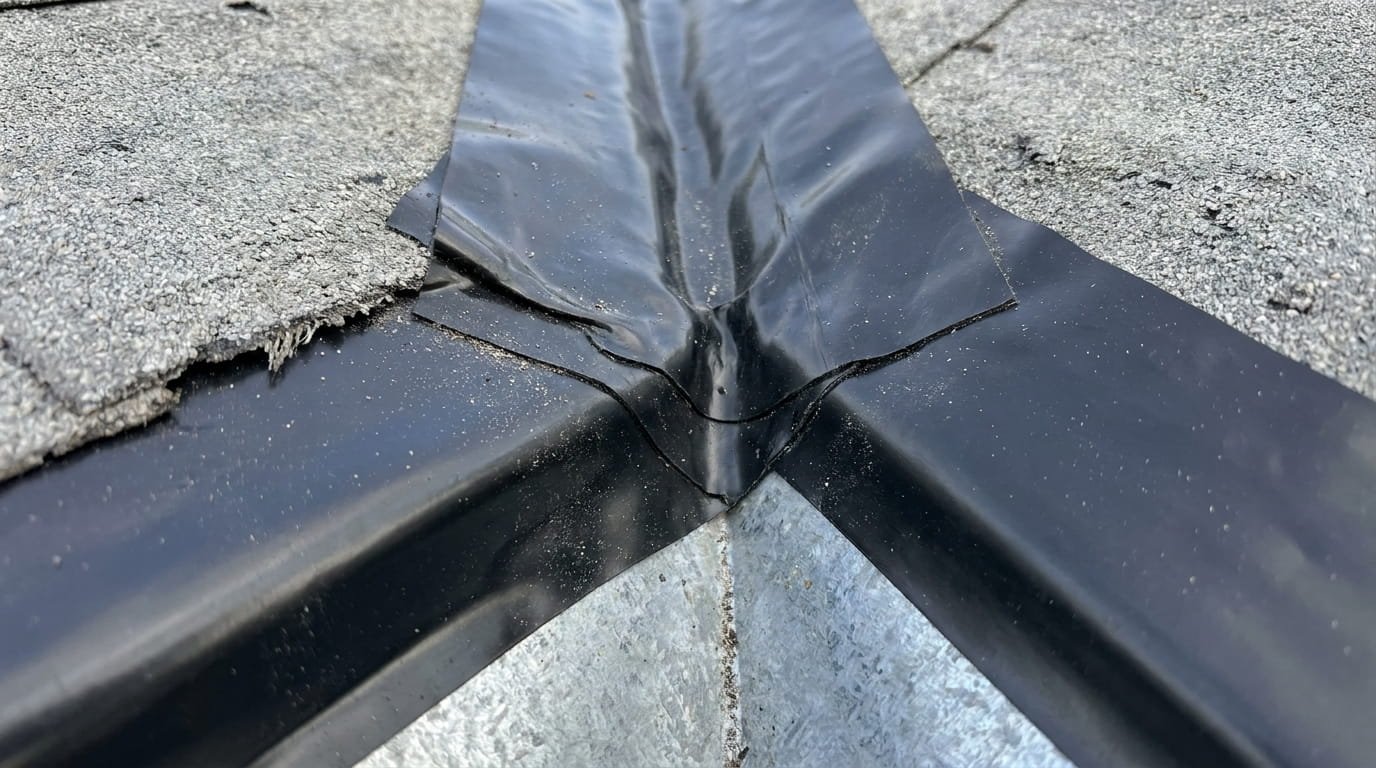
- Valleys, where water from two roof planes converges and the volume is highest
- Around all penetrations including skylights, vents, chimneys, and dormers
| Quick Distinction Worth Knowing: Ice and water shields are NOT the same as regular underlayment. It self-seals around nails and fasteners. Felt paper and synthetic underlayment do not. This single difference determines whether your fastener penetrations are truly waterproof. |
Do You Need Ice and Water Shield Under Metal Roofing?
This is the question at the center of this entire guide. If you are wondering if you need ice and water shields under metal roofing, the direct answer is yes, in most cases, especially at vulnerable areas. Whether you need full coverage or targeted application depends on your climate, the design of your roof, and what your local building code requires.
When Ice and Water Shield Is Strongly Recommended
The following situations call for ice and water shields as a non-negotiable part of your roofing system. If any of these describe your home, do not skip this product:
- Any climate that experiences freezing temperatures or ice dams, including most of the northern United States
- Low slope roofs below a 4:12 pitch, where water drains more slowly and has more time to find entry points
- Coastal and high wind areas where rain can be driven horizontally under panel edges
- Roofs with multiple penetrations including skylights, solar vents, chimneys, and pipes
- Screw down metal roofing systems, which have significantly more fastener penetrations than standing seam systems
When Ice and Water Shield May Be Optional
In a narrow set of circumstances, a high quality synthetic underlayment may be sufficient instead of full coverage ice and water shield. This typically applies when all of the following are true:
- You live in a hot, arid climate with no freeze thaw cycles and minimal intense rainfall events
- You are installing a standing seam metal roof with very few penetrations, reducing fastener entry points significantly
- A premium synthetic underlayment is applied full coverage with manufacturer specified lapping at all seams
When It Is Required by Code
Beyond best practices, many jurisdictions actually mandate ice and water shield through local building codes. Homeowners often discover this when pulling permits for a roofing project:
- Most northern U.S. states require ice and water shield at the eaves, typically covering the first 3 to 6 feet of the roof deck measured horizontally
- Some local codes require full deck coverage on low slope metal roofs regardless of climate zone
- Metal roofing manufacturer warranties frequently list ice and water shield as a required component. Installing without it can void your product warranty entirely from day one
Do You Need a Moisture Barrier Under a Metal Roof?
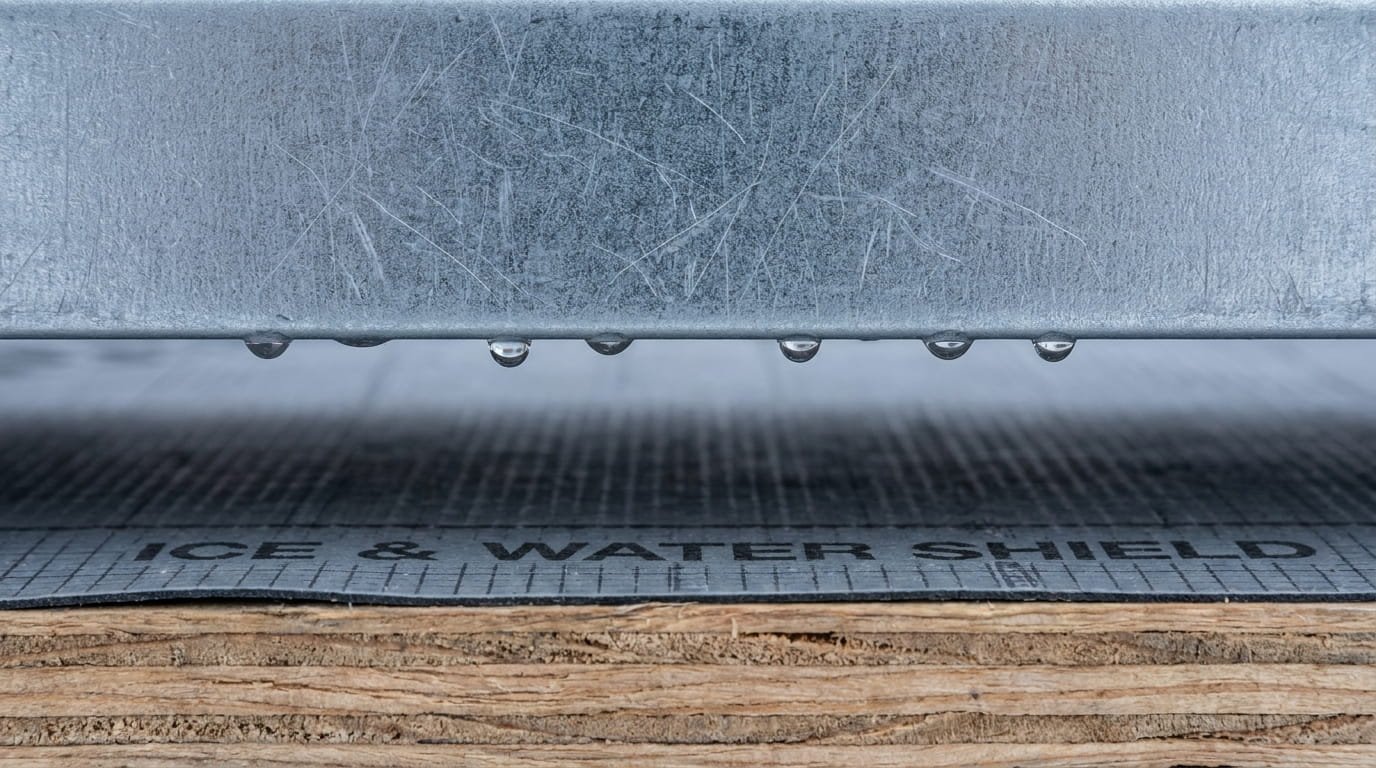
Yes. But here is where a lot of homeowners and even some contractors get tripped up. When people ask “do you need a moisture barrier under a metal roof”, they are often using that term to describe several different products at once. This distinction is missed more often than any other point in the conversation about metal roofing underlayment.
The table below clarifies exactly what each commonly referenced product does and how they relate to each other:
| Term | What It Does | Same as Ice & Water Shield? |
| Ice & Water Shield | Fully waterproof membrane, self seals around fasteners | Yes, it IS a moisture barrier |
| Vapor Barrier | Controls moisture vapor movement through roof assembly | No, different product and function |
| Synthetic Underlayment | Water resistant but NOT fully waterproof | Partially, does not self seal |
The practical rules that govern moisture management under a metal roof come down to your climate:
- Cold climates: A separate vapor barrier may be necessary when warm interior air rises and hits the cold underside of metal panels, causing condensation to form. In this case, the vapor barrier should be installed on the warm side of the roof assembly, below the insulation, not directly under the metal panels.
- Hot climates: A vapor barrier is typically NOT recommended. Trapping moisture vapor in a hot roof assembly causes significantly more damage than it prevents. Ventilation is the priority instead.
Getting this right is essential. The wrong vapor management approach in either climate can lead to mold growth, deck rot, and structural damage that goes undetected for years. Our team at EZ Roofing & Builders assesses each home individually during a free roofing inspection to recommend the right system for your specific conditions.
Types of Underlayment for Metal Roofs: A Full Comparison
Now that you understand why underlayment matters and what it protects against, let us compare all three main options in detail. Choosing the right product or the right combination of products is one of the most impactful decisions in any metal roofing project.
Option 1: Felt Paper (Tar Paper)
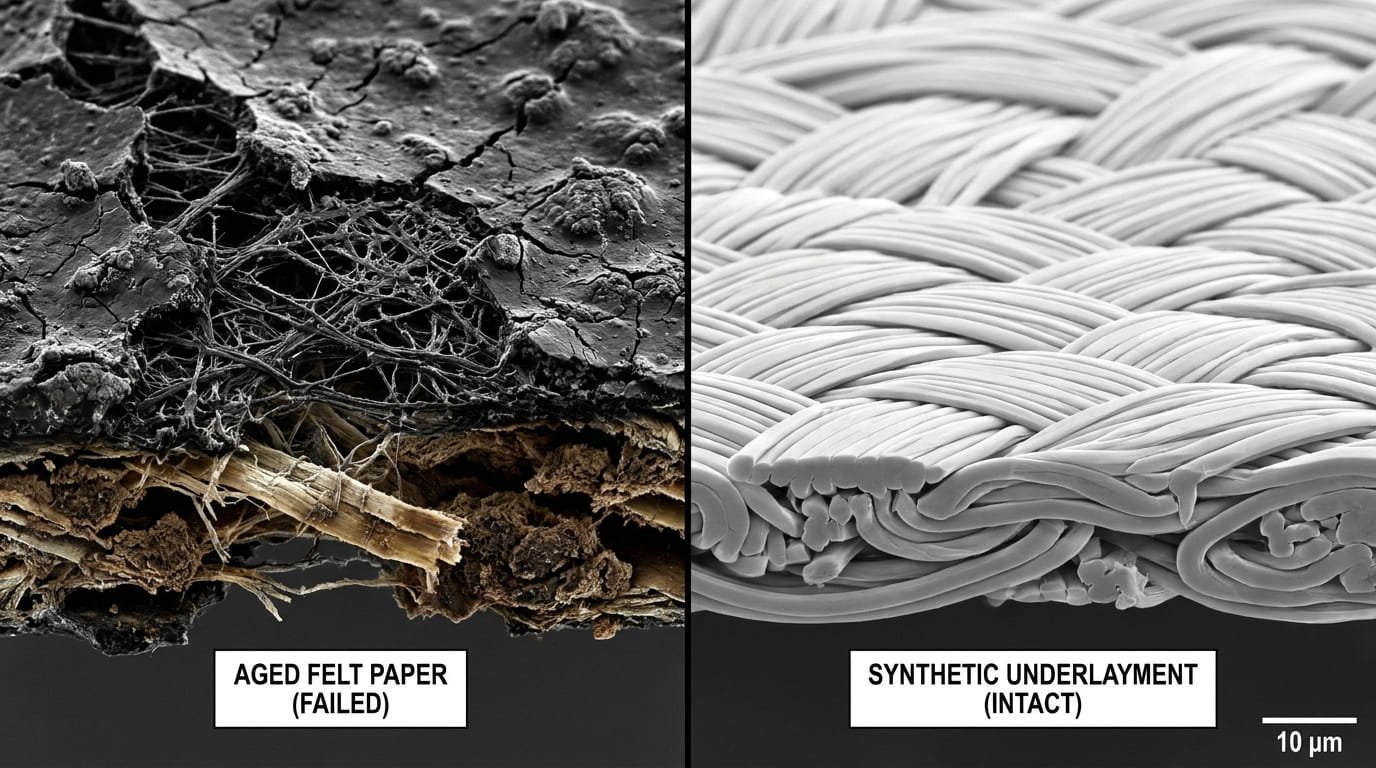
Felt paper is the oldest and cheapest underlayment available. Made from asphalt saturated natural fibers, it has been used under roofing for generations. For metal roofing specifically, it is a poor long term choice for one fundamental reason.
Metal roofs last 50 years or more. Felt paper lasts 10 to 20 years under standard conditions. Under metal panels, that timeline shrinks further because the intense heat that metal generates accelerates felt breakdown, causing bubbling, adhesion failure, and cracking. In practical terms, you could end up removing a perfectly functional metal roof just to replace the deteriorated felt beneath it.
Rating: Not recommended for metal roofing installations.
Option 2: Synthetic Underlayment
Synthetic underlayment is woven polyethylene or polypropylene and represents a major improvement over felt in nearly every measurable way. It handles high temperatures far better, has a much longer functional lifespan, and is significantly more resistant to tearing during installation.
The key limitation is that synthetic underlayment is water resistant rather than fully waterproof, and it does not self seal around fasteners. This is why most experienced roofers pair synthetic underlayment across the field of the roof with ice and water shield at the eaves, valleys, and all penetration points.
Rating: An excellent choice for most climates when combined with ice and water shield at vulnerable zones.
Option 3: Ice and Water Shield (Peel and Stick)
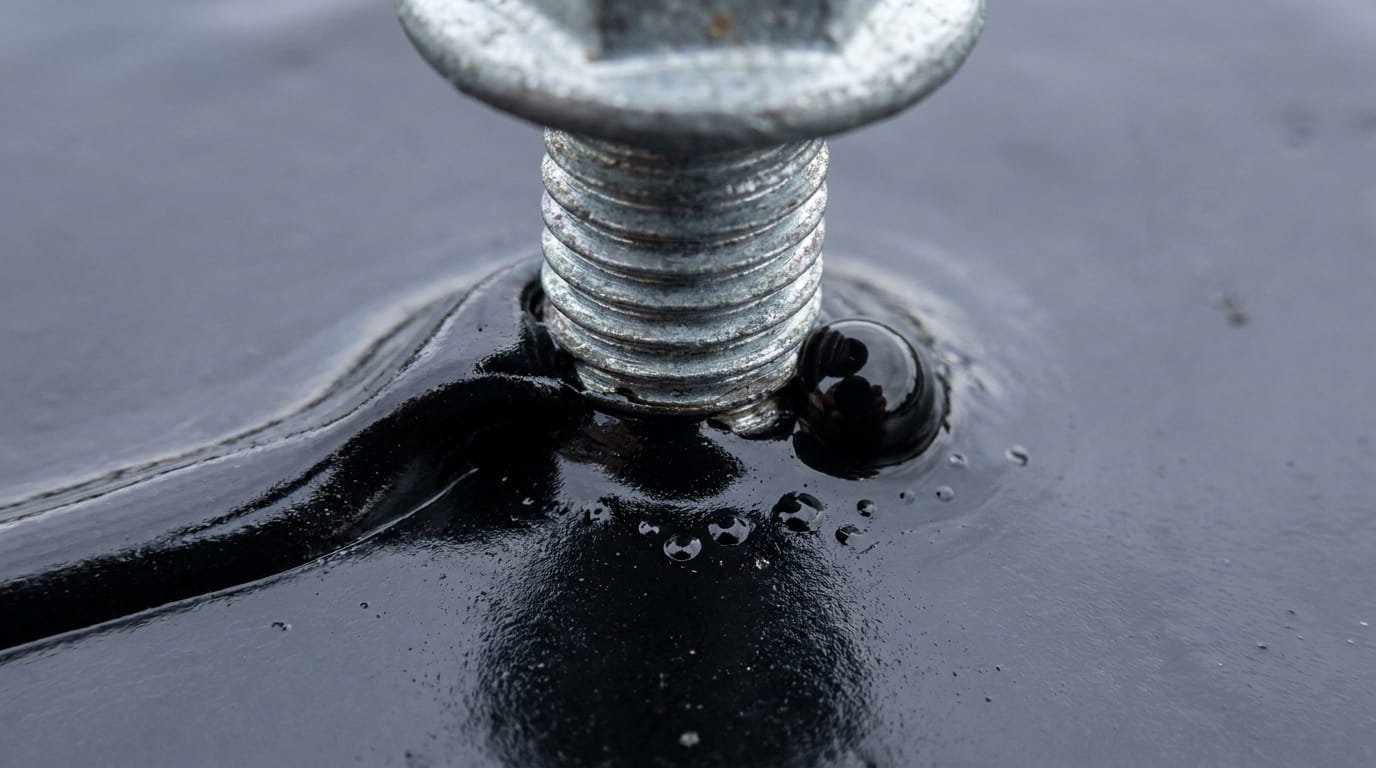
This is the gold standard for metal roofing protection. Rubberized asphalt construction, fully waterproof, and self sealing around every fastener penetration. It provides the best available defense against ice dams, wind driven rain, and the slow leak damage that starts at fastener locations and spreads unseen for years.
One critical detail that most product guides skip entirely: you must use a high temperature rated version under metal roofing. Standard ice and water shield products can soften and degrade when exposed to the extreme heat that metal panels generate in summer sun. Always look for products labeled high temperature or specifically designed for use under metal roofing.
Rating: The strongest available protection, particularly in cold climates, low slope applications, and all high risk zones.
Cost Comparison Table
Here is how the three main options compare across the factors that matter most for a long term investment:
| Underlayment Type | Cost Per Square (100 sq ft) | Lifespan | Best For |
| Felt Paper | $10 to $20 | 10 to 20 years | Budget installs only |
| Synthetic | $25 to $45 | 25 to 40 years | Most climates, standard protection |
| Ice & Water Shield | $50 to $80 | 30 to 50 years | Cold climates, low slopes, high risk zones |
The Hybrid Approach (What Experienced Contractors Actually Do)
The approach most professional metal roofing contractors use is not a single product across the entire deck. It is a strategic combination: ice and water shield applied at the eaves, all valleys, and around every penetration, with synthetic underlayment covering the remaining field of the roof. This hybrid strategy delivers maximum protection exactly where the roof is most vulnerable, while keeping material costs reasonable across the full deck. It also satisfies most local code requirements without committing to full coverage ice and water shield everywhere.
High Temperature Rating: Why This Technical Detail Actually Matters
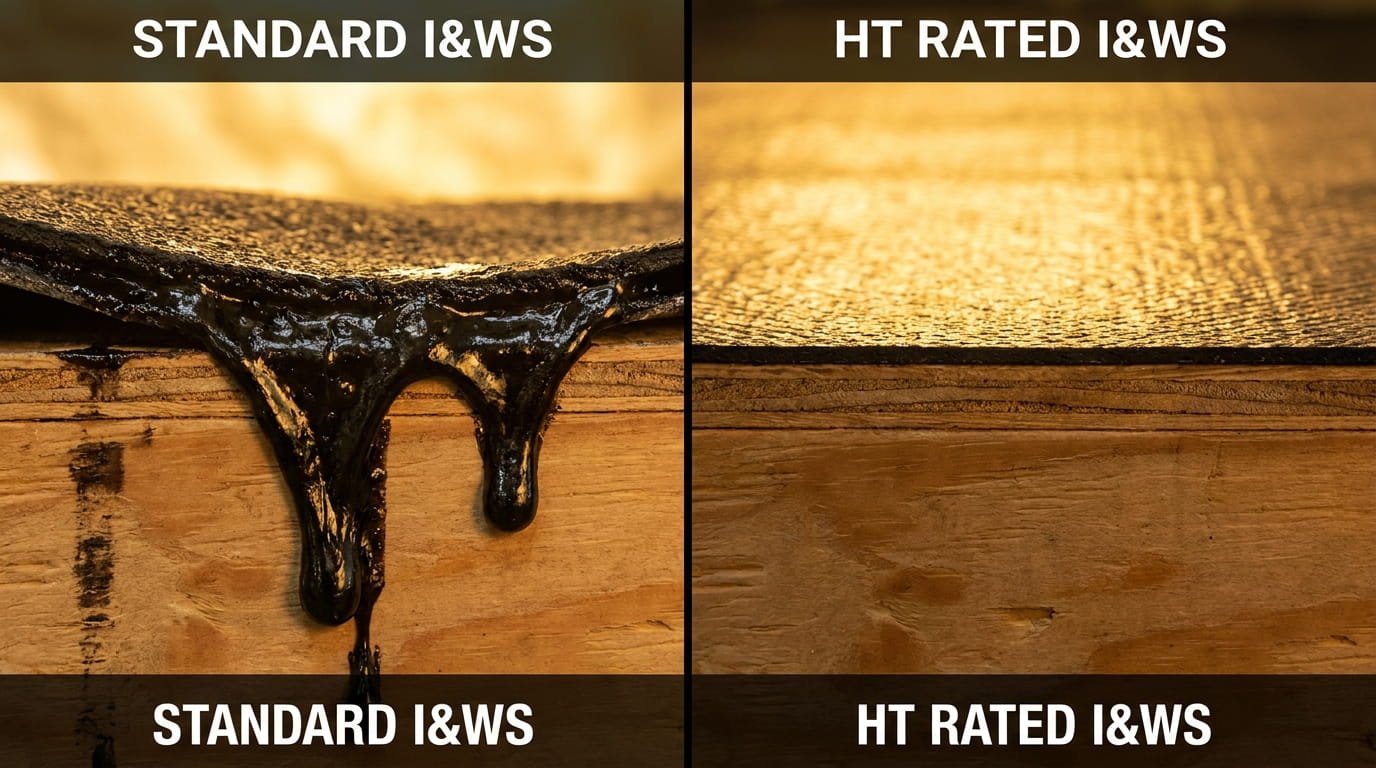
This is one of the most important technical points in this entire guide, and it is the one most frequently glossed over in product descriptions and installation guides. Metal panels sitting in direct summer sunlight can reach surface temperatures between 150- and 180-degrees Fahrenheit. On dark colored panels or south facing exposures, that number can go even higher.
Standard ice and water shield products are typically rated to approximately 150 degrees Fahrenheit. At or near that threshold, the rubberized asphalt adhesive begins to soften and can migrate. The membrane may slip, wrinkle, or partially separate from the roof deck. That is not a minor cosmetic issue. It represents a real waterproofing failure beneath a roof that may show no exterior symptoms for years.
High temperature rated ice and water shield, often labeled HT, maintains its structural integrity at temperatures up to 250 degrees Fahrenheit or more. When selecting underlayment for any metal roofing application, always look for products that state clearly that they are suitable for use under metal roofing or rated for high temperature applications. Using a standard product where an HT rated one is required can simultaneously void the underlayment manufacturer warranty and the metal panel manufacturer warranty.
According to the National Roofing Contractors Association (NRCA), selecting materials that are compatible with the entire roofing system, including thermal performance, is a foundational principle of quality installation practice.
Climate Based Recommendations: Find Your Situation Fast
One of the most practical things this guide can offer is a way for you to quickly identify what the right underlayment approach is for your specific region. The table below is organized by IECC climate zone, which you can look up by zip code through the U.S. Department of Energy website.
Scan the table, find your climate type, and use the recommendation as your starting point before talking to a roofing contractor:
| Climate Type | Ice & Water Shield Needed? | Where to Apply | Other Notes |
| Cold / Snow heavy (Zone 5 to 7) | Yes, strongly recommended | Full eaves + valleys + all penetrations | Ice dams are the primary risk factor |
| Coastal / High wind | Yes, recommended | Eaves + all penetrations | Specify wind rated product |
| Hot / Arid (Zone 1 to 2) | Optional | Penetrations only | Must be HT rated; vapor management critical |
| Mixed / Moderate (Zone 3 to 4) | Recommended at key zones | Eaves, valleys, penetrations | Hybrid approach works well here |
Do Metal Roofs Need Snow Guards?
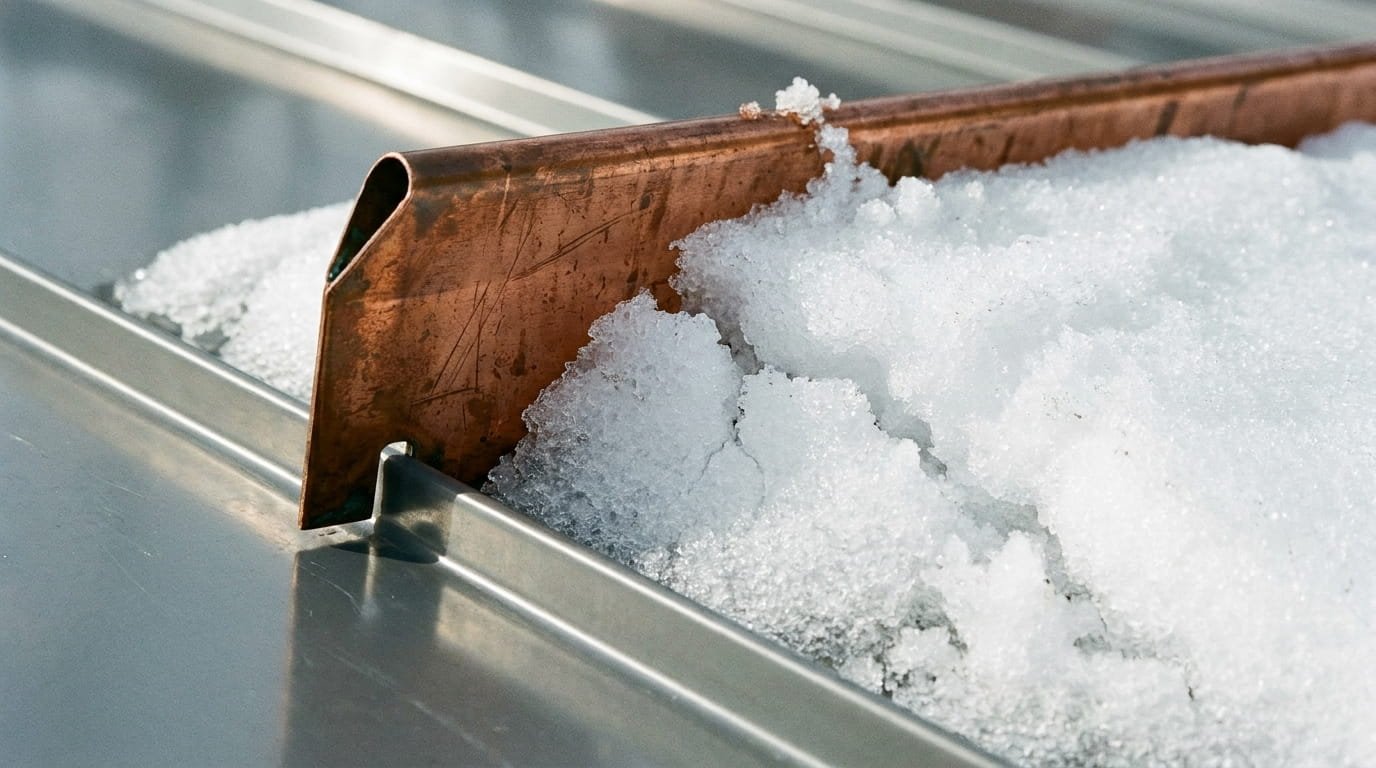
If you are wondering do metal roofs need snow guards for your home, the answer depends on your location, roof pitch, and what sits below your roof edge. Metal panels are engineered with smooth surfaces that shed water efficiently, and that same characteristic causes accumulated snow and ice to release suddenly in large, heavy sheets rather than melting and dripping gradually.
Snow guards are devices mounted to the roof surface that disrupt the snowpack and force it to release gradually in small amounts rather than all at once. They do not stop snow from eventually leaving the roof. They control the manner and timing of that release. Snow guards move from strongly recommended to genuinely necessary in these situations:
- Steep pitch roofs at 6:12 and above in regions with regular heavy snowfall
- Roofs that overhang entries, front doors, driveways, walkways, or other occupied outdoor areas
- Properties in areas that regularly receive more than 6 inches of snowfall per event
Two main types of snow guards are available. Pad style snow guards are individual devices spaced in a pattern across the roof surface. Bar or pipe style guards run horizontally across the full width of the roof and are better suited to handling heavier snow loads.
What Actually Happens If You Skip Underlayment Entirely?
Let us get specific about consequences, because this is where the decision gets real. Skipping underlayment to save a few hundred dollars upfront is one of the most expensive mistakes a homeowner can make, and the damage is almost always invisible until it has become severe.
In the short term, nothing visibly dramatic happens. Metal panels perform well under normal conditions, and a roof without underlayment may look and function perfectly fine for the first year or two.
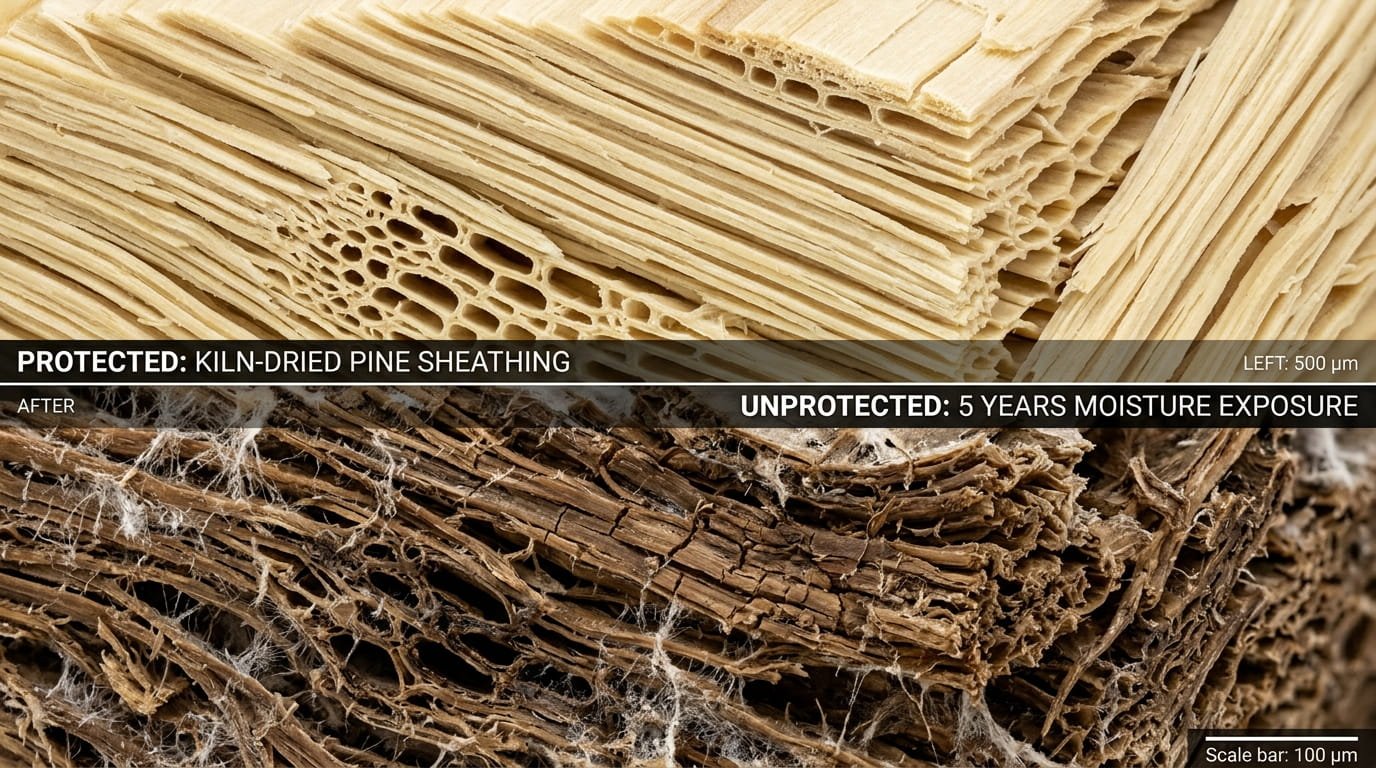
In the medium term, roughly between 3 and 10 years, the problems begin to compound. Condensation accumulates on the underside of metal panels and drips repeatedly onto the unprotected roof deck. OSB and plywood sheathing absorb that moisture in cycle after cycle. The wood begins to soften, warp, and eventually rot. Mold establishes itself in the attic space. None of this is visible from the street or even from inside your living areas until the damage is already advanced and expensive.
In the long term, structural deck failure becomes a genuine possibility. Replacing a rotted roof deck underneath a metal roof is dramatically more expensive than the original cost of proper underlayment installation would have been, because you are now also paying for labor to remove and reinstall the metal panels that are still in perfect condition above the damage.
If you want to make sure your metal roof was installed correctly, or if you are planning a new installation and want it done right the first time, visit our metal roof installation page to learn how EEZ Roofing & Builders approaches every project.
Installation Best Practices: What You Should Know Before Work Begins
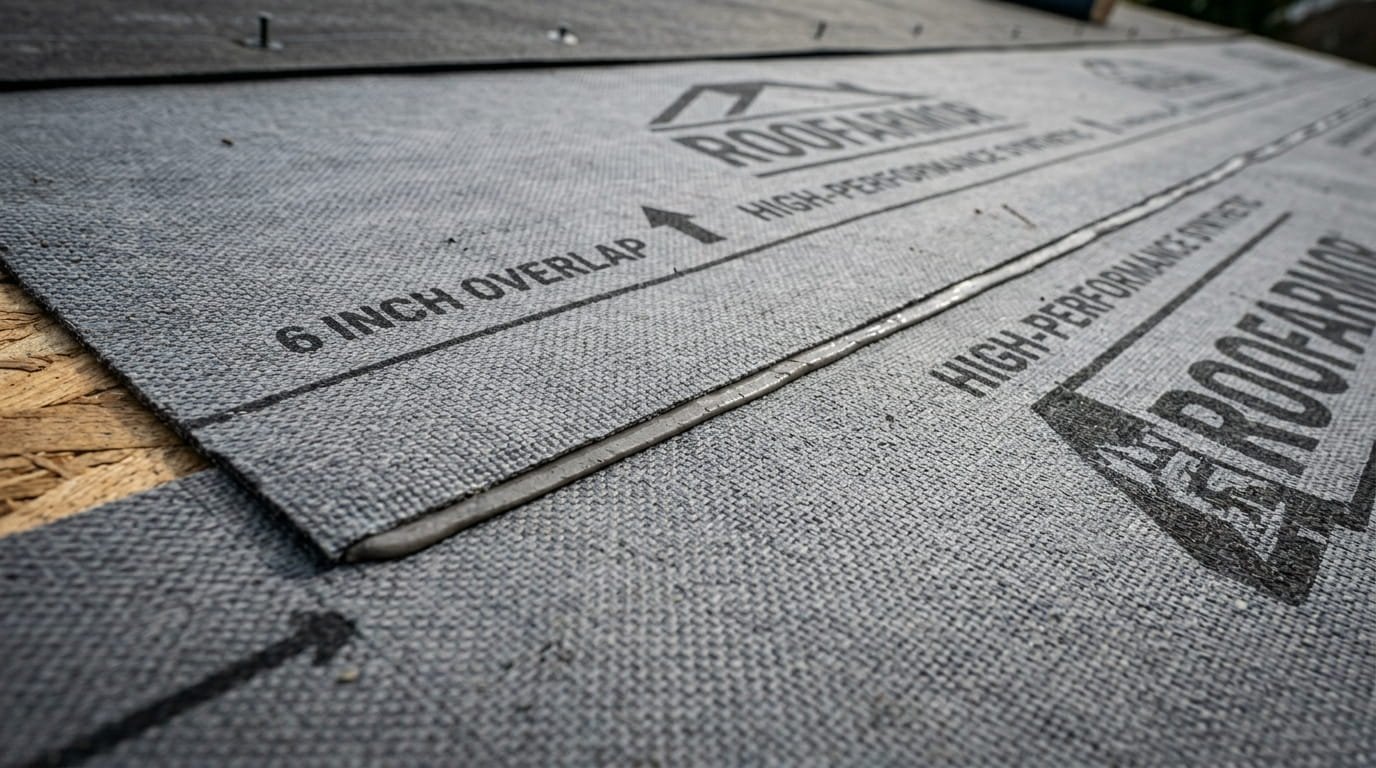
Even if you are hiring a professional for this project, understanding what a proper installation looks like puts you in a much better position to ask the right questions and recognize quality work when you see it. The following represent the established standard for a well installed metal roofing underlayment system.
Before any underlayment goes down, the roof deck must be clean, completely dry, and structurally sound. Any soft spots, areas of rot, or damaged sheathing panels must be addressed before the first roll of underlayment is ever opened.
- Overlap all seams per manufacturer specifications, typically 3 to 6 inches on horizontal laps and 6 inches at all end laps
- Roll seams firmly after application to eliminate any air pockets that can trap moisture and reduce adhesion over time
- Always lap underlayment under rake edges rather than over them to prevent wind driven rain from getting behind the edge
- Apply ice and water shield first at all eaves, valleys, and penetrations before synthetic underlayment is installed over the field of the roof
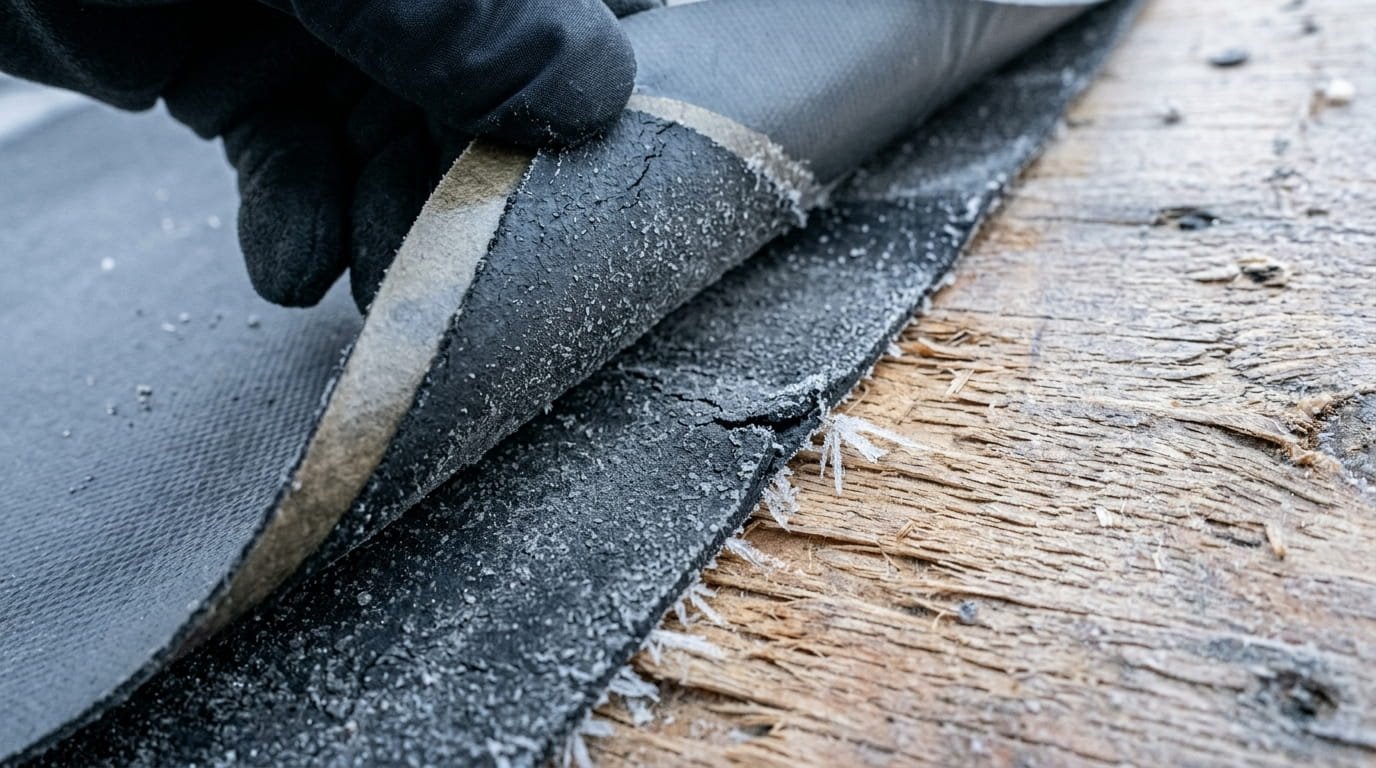
- In cold weather, store membrane rolls indoors before use because low temperatures significantly reduce the adhesive performance of peel and stick products
- On low slope roofs below 3:12 pitch, consider full coverage ice and water shield rather than only targeted application at high risk zones
Once your metal roof is installed, protecting that investment over its full lifespan requires consistent attention. Our roof maintenance page walks you through exactly what to do and when to do it to keep your metal roof performing at its best for decades.
Ready to Get Your Metal Roof Protected the Right Way?
Your metal roof deserves more than just panels sitting on bare decking. It deserves a complete, warranty compliant installation that protects your home for the next 50 years, starting with the very first layer that goes down.
At EZ Roofing & Builders, we have been helping homeowners across Long Island and greater New York install metal roofs correctly, from the deck up. Every installation we complete uses code compliant underlayment systems, high temperature rated products where required, and a full installation approach that keeps your manufacturer warranty valid from day one. Contact EZ Roofing & Builders now!
Frequently Asked Questions
- Do you use an ice and water shield under metal roofing?
Yes. Ice & water shield under metal roofing should be installed at a minimum at the eaves, valleys, and around all penetrations. In cold climates or on low slope roofs, full coverage is strongly recommended. For most U.S. homeowners the answer to whether do you need ice and water shield under metal roofing is yes.
- Do you need to put anything under a metal roof?
Yes. This is one of the most important questions to answer before any installation begins. Underlayment is required to manage condensation, provide secondary waterproofing, and satisfy manufacturer warranty requirements. Metal panels alone are not a complete roofing system.
- Do you need a moisture barrier under a metal roof?
Yes. Do you need a moisture barrier under a metal roof is a question with a nuanced answer. Ice and water shield functions as a waterproof moisture barrier at the roof deck level. A separate vapor barrier may also be needed in cold climates to control moisture vapor movement from inside the home upward through the roof assembly.
- Do metal roofs need snow guards?
In snowy climates, yes. When the roof overhangs populated areas? Absolutely. Snow guards prevent dangerous sudden snow releases off smooth metal surfaces that can damage gutters, landscaping, and injure people below.
- What is the best underlayment for a metal roof?
A high temperature rated ice and water shield at vulnerable zones combined with synthetic underlayment for full field coverage. This hybrid approach delivers the best balance of protection, longevity, and cost.
- Can I use regular ice and water shield under metal roofing?
No. Standard ice and water shield may not withstand the high surface temperatures that metal panels generate. Always use a product specifically rated for high temperature applications or labeled for use under metal roofing.