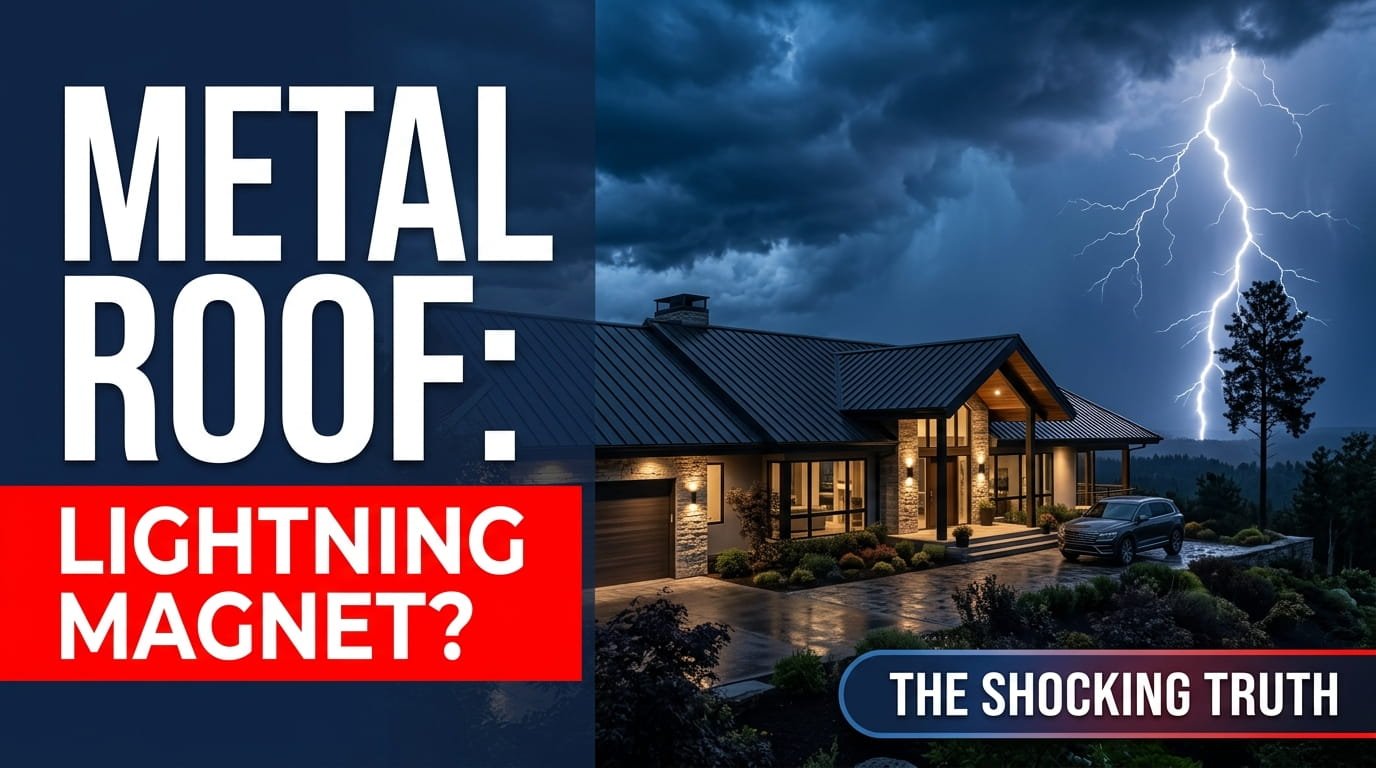
Metal roofs are growing faster in popularity than any other roofing category in North America, and for good reason they last longer, perform better in severe weather, and deliver long-term value that asphalt shingles simply can’t match.
But one fear stops homeowners cold during the decision-making process: lightning. The concern sounds completely logical on the surface. Metal conducts electricity. Lightning is electrical energy. Putting a metal roof over your family’s heads therefore seems like painting a target on your home.
This article gives you a clear, science-based answer without exaggeration in either direction. And the verdict, supported by roofing science, electrical physics, and industry standards, is this: metal roofs do not attract lightning. Here is exactly why that is true, what actually determines lightning strike probability, and what you can do to maximize your home’s protection in storm-prone regions.
How Does Lightning Actually Work?
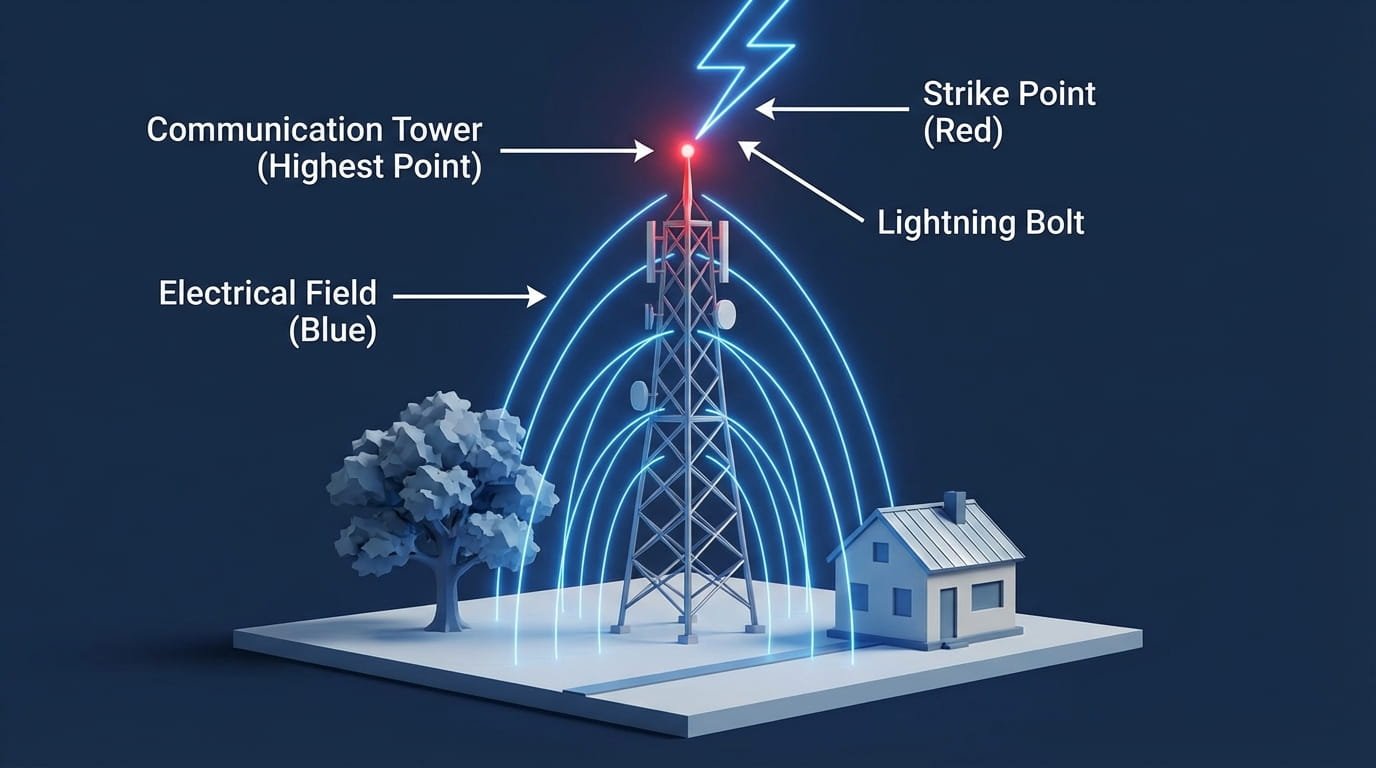
To understand why metal roofs don’t attract lightning, you first need to understand what lightning actually seeks and it isn’t metal.
Lightning is a massive discharge of electrical energy between charged regions of the atmosphere and the ground. As storm clouds build and electrical charge separates between the cloud base and the earth’s surface, the voltage difference eventually becomes large enough to overcome air’s resistance as an insulator. When it does, electricity discharges in the path of least resistance between the cloud and the ground. That path is a lightning bolt.
What lightning seeks is the shortest, easiest path to complete the electrical circuit. That means it is attracted to height, isolation, and favorable electrical conductivity in the atmosphere not to roofing materials. A single lightning bolt carries between 15,000 and 30,000 amperes of current and can travel up to five miles. The electrical field that guides it forms based on atmospheric conditions, terrain, and the relative height of objects on the ground. Tall trees, communication towers, utility poles, and tall buildings are primary targets for this reason not because of what they’re made of, but because of where they stand and how high they reach.
Lightning does not hunt for metal objects. It follows physics.
Do Metal Roofs Attract Lightning? The Direct Answer
No. Metal roofs do not attract lightning. This is not a matter of opinion or industry bias, it is a conclusion supported by electrical physics and confirmed by roofing industry standards organizations.
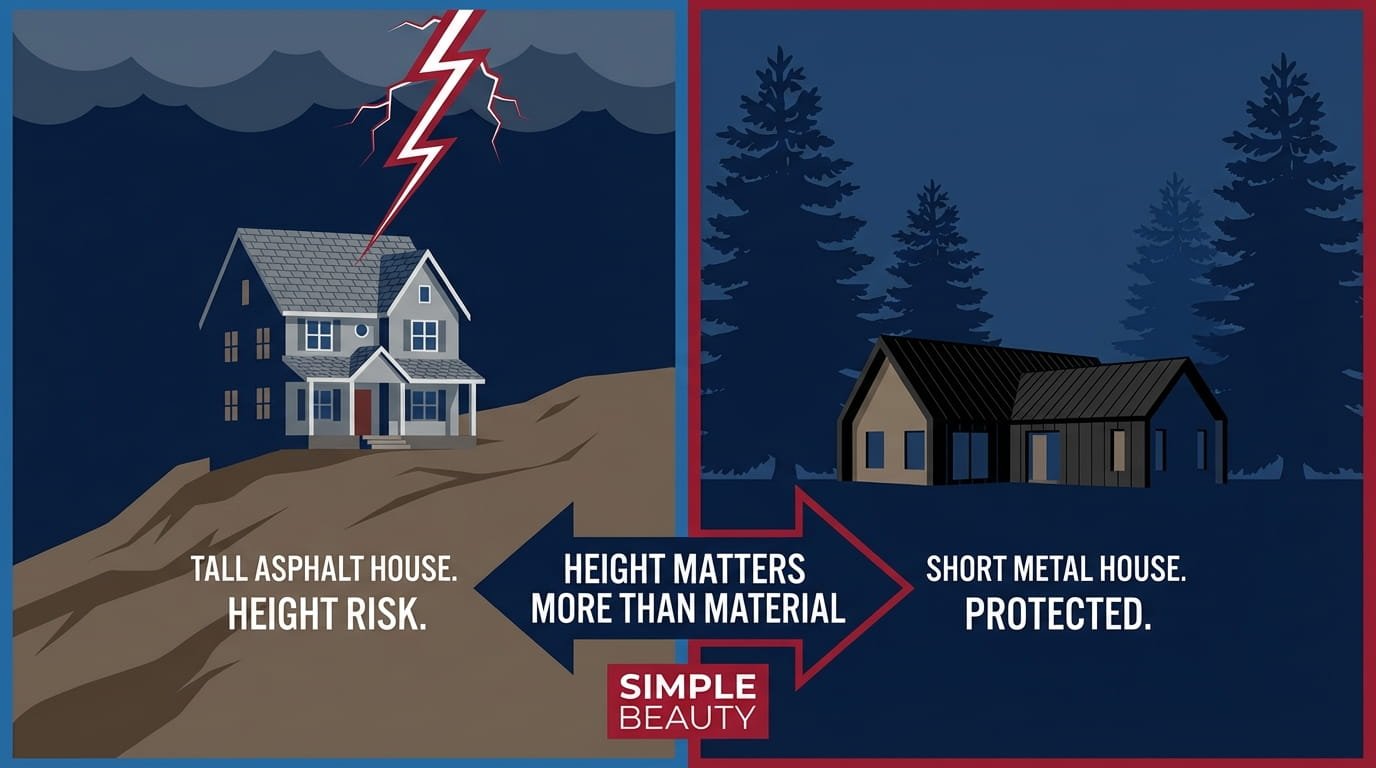
The Metal Construction Association explicitly states that roofing material does not influence the probability of a lightning strike. The factor that determines whether your home is struck is not what your roof is made of, it is where your home sits, how tall it is, and what the electrical field conditions are during a given storm.
Consider a straightforward example. A single-story home with a metal roof surrounded by 60-foot oak trees is significantly less likely to be struck by lightning than a three-story home with asphalt shingles standing alone on an elevated lot. The metal roof does not affect the strike probability equation. Height, size, topography, geographic location, and thunderstorm frequency in your region are the only variables that actually matter.
If you’ve been hesitating about metal roofing because of the lightning concern, the science is clear: the material on your roof has no bearing on whether lightning will find it.
What Actually Determines Lightning Strike Probability?
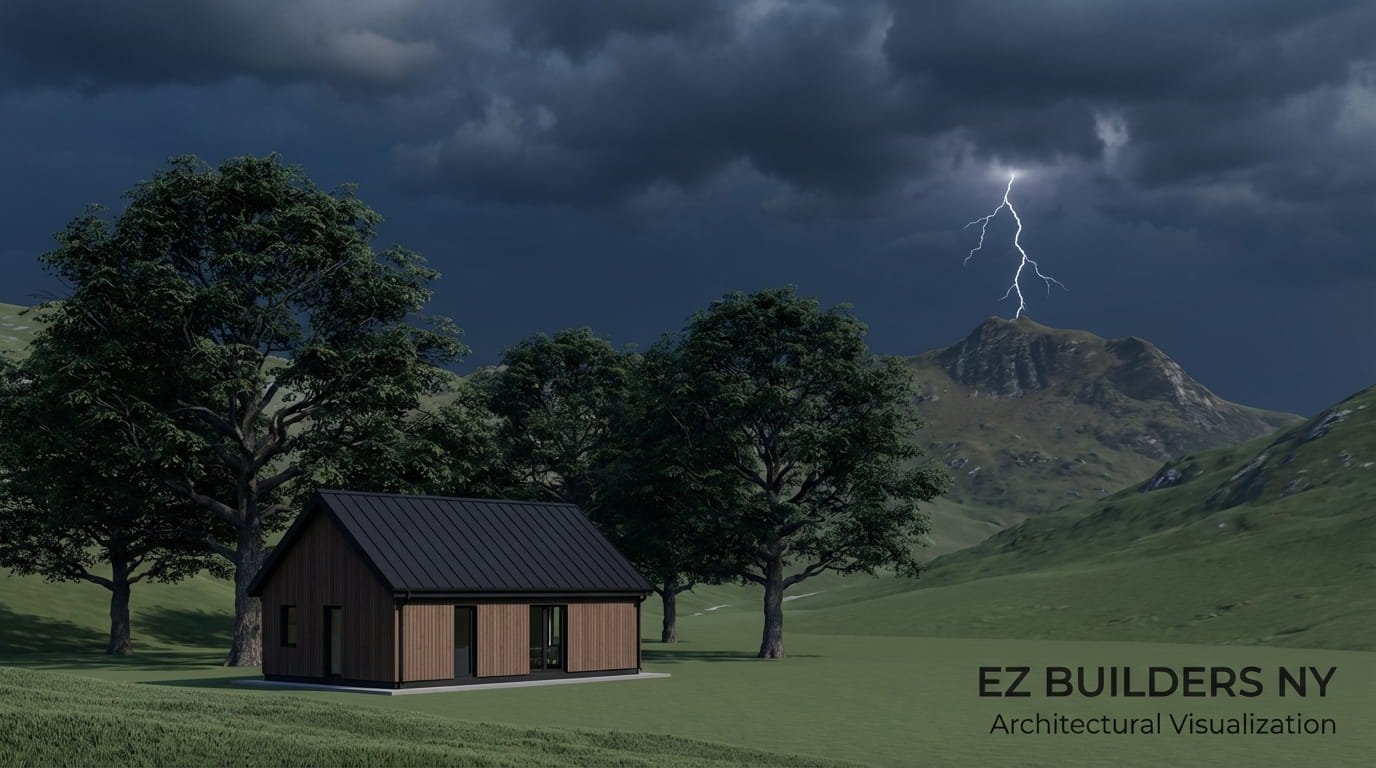
Building Height
Taller structures relative to their surroundings are the primary targets for lightning. The electrical field that guides a lightning bolt is influenced strongly by the relative height of objects on the ground. A building that rises significantly above neighboring structures, trees, or terrain features provides a shorter path for discharge, making it the preferred target. Nearby tall trees, utility poles, and communication towers actively reduce the strike risk to shorter buildings around them regardless of what those shorter buildings are made of.
Building Size and Surface Area
Larger buildings with greater surface area present a larger electrical target simply by occupying more space in the landscape. A large commercial warehouse or multi-story apartment building has a statistically higher strike probability than a small single-family home for this reason alone. This relationship has nothing to do with roofing material; it is purely a function of physical size and the electrical field geometry it creates.
Geographic Location and Topography
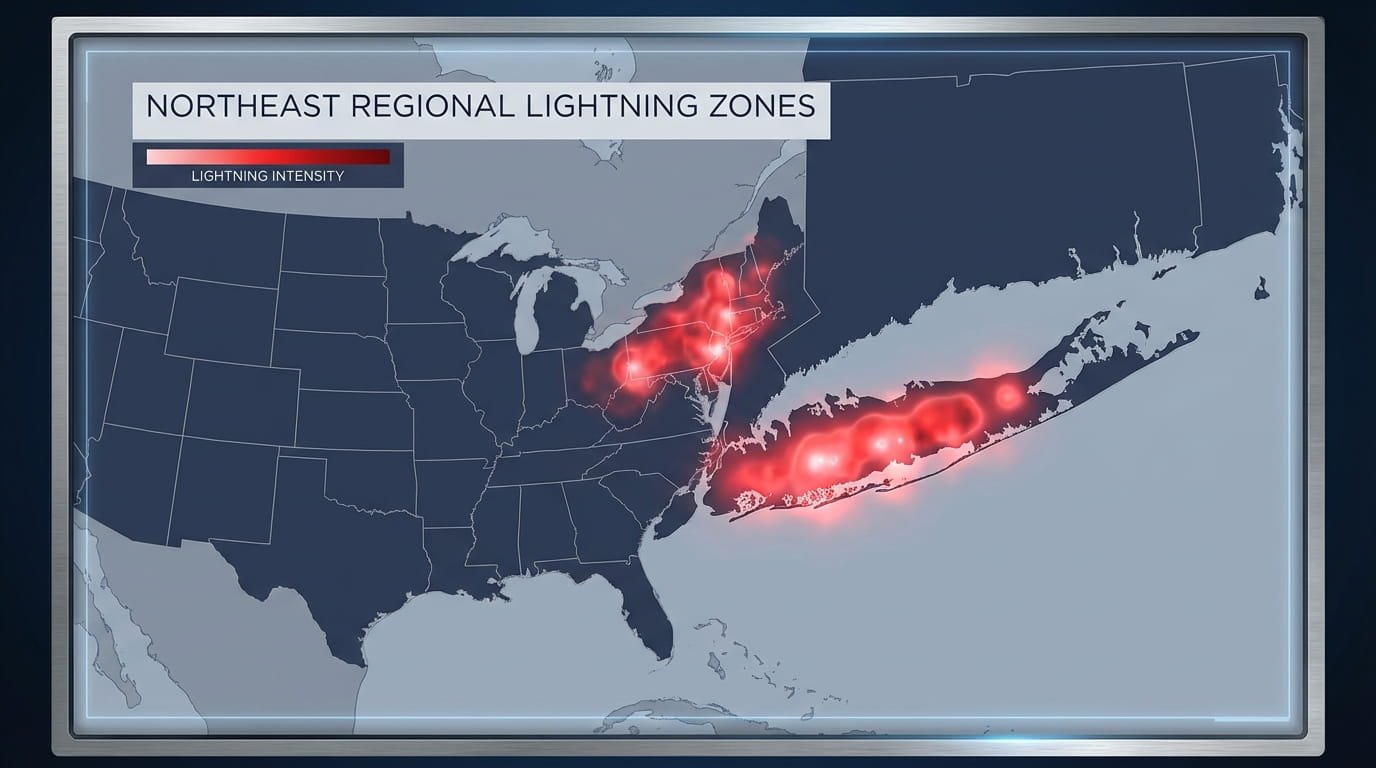
Where your home sits in the landscape matters enormously. Hilltop and ridge-line structures face significantly higher lightning probability because their elevation puts them closer to the charged cloud base and makes them the highest points in their immediate terrain. Homes in valleys or at sea level have lower overall exposure. Across the United States, Florida, Texas, Oklahoma, and the Gulf Coast states experience dramatically higher annual lightning activity than the Pacific Coast or New England. This geographic reality has far more influence on your strike risk than any roofing decision. If you’re on Long Island or Suffolk County, your regional storm frequency is a more meaningful factor than your roof material.
Thunderstorm Frequency in Your Region
The single most predictive factor for lifetime lightning strike risk is how often thunderstorms occur in your region. The National Lightning Safety Institute estimates that the average home will be struck by lightning once every 200 years, but that average conceals enormous regional variation. Homes in central Florida, the most lightning-active region in North America face a much shorter return period than homes in the Pacific Northwest. This factor dwarfs any roofing material consideration by an enormous margin.
What Happens When Lightning Strikes a Metal Roof?
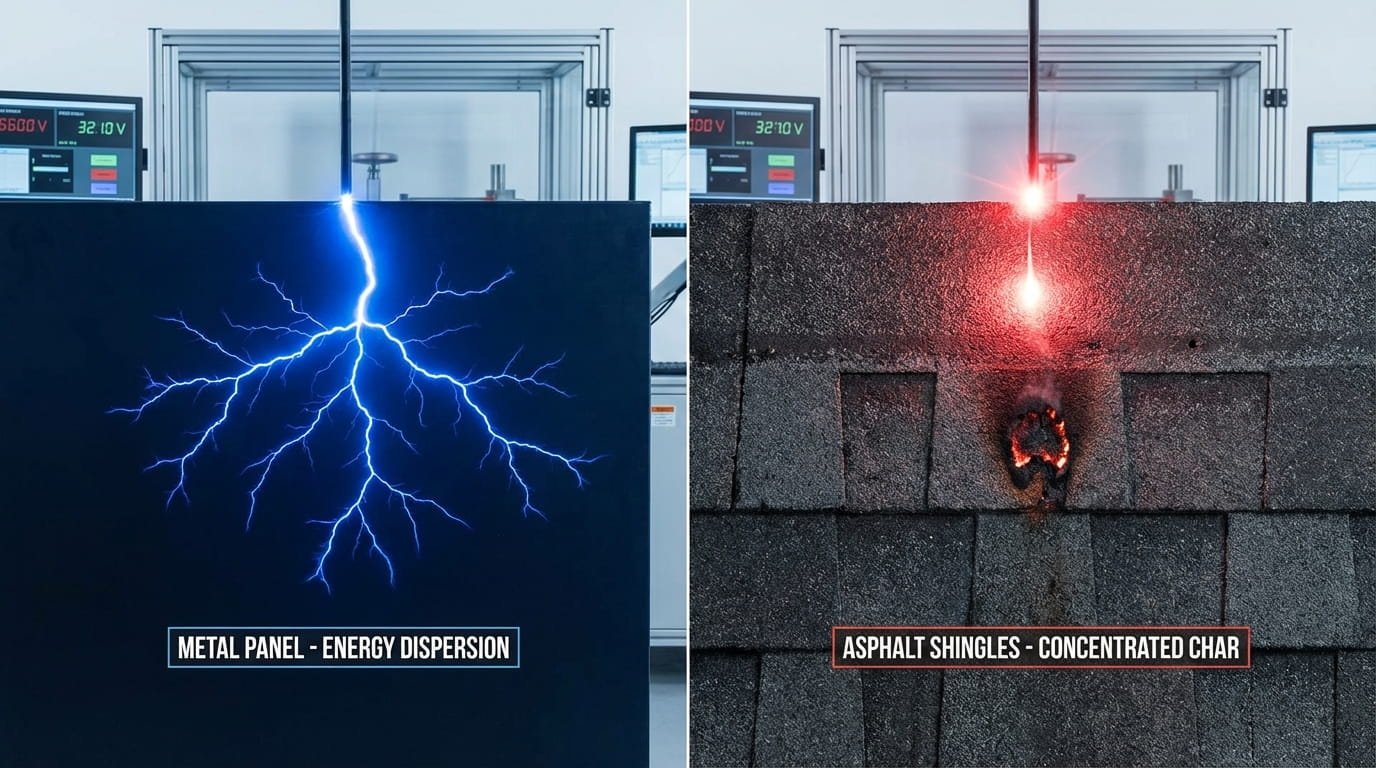
This is where metal roofing’s advantage becomes most clear. The real question during a lightning strike isn’t whether your roof was struck, it’s what happens after it is.
Metal is non-combustible. It does not ignite, char, or catch fire from a lightning strike. When electrical energy contacts a metal roof surface, the metal spreads that energy across a wide surface area rather than concentrating it at a single point. Concentrated heat is the primary mechanism of fire ignition during a lightning strike, and metal’s conductivity actively prevents that concentration from developing.
Asphalt shingles, by contrast, are petroleum-based products. They are inherently flammable and present a genuine fire ignition risk when struck by lightning particularly when the concentrated heat of the strike contacts a petroleum-saturated surface. Wood shakes are even more dangerous, being combustible by nature and requiring heavy chemical treatment just to achieve a Class B fire rating, one full step below the highest classification.
Metal roofing holds a Class A fire rating, the highest possible designation under ASTM and UL testing standards. This rating reflects the material’s ability to withstand severe fire exposure without igniting, spreading flame, or allowing fire to penetrate to the roof deck. When you’re evaluating roofing choices for a storm-prone region, this distinction is significant. You can read more about how metal roofing performs in severe conditions in our storm damage and roof repair guide.
A properly grounded metal roof goes one step further giving any electrical energy from a strike a controlled, safe path into the earth rather than allowing it to find its own destructive route through the building’s framing, wiring, or plumbing.
Metal Roof vs. Other Roofing Materials During a Lightning Strike
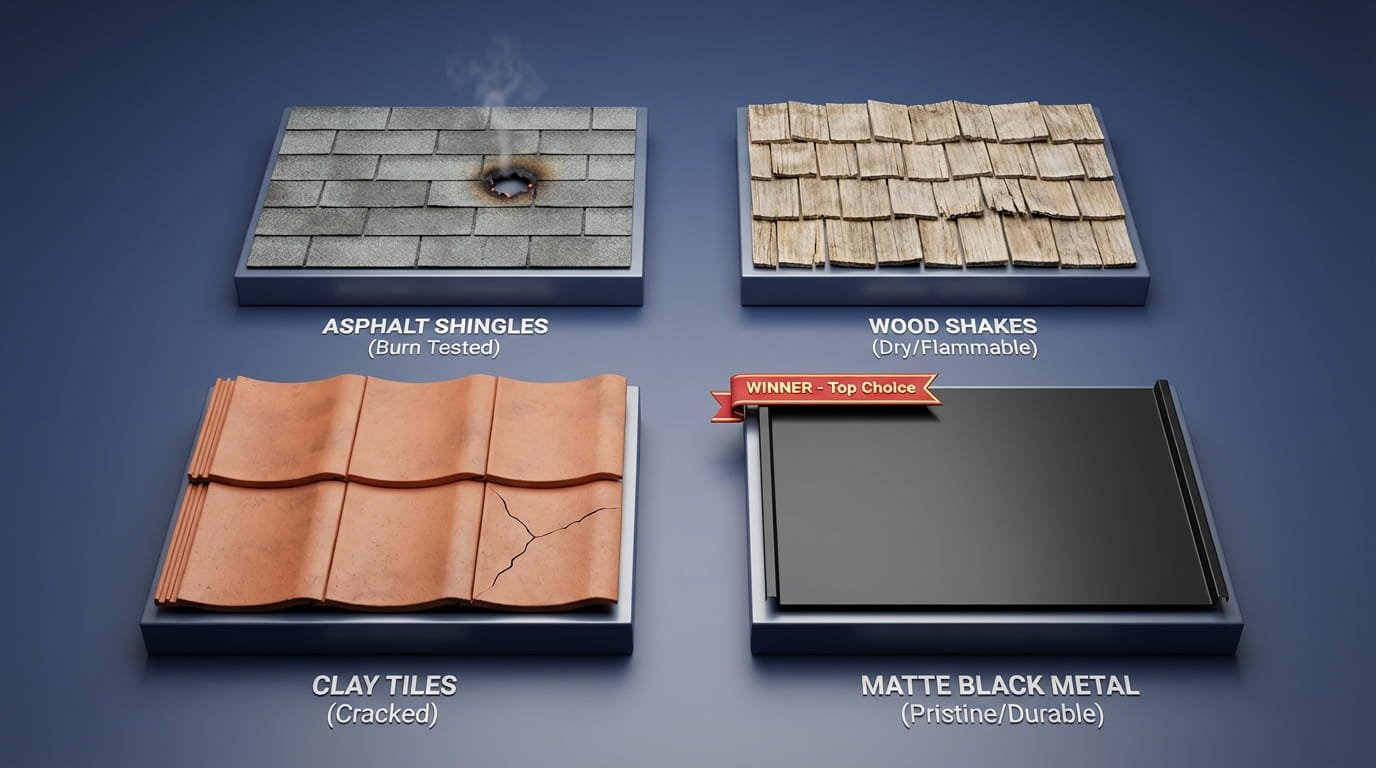
Asphalt Shingles do not conduct electricity but are flammable petroleum-based products. They offer no active protection during a lightning strike and present a genuine fire ignition risk when struck. They carry only a Class A fire rating when installed over specific underlayment combinations, and they are a poor choice for regions where lightning-caused roof fires are a meaningful risk. If you’re considering the cost implications of different roofing materials, our guide on roof replacement costs on Long Island provides useful context.
Clay and Concrete Tiles are naturally fire-resistant and carry a Class A fire rating, making them a reasonable choice from a fire safety perspective. However, they are fragile under impact hail, wind-driven debris, and even foot traffic during maintenance can cause cracking and breakage. In storm-prone regions where hail and high winds accompany lightning, their impact vulnerability is a significant liability.
Wood Shingles and Shake are the worst choice for lightning-prone areas without qualification. They are combustible by nature, requiring significant chemical treatment to achieve a Class B fire rating and many insurers refuse to write coverage on wood roofs in fire or lightning-prone regions at any price. If your home currently has a wood shake roof and you’re concerned about storm performance, our cedar roofing guide covers the full picture of what wood roofing involves in the Long Island climate.
Metal Roofing is non-combustible, with a Class A fire rating; it safely spreads electrical charge across its surface and is fully compatible with lightning protection and grounding systems. It is the best overall choice for storm and lightning-prone regions on every objective performance measure.
Does a Metal Roof Need to Be Grounded?
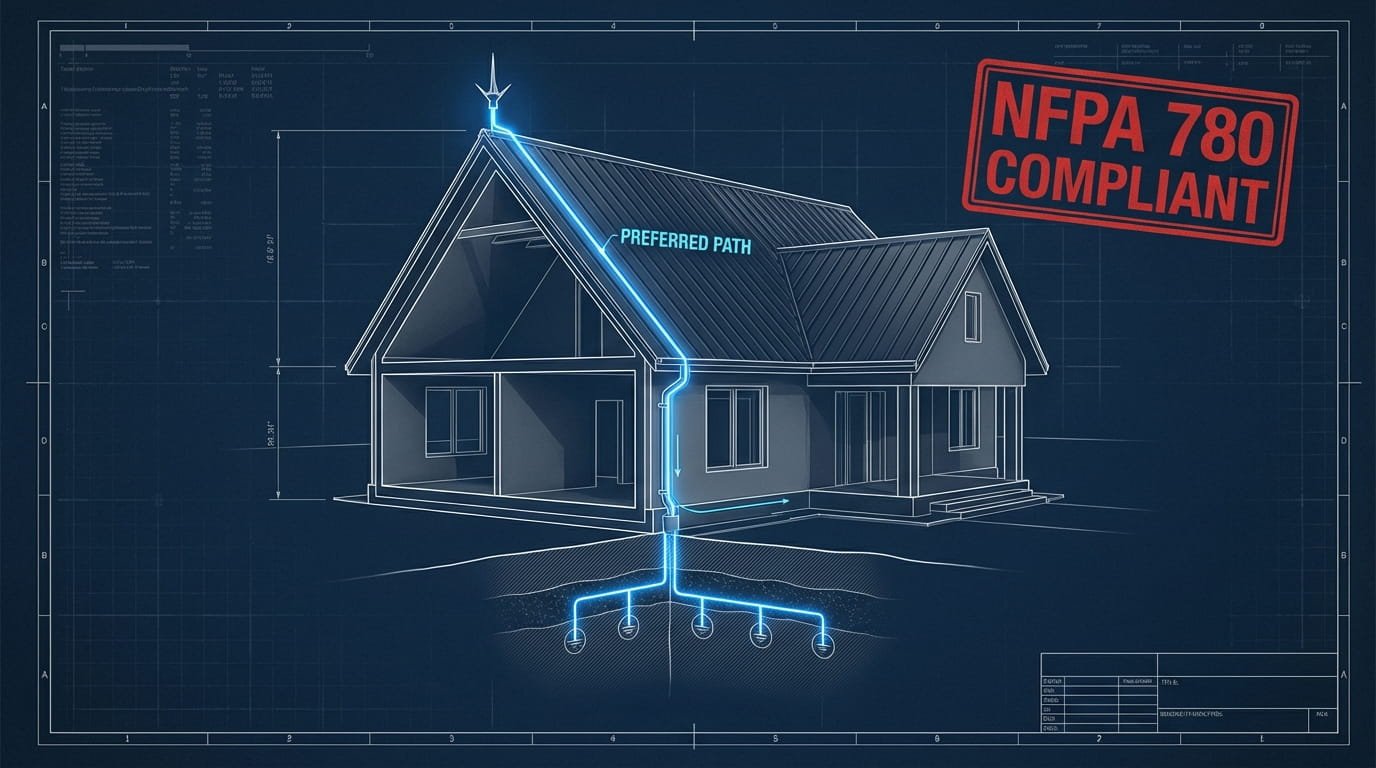
Grounding is not automatically required by building code for every metal roof installation. However, it is strongly recommended in storm-prone and lightning-prone regions, and in certain jurisdictions and building types it may be required by local ordinance or insurance requirement.
The governing standard for lightning protection system installation in the United States is NFPA 780 the Standard for the Installation of Lightning Protection Systems, published by the National Fire Protection Association. A complete lightning protection system as defined by NFPA 780 consists of air terminals (lightning rods) mounted at the roof’s high points, a network of conductors that carry electrical energy from the air terminals down the exterior of the structure, and grounding electrodes buried in the earth that dissipate the energy safely.
This system works by providing a preferred, controlled conduction path for lightning energy routing it around the structure and into the earth rather than through it. Properly installed, it dramatically reduces the risk of fire, structural damage, and electrical system damage from a direct strike.
Two critical points about grounding metal roofs deserve emphasis. First, improper grounding increases risk rather than reducing it. A partial or incorrectly installed grounding system can create unpredictable current paths that cause more damage than no system at all. Professional installation by a licensed lightning protection specialist is not optional, it is essential. Second, metal compatibility matters. Aluminum lightning protection components must be used with metal roofing.
Copper components must never contact metal roofing panels directly, as the dissimilar metals trigger galvanic corrosion that deteriorates both materials over time. You can learn more about how metal roofing systems are properly assembled in our metal roof ventilation guide and metal roof insulation overview.
Ongoing maintenance of grounding systems is also required. Connections corrode, conductors can be damaged by weather or landscaping activity, and grounding electrodes can lose effectiveness in very dry soil conditions. Annual inspection by a qualified professional maintains the system’s electrical continuity and protective performance.
How to Protect a Metal Roof From Lightning
Step 1: Start with proper installation. The foundation of any lightning-safe metal roof is correct installation, proper fasteners, appropriate panel overlap, and quality underlayment that protects the roof deck if any moisture or energy infiltration occurs. Shortcuts in installation create vulnerabilities that compound under storm conditions. Our guide on overlapping metal roofing covers the installation standards that matter.
Step 2: Consult a licensed lightning protection specialist. If your home is in a storm-prone region, on elevated terrain, or is taller than surrounding structures, a consultation with a specialist certified by the Lightning Protection Institute is worthwhile. They will assess your specific exposure and recommend an appropriately specified system.
Step 3: Install a complete lightning protection system. This means air terminals at the roof’s high points, conductive cables running down the exterior, and properly installed grounding electrodes. Partial systems provide partial protection at best and can create new risk points at worst.
Step 4: Use clamp-based attachment hardware. Lightning protection attachments for metal roofs should secure to the panel profiles using clamps rather than penetrating fasteners. Penetrations compromise the roof’s weather barrier and can void the manufacturer’s warranty. Clamp-based systems are fully compatible with all major standing-seam and exposed-fastener metal roof profiles. 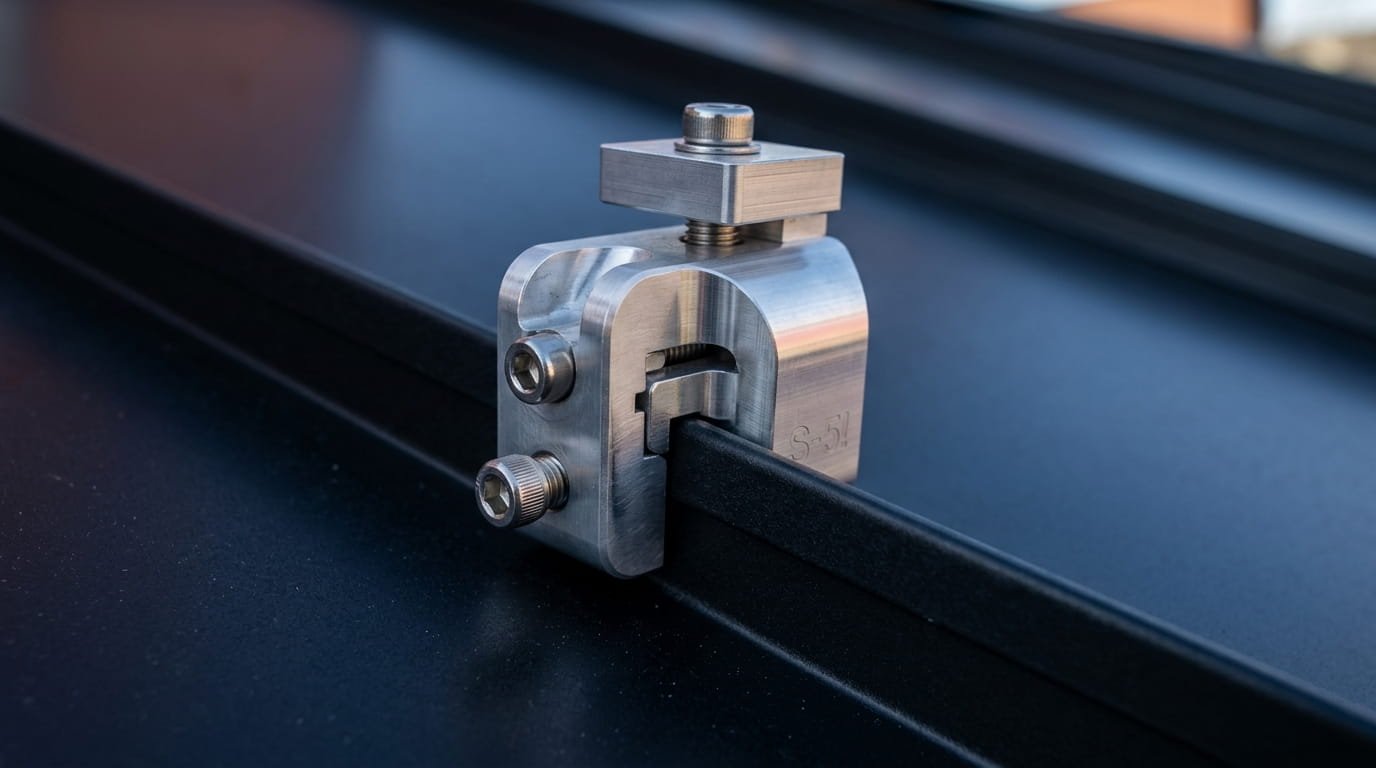
Step 5: Schedule regular inspections. Lightning protection systems require periodic inspection to verify connection integrity, conductor condition, and the effectiveness of the grounding electrode. Annual inspection is the standard recommendation, with additional checks following any significant storm activity. A professional roofing inspection can incorporate a review of the system’s visible components.
According to the Lightning Protection Institute, a properly installed lightning protection system provides a reliable and effective means of protecting structures from the destructive effects of lightning — a standard validated by decades of field performance data.
The National Fire Protection Association’s NFPA 780, which governs lightning protection system installation standards in the United States, provides the technical framework that licensed installers follow to ensure systems are correctly designed and grounded.
Common Myths About Metal Roofs and Lightning Busted
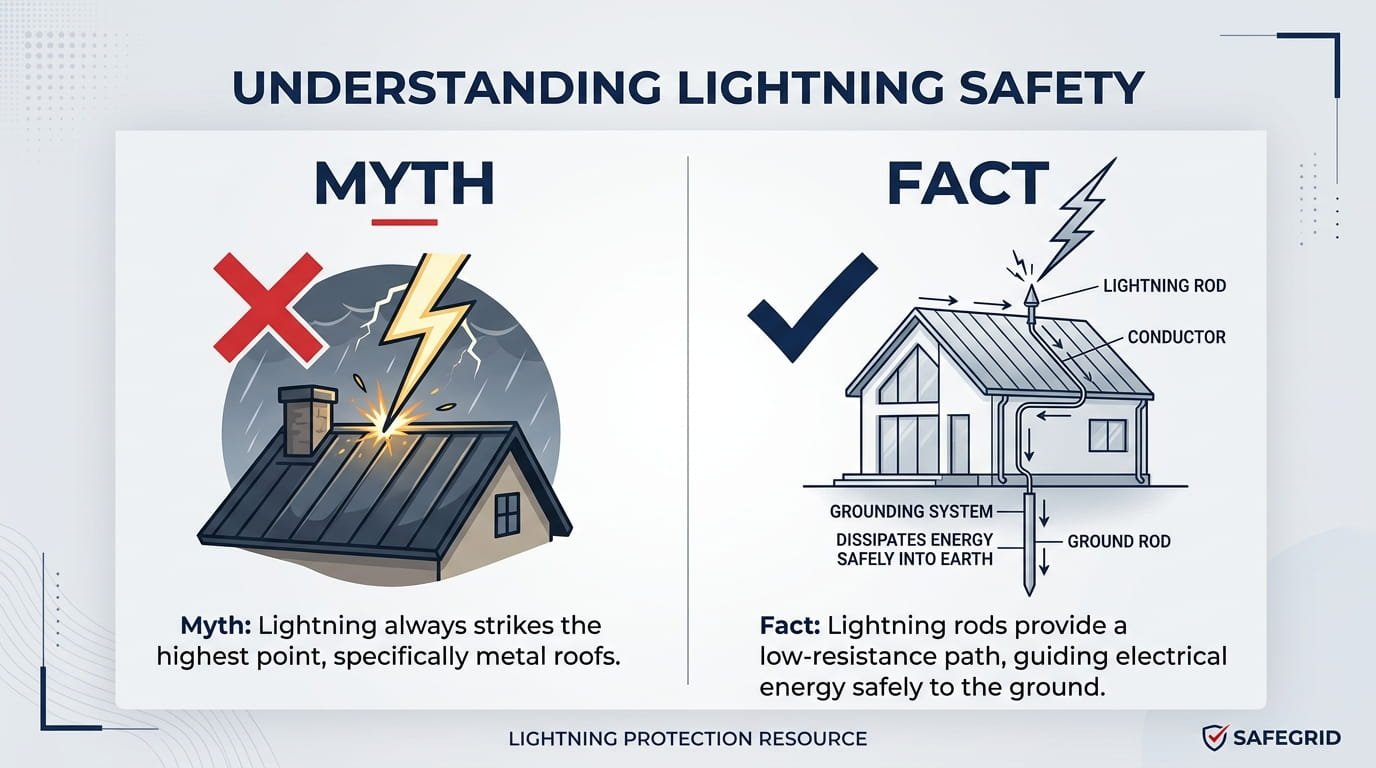
Myth 1: Metal roofs attract lightning.
Fact: Lightning is attracted to height, isolation, and topography — not roofing material. The Metal Construction Association and electrical physics both confirm that roofing material plays no role in strike probability. A tall asphalt-shingled home is far more likely to be struck than a low-profile home with a metal roof.
Myth 2: Conductivity makes metal roofs dangerous.
Fact: Conductivity is actually an advantage during a lightning strike. It allows the electrical energy to spread across a wide surface area rather than concentrate at a single point. Concentration of heat causes ignition — conductivity prevents it. Metal’s electrical properties work in your favor, not against you.
Myth 3: Lightning rods attract lightning.
Fact: Lightning rods do not invite strikes. They provide a controlled, preferred conduction path so that if a strike occurs near the structure, the energy travels along the protection system and into the earth safely rather than finding its own destructive path through the building.
Myth 4: Metal roofs are unsafe during storms.
Fact: Metal roofs are among the safest available options during severe weather. They are non-combustible, rated Class A for fire resistance, rated Class 4 for impact resistance, and engineered to withstand hurricane-force winds. Our guide on tips to protect your roof during a hurricane covers storm preparation in detail.
Myth 5: Grounding is optional for metal roofs.
Fact: While not universally required by code for every installation, grounding is strongly recommended in any storm-prone or lightning-active region and is essential for a complete, functional lightning protection system. Optional in code terms does not mean optional in practical safety terms.
Myth 6: Metal roofs make homes noisier in storms.
Fact: A properly installed metal roof over solid decking with quality underlayment produces minimal additional noise compared to asphalt shingles in rain and storms. The noise difference is negligible with correct installation, a point worth noting for homeowners who’ve heard this concern repeatedly. You might also find it interesting to check whether metal roofs affect cell service, another common myth worth examining.
Additional Benefits of Metal Roofing in Severe Weather
Lightning protection is only one dimension of metal roofing’s performance in severe weather. The material delivers advantages across every major weather threat a home faces.
Wind resistance is among the most significant. Properly installed metal roofing systems are engineered to withstand hurricane-force winds, with many products tested and rated for wind speeds exceeding 140 miles per hour. The interlocking panel profiles and concealed or correctly spaced fastener systems distribute uplift loads across the entire roof structure rather than concentrating stress at individual points.
Hail resistance is exceptional. Metal roofing commonly achieves a Class 4 impact rating, the highest classification available under UL 2218 testing. This rating reflects the panel’s ability to withstand impacts from two-inch-diameter hailstones without cracking, splitting, or losing its weather-shedding integrity. Many insurance carriers offer premium reductions for Class 4 impact-rated roofing products, which can meaningfully offset the higher upfront cost of metal. You can explore whether a roof replacement adds value to your home to understand the full financial picture.
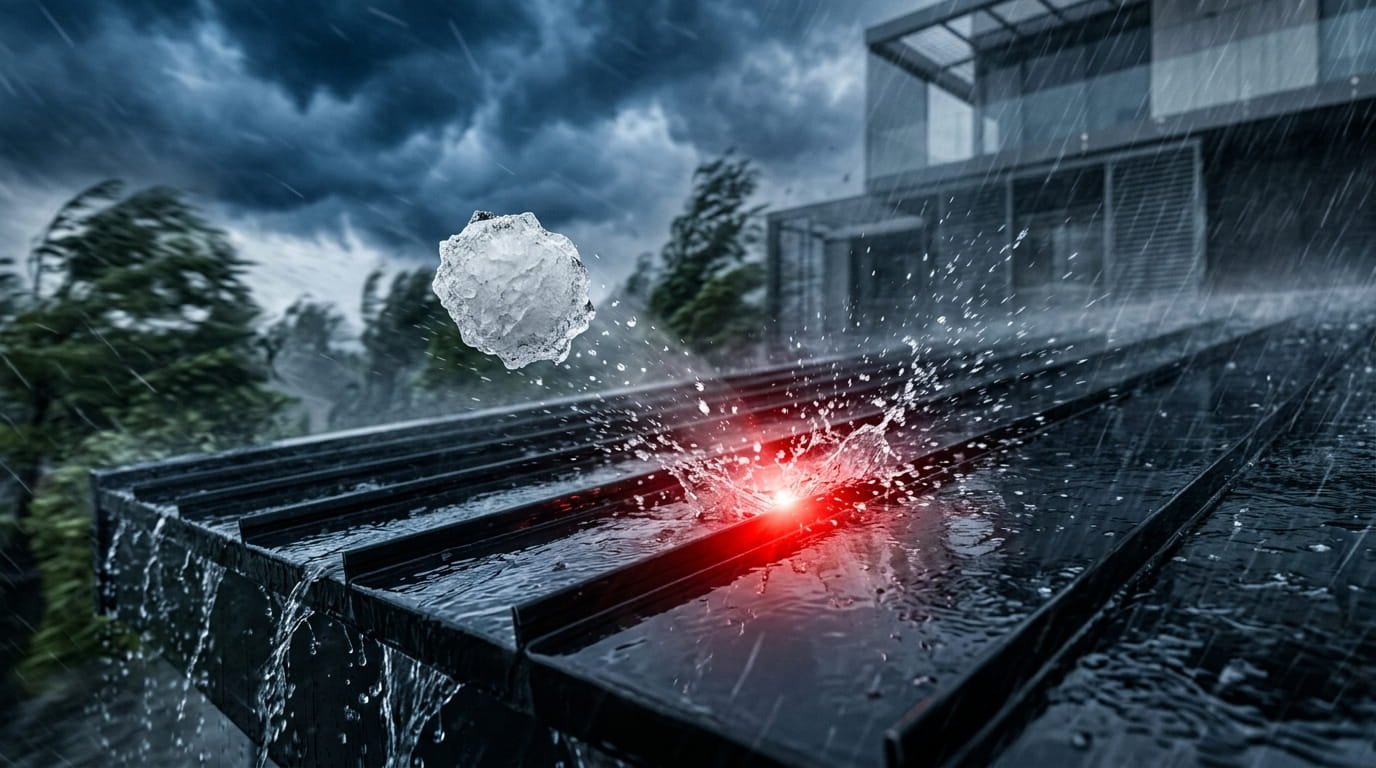
Rain performance benefits from metal’s smooth, non-porous surface, which sheds water efficiently and prevents the pooling and ponding that shortens the life of flat and low-slope roofing systems. Snow and ice performance is similarly strong the non-porous surface handles freeze-thaw cycles without moisture absorption or cracking that degrade other materials, and snow guards can be installed to manage controlled snow release. Our guide on how much snow a roof can hold is a useful resource for homeowners in colder climates.
Conclusion

Metal roofs do not attract lightning. This is settled science, not a matter of debate or industry spin. The electrical physics of lightning attraction are governed entirely by building height, size, topography, and regional storm frequency none of which have any relationship to roofing material. When lightning does strike, a metal roof is among the safest surfaces it can contact: non-combustible, energy-dispersing, and fully compatible with grounding systems that route electrical energy safely into the earth.
If you’re in a storm-prone region and want the most complete protection available, pair a properly installed metal roof with a professionally designed and installed lightning protection system. The combination delivers performance that no other roofing material can match.
Ready to explore metal roofing for your home? Contact EZ Roofing & Builders for a professional consultation and find out which metal roofing system is right for your property, location, and budget.
Frequently Asked Questions
Do metal roofs attract lightning? No. Metal roofs do not attract lightning. Lightning strike probability is determined by building height, size, topography, and geographic location not by roofing material. A home with a metal roof has the same statistical likelihood of being struck as an identical home with any other roofing material.
Does a metal roof need to be grounded? Grounding is not universally required by code for residential metal roofs, but it is strongly recommended in storm-prone and lightning-active regions. A complete lightning protection system installed in accordance with NFPA 780 by a licensed professional provides the most reliable protection.
What is the best roof material for lightning protection? Metal roofing is the best overall choice. It is non-combustible with a Class A fire rating, safely conducts electrical energy, and is fully compatible with complete lightning protection and grounding systems. It outperforms asphalt, wood, and tile roofing on every relevant measure in lightning-prone conditions.
What happens when lightning strikes a metal roof? The metal surface spreads the electrical energy across a wide area rather than concentrating it. Because metal is non-combustible, no fire ignition occurs from the strike itself. A properly grounded metal roof safely channels energy into the earth. The roof structure and home interior are protected far more effectively than with combustible roofing materials.
How do I protect my metal roof from lightning? Ensure proper installation with appropriate fasteners and overlap; consult a licensed lightning protection specialist in high-risk regions; install a complete NFPA 780-compliant system with air terminals, conductors, and grounding electrodes; use clamp-based attachments that don’t penetrate the roof; and schedule annual inspections of the protection system.
Is a metal roof better in a storm? Yes, across every major storm threat. Metal roofs offer Class A fire resistance, Class 4 impact resistance, high wind uplift ratings, and excellent rain and snow performance. They are among the most storm-resilient roofing options available for residential construction.
What is the biggest problem with metal roofs? The primary challenge with metal roofing is upfront cost — metal roof installation typically costs more than asphalt shingle installation. However, the significantly longer service life (40 to 70 years versus 15 to 25 for asphalt), lower maintenance requirements, insurance benefits, and performance advantages make the total cost of ownership highly competitive over time. Our roof installation services page covers what to expect from a professional metal roof installation.
What is the 30/30 rule for lightning safety? The 30/30 rule is a personal safety guideline — not a roofing standard. It states that if the time between seeing a lightning flash and hearing the associated thunder is 30 seconds or less, you should immediately seek shelter indoors and remain sheltered until 30 minutes after the last thunder is heard. The rule helps estimate storm proximity: sound travels approximately 1 mile every 5 seconds, so a 30-second gap means lightning is within 6 miles.