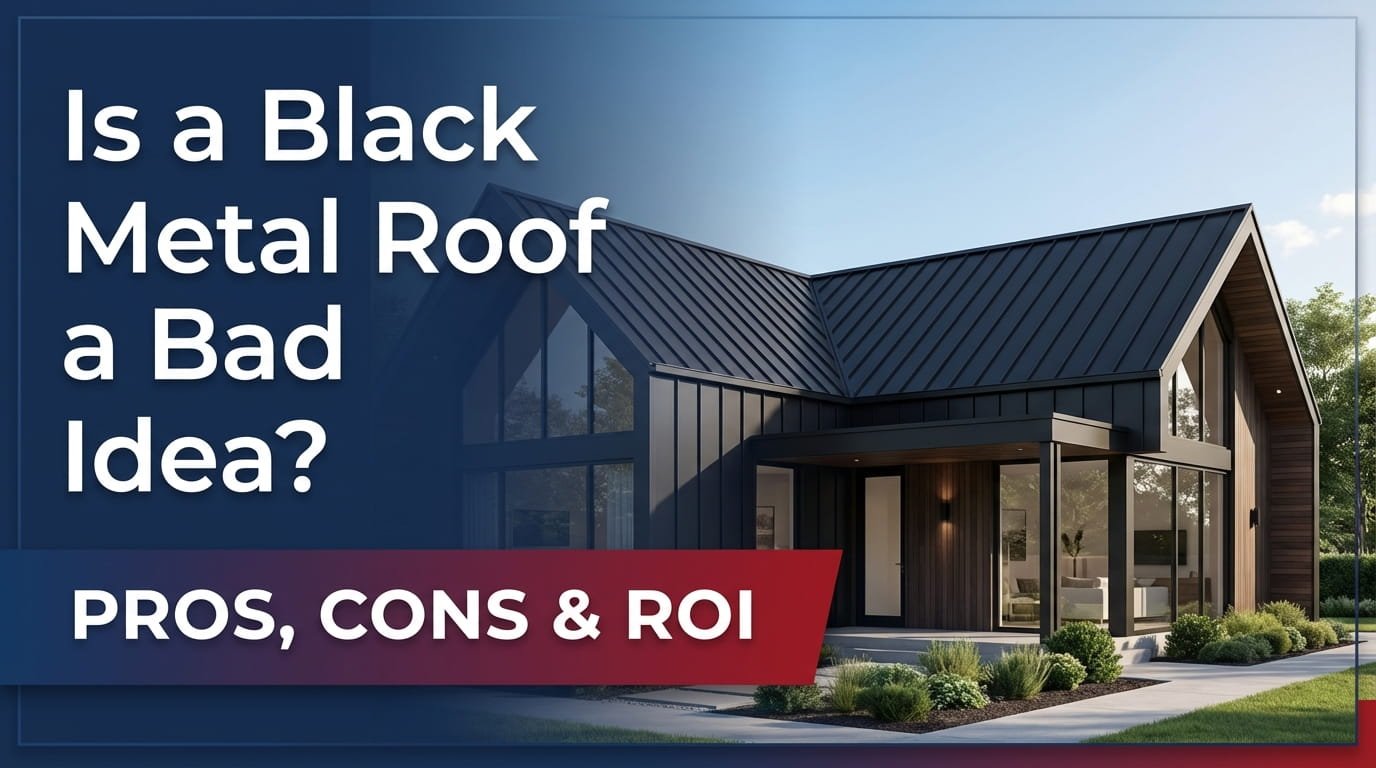
Black metal roofs are showing up everywhere from sleek modern farmhouses to classic Cape Cods across Long Island. It’s one of the most dramatic choices you can make for your home’s exterior, and for good reason: the contrast is striking, the look is timeless, and the material is built to last decades. But with that bold aesthetic comes genuine questions: Will it overheat my home? Will the color fade? Is it worth the cost?
A black metal roof is not a bad idea when it is installed with proper insulation, quality coatings, and correct ventilation. The vast majority of concerns homeowners have heat, noise, and fading are solvable problems, not dealbreakers.
This article gives you honest, evidence-based answers without sales hype. By the end, you’ll know exactly whether a black metal roof is the right move for your home and what to watch out for if it is.
What Is a Black Metal Roof?
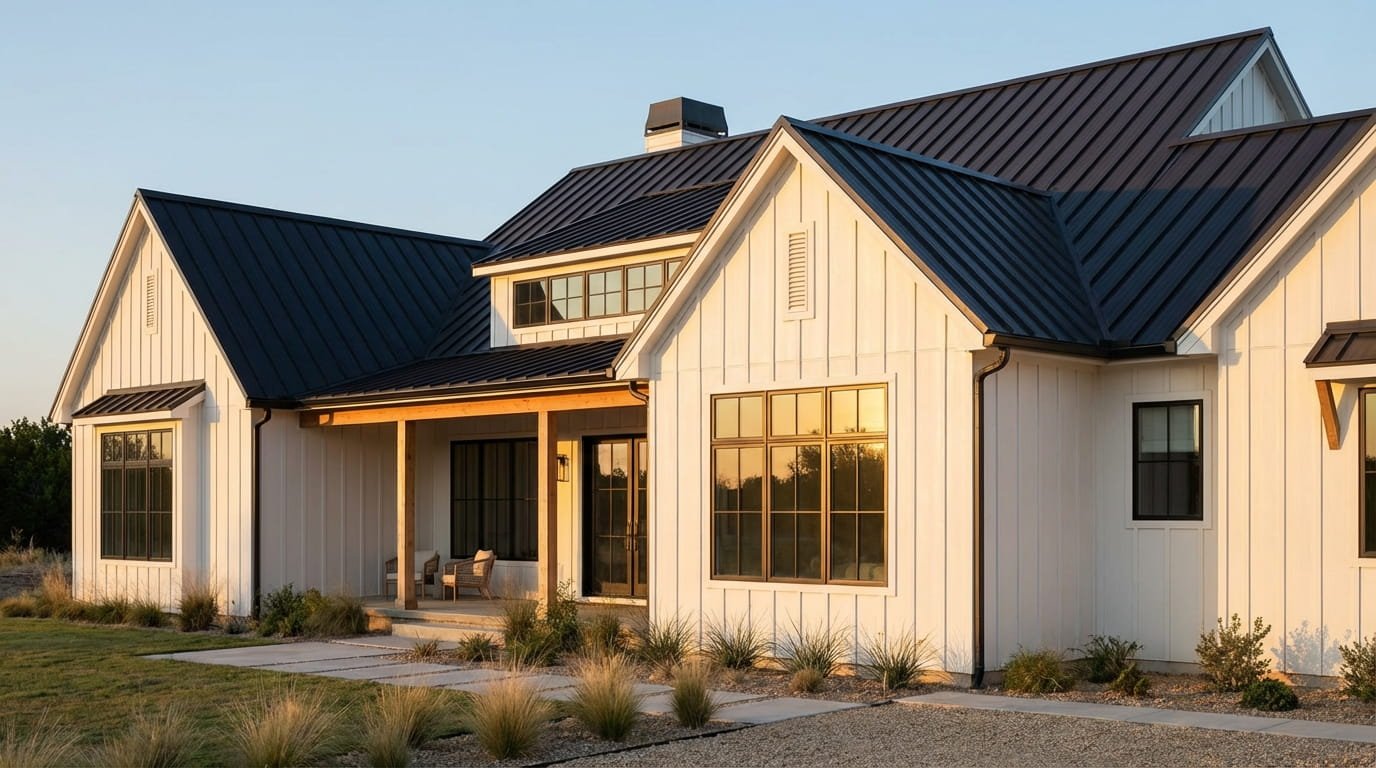
A black metal roof is exactly what it sounds like: a metal roofing system finished in black or near-black tones. But that simple description covers a wide range of materials, profiles, and coating technologies and the differences matter for performance and longevity.
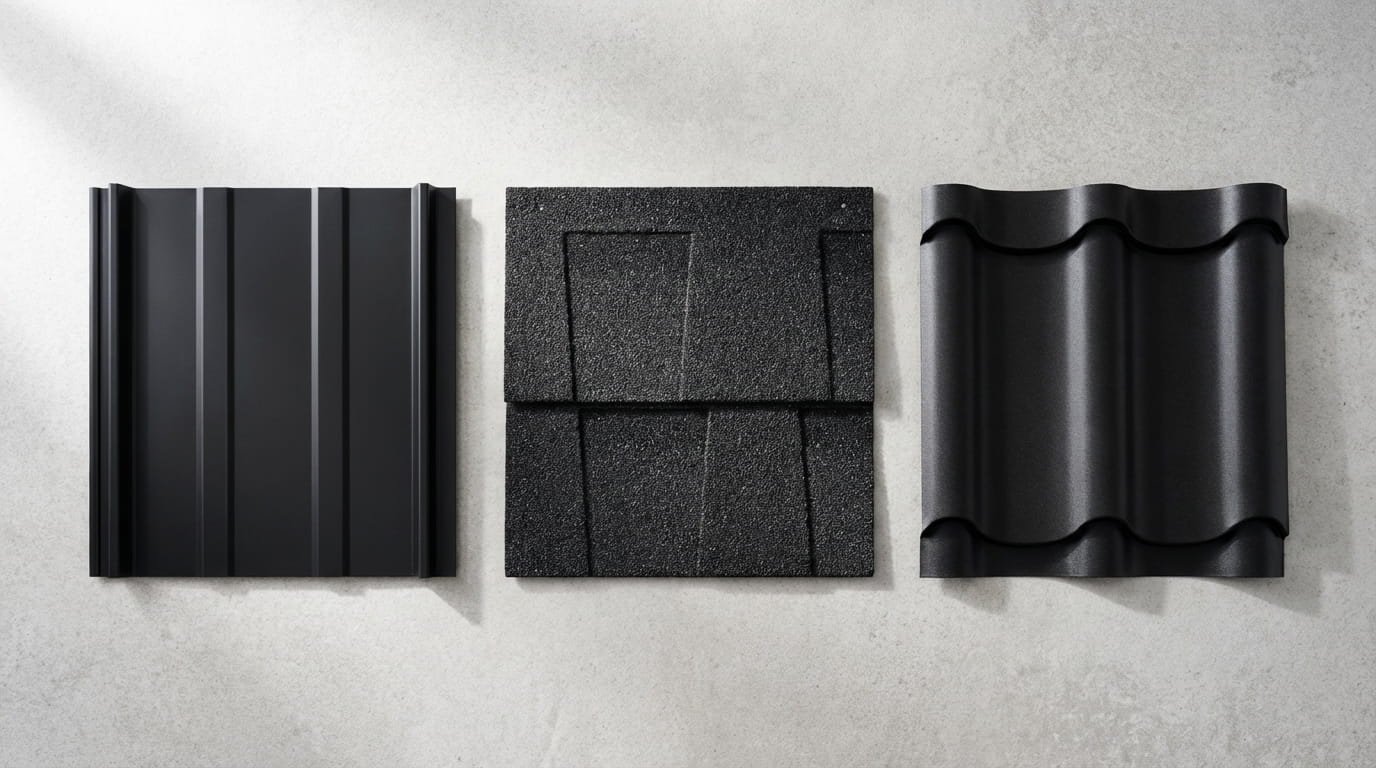
Common materials include galvanized or Galvalume steel (the most widely used), aluminum (lighter and naturally rust-resistant), and stone-coated metal, which adds a layer of acrylic resin bonded with stone granules over a steel core. Each material has its own weight, cost, and durability profile.
Profile styles range significantly. Standing seam panels offer a clean, architectural look with concealed fasteners. Shingle-style and shake-style metal panels mimic the appearance of traditional asphalt or wood roofing. Tile-style profiles echo Mediterranean or Spanish aesthetics. If you have a traditional home, a shingle or shake profile often integrates more naturally than an exposed standing seam.
On color and coating, there is an important distinction between naturally dark steel and painted or coated black metal. Painted panels, particularly those using PVDF (polyvinylidene fluoride) technology, are the standard for premium black metal roofing today. PVDF coatings hold color significantly longer than standard polyester finishes and include infrared-reflective pigments that actively push back solar heat. This distinction is central to the heat debate we will address later.
Black Metal Roof Pros
Let’s cover the genuine advantages and why each one matters for a Long Island homeowner specifically.
1. Exceptional Durability and Lifespan
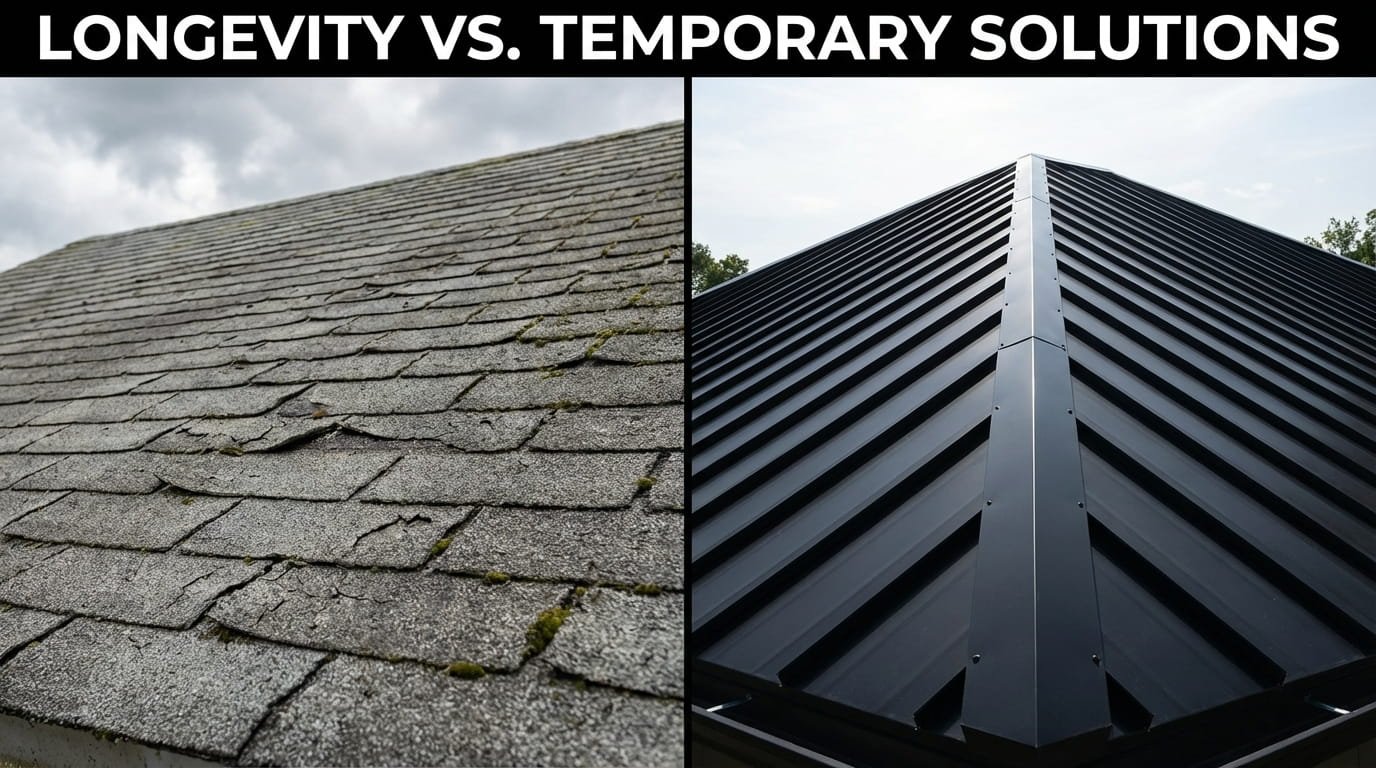
Quality metal roofing systems routinely last 40 to 70 years. Compare that to asphalt shingles, which typically need replacement after just 15 to 25 years. A black metal roof is resistant to wind, hail, moisture, mold, rot, and pest damage. Unlike asphalt, it does not crack or absorb water over time, two failure modes that significantly shorten the lifespan of traditional roofing. For Long Island homeowners dealing with nor’easters and coastal humidity, that resilience is not a minor advantage.
2. Aesthetic Versatility Across Home Styles
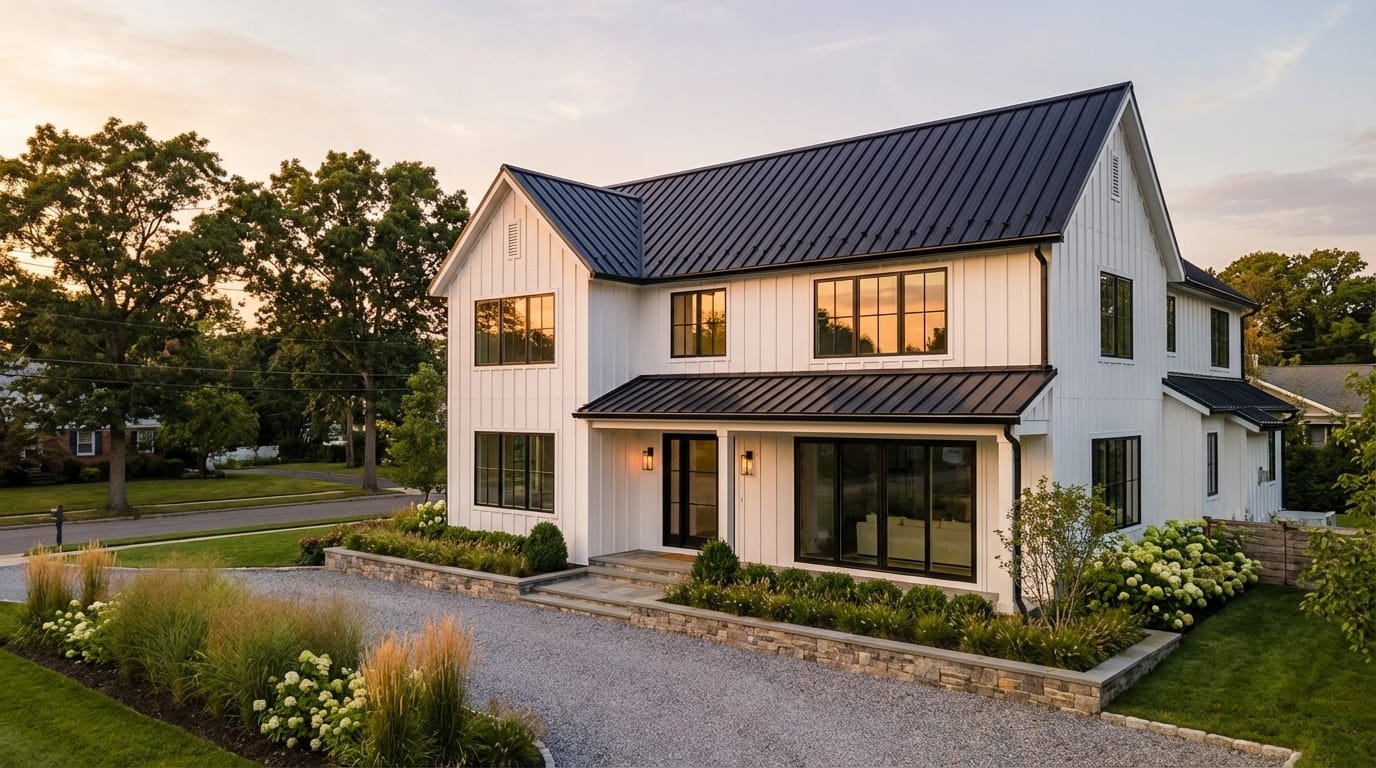
Black is one of the most versatile neutrals in exterior design. It works confidently on modern and contemporary homes, pairs beautifully with the board-and-batten siding of a farmhouse, complements the clean lines of craftsman architecture, and holds its own on Victorian or transitional styles. A matte black finish reduces glare, hides minor surface imperfections, and creates a grounded, sophisticated palette that coordinates with virtually any siding color white, gray, navy, warm beige, or even cedar tones.
3. Energy Efficiency and Heat Reflection
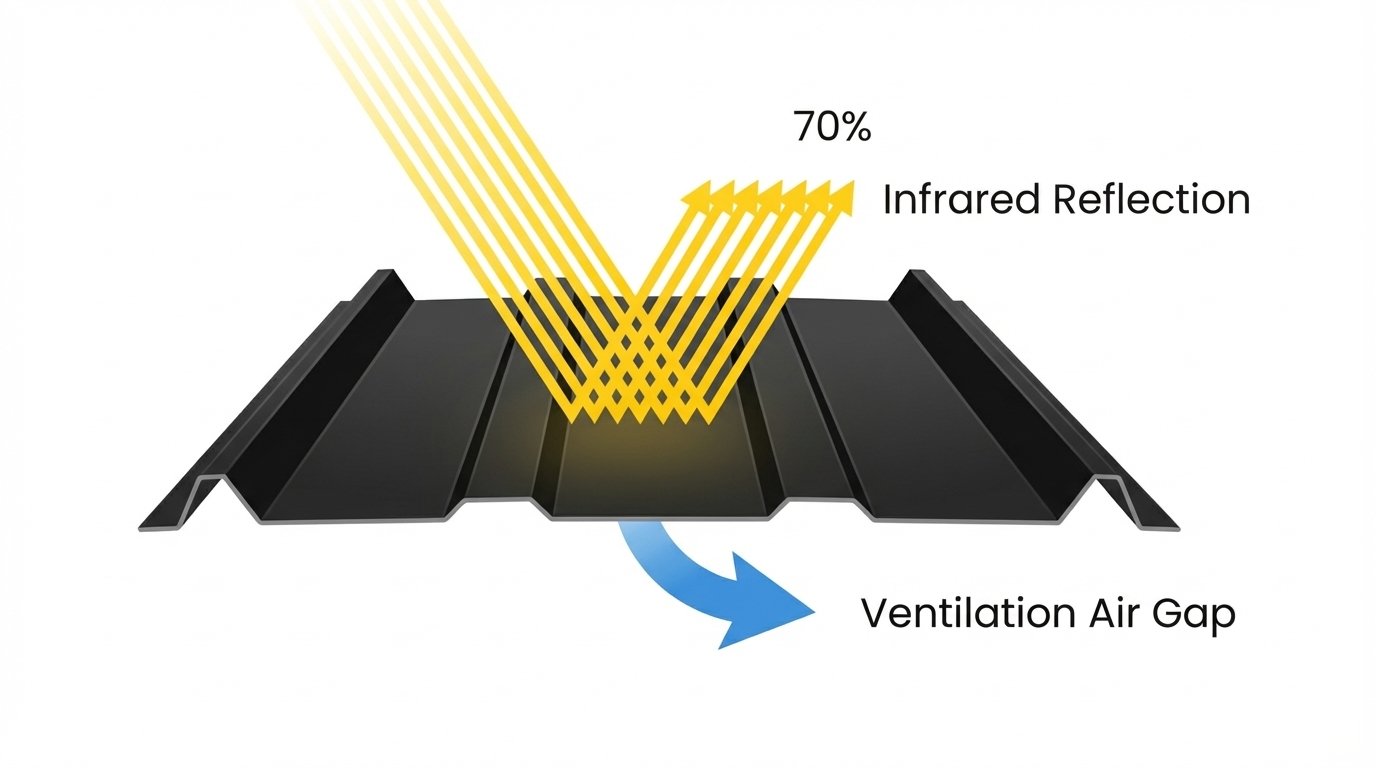
This is the one that surprises most homeowners. Metal roofing with proper coatings can reflect up to 70% of solar energy not because it’s light-colored, but because modern cool roof coatings use infrared-reflective pigments that redirect heat regardless of surface color. Stone-coated metal goes further: it re-emits up to 90% of the solar radiation it absorbs. For context, an asphalt shingle roof can reach surface temperatures of 140°F or higher on a Long Island summer afternoon.
A properly coated black metal roof stays significantly cooler than that and when installed over battens rather than directly on the deck, the air gap underneath provides natural ventilation that further reduces heat transfer into your home. We discuss metal roof insulation and metal roof ventilation in dedicated guides if you want to go deeper.
4. Class A Fire Rating and Safety
Metal is non-combustible and earns the highest possible fire resistance classification: Class A. This is especially relevant in areas where wildfires or brush fires are a risk, since a metal roof resists airborne embers far better than asphalt or wood shingles. Beyond safety, a Class A rating can translate to lower homeowner’s insurance premiums, a financial benefit that partially offsets the higher upfront cost of metal roofing.
5. Snow and Ice Performance
For Long Island winters, this pro deserves specific attention. Black absorbs heat from winter sunlight, helping melt snow faster than lighter roofing materials. When paired with proper attic ventilation, this reduces the risk of ice dam formation, a common and damaging issue in the Northeast. If you want to understand how much load your roof can handle before that snow melts, our guide on how much snow a roof can hold is a useful reference.
6. Solar Panel Compatibility
If solar panels are on your horizon and for many Long Island homeowners, they should be, a metal roof is the ideal foundation. Metal roofing lasts 40 to 70 years, while solar panels typically have a lifespan of 25 to 30 years. That alignment means you won’t need to remove and reinstall panels mid-roof lifecycle, which is a real cost many asphalt roof owners face. Metal also has the structural capacity to handle 20 or more panels comfortably. Aesthetically, black metal and black solar panels create a unified, intentional appearance. You can learn more about solar roofing options on our services page.
7. Eco-Friendly and Sustainable
Metal roofing is often manufactured with significant recycled content, sometimes 25-95%, depending on the product. More importantly, it is 100% recyclable at the end of its lifespan, meaning it doesn’t contribute to landfill waste the way asphalt shingles do. Fewer replacement cycles over 60 years also mean fewer manufacturing runs, fewer haul-away trips, and a smaller overall environmental footprint.
Black Metal Roof Cons
No roofing material is perfect. Here is an honest look at the real disadvantages of black metal roofing and what you can do to mitigate each one.
1. Higher Upfront Cost
In the New York market, installed metal roofing typically ranges from $6 to $12 per square foot, compared to $3 to $5 per square foot for asphalt shingles. On a 2,000-square-foot home, that gap can cost $6,000 to $14,000 in additional upfront spend. However, the lifecycle cost comparison shifts dramatically when you factor in that asphalt roofs need full replacement every 15 to 25 years, including labor and disposal costs each time. Over 40 years, a quality metal roof often costs less in total than two or three rounds of asphalt replacement. For a detailed breakdown, see our guide to roof replacement costs on Long Island. You can also explore financing options to manage the initial investment.
2. Heat Absorption Without Proper Insulation
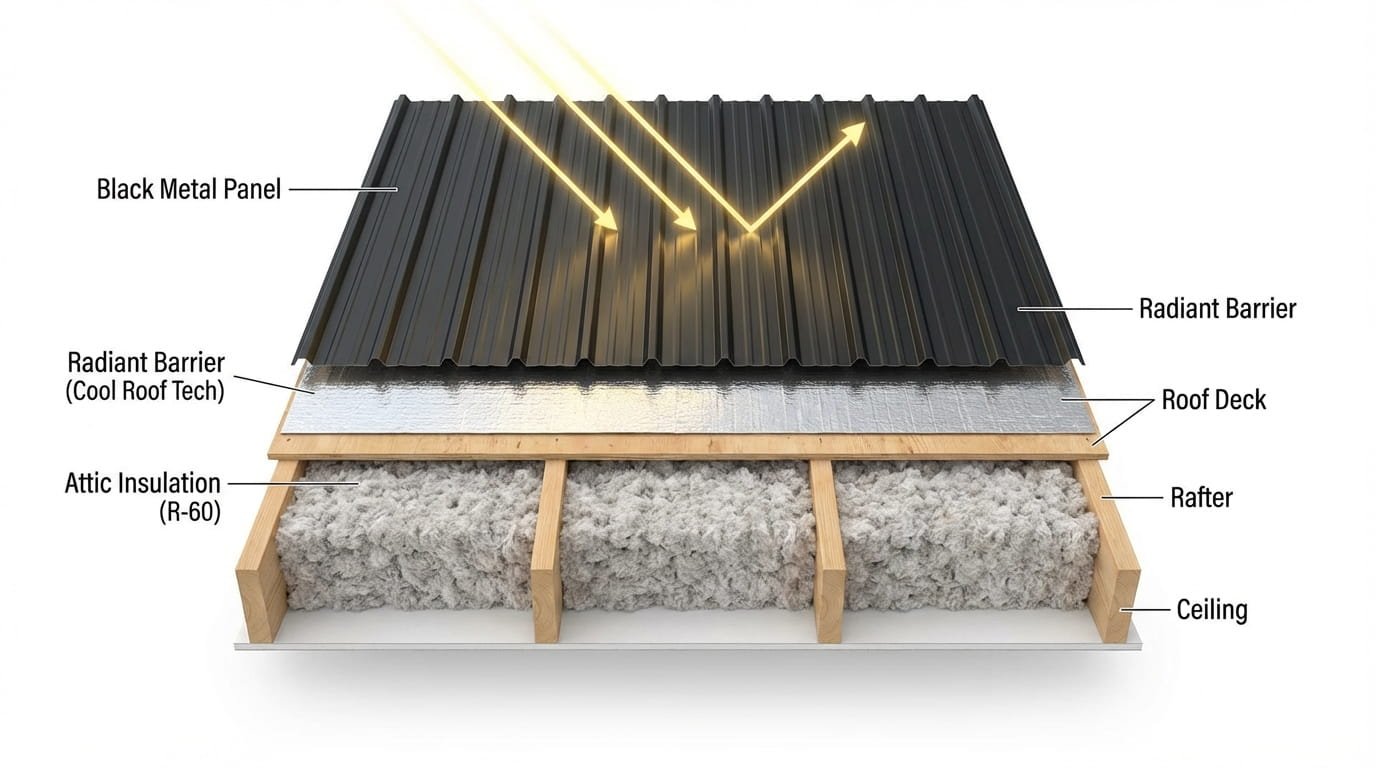
This needs an honest answer: black does absorb more heat than lighter colors, even with reflective coatings. The coating reduces but does not eliminate that effect. Without adequate insulation and proper attic ventilation, a black metal roof can increase summer cooling costs. The solution is straightforward: invest in radiant barriers, ensure your attic has proper airflow, and use a high-quality underlayment. These are not optional add-ons; they are the core of any responsible black metal roof installation.
3. Color Fading and Coating Limitations
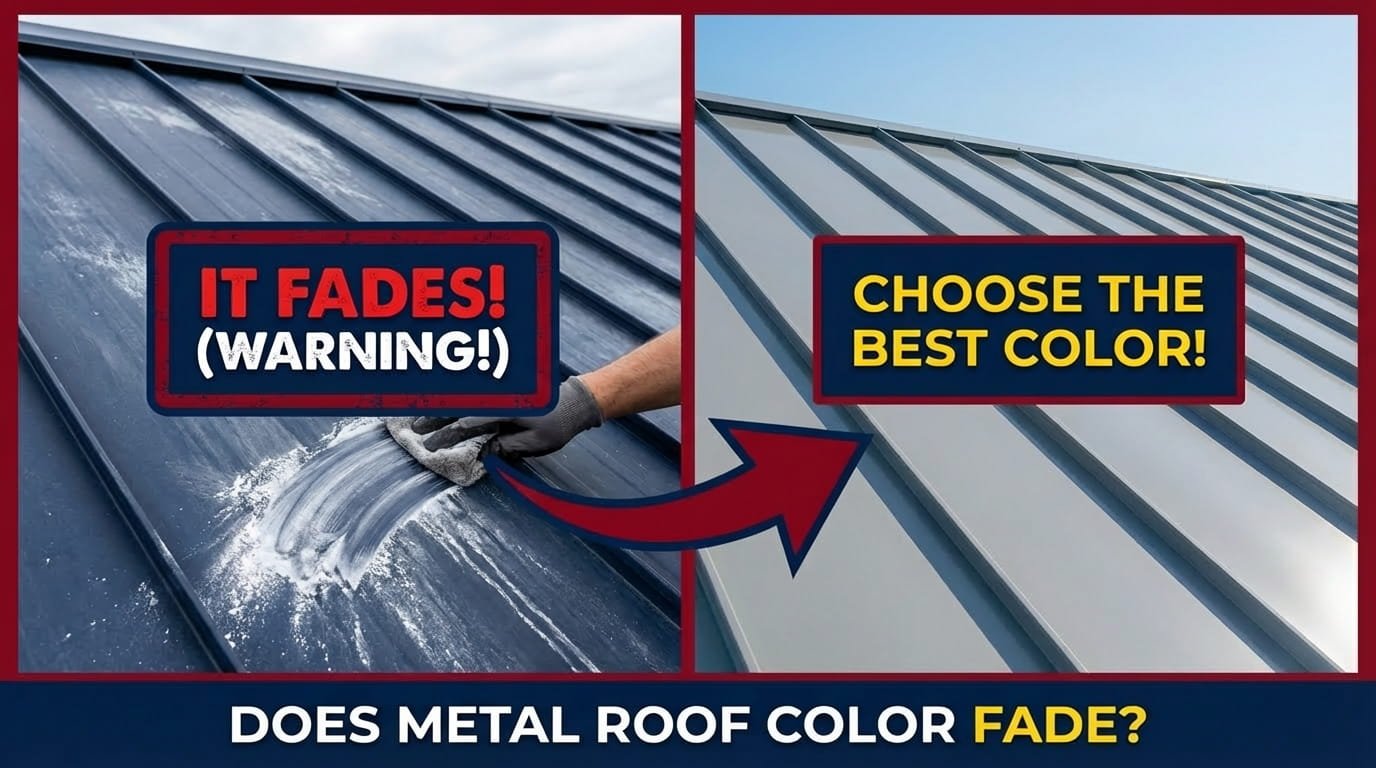
UV exposure causes gradual color fading on any painted surface, and black is particularly unforgiving when fading becomes uneven. Matte black finishes typically carry a 10-year chalk-and-fade warranty significantly shorter than the 30-year warranties available for lighter colors with the same PVDF coating. Polyester-based finishes fade faster and lose adhesion more readily than PVDF coatings. This is worth understanding before you buy: metal roof color fading is a real phenomenon, and coating quality is the primary variable that determines how quickly it happens. Choose PVDF upfront to reduce long-term fading risk significantly.
4. Noise During Rain and Hail
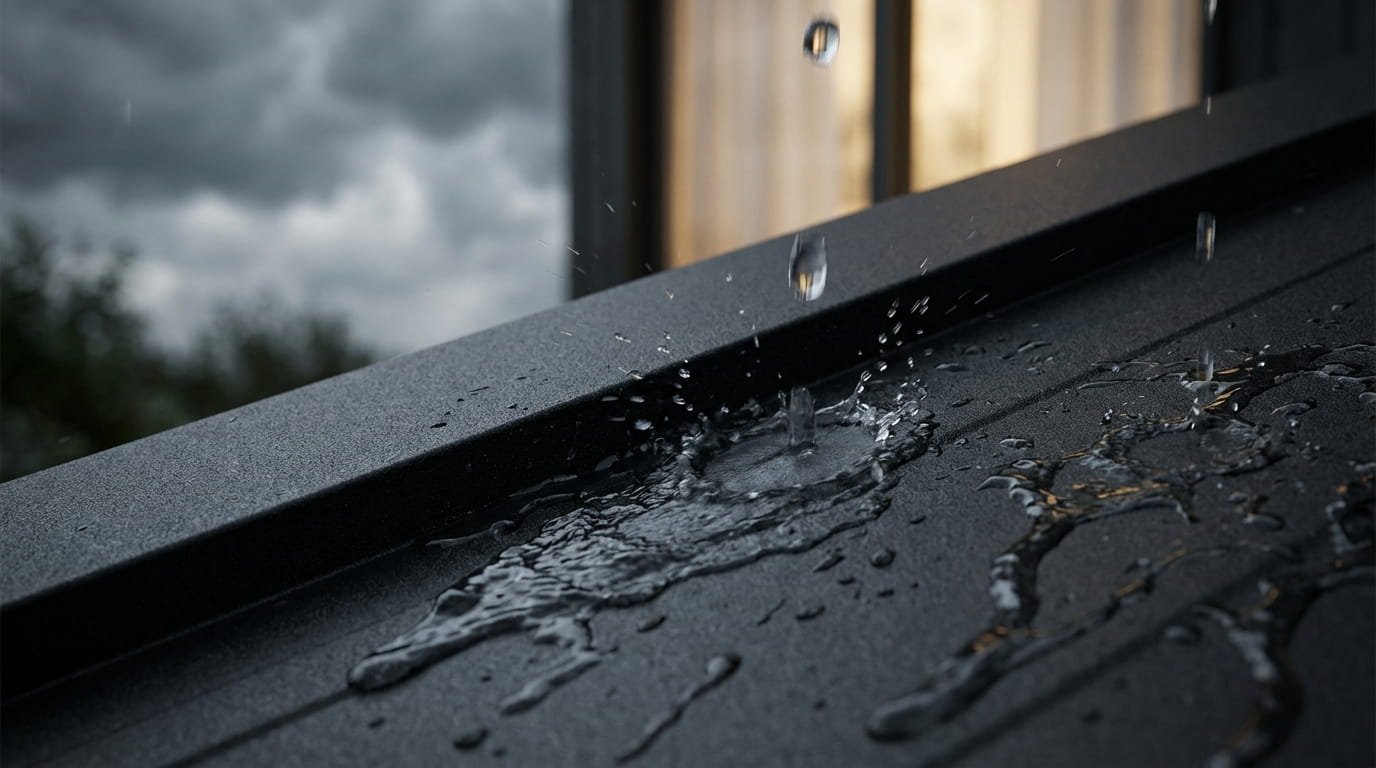
Metal amplifies the sound of rain and hail. This is true, and it’s worth acknowledging. On an open framing structure like a barn or pergola, that noise can be pronounced. In a residential home with solid sheathing, insulation, and a proper underlayment system, the difference compared to asphalt shingles is minimal. Most homeowners who install metal roofing on a well-built home report that rain noise is not a meaningful issue in daily life.
5. Dents and Scratch Vulnerability
Softer-gauge metals can dent from large hail impacts. Panel gauge the thickness of the metal matters significantly here. Thicker panels with lower gauge numbers offer better hail resistance. Stone-coated metal panels are specifically rated to resist hailstones up to 2.5 inches in diameter, making them a strong choice in hail-prone areas. If roof damage assessment after a storm is a concern, choosing the right gauge at installation is the best insurance.
6. Color Matching Challenges
Different paint production runs can show slight color variation, and black amplifies any inconsistency. If you need to replace a panel several years after installation, matching the exact shade of a weathered black roof is genuinely difficult. Similarly, black trim and a black roof from different manufacturers may appear visibly different even at the same stated color code. Matte and glossy finishes read as different blacks even in natural light. The practical solution: order all components from the same manufacturer, same production run, at the same time.
Black Metal Roof and Heat, Myth vs. Reality
Black metal roofs are not a bad idea because of heat, not when the right coatings and insulation are in place. This is the single most misunderstood aspect of black metal roofing, and it’s worth addressing directly.
Myth: A black roof absorbs heat like a black car on a summer day, turning your attic into an oven and sending your cooling bills through the roof. Reality: A rising surface temperature does not necessarily mean indoor temperatures rise proportionally. Modern cool roof coatings with infrared-reflective pigments redirect heat at the surface level before it transfers inward.
Myth: Metal roofs store heat all day and radiate it into the home through the evening. Reality: Metal cools extremely rapidly after sunset. Asphalt shingles actually store and radiate heat longer into the evening than metal does the opposite of what most people assume.
Myth: The roof color is the primary driver of indoor temperature. Reality: Insulation and attic ventilation are the primary drivers of indoor comfort far more than surface color. A well-ventilated black metal roof outperforms a poorly insulated white asphalt roof on every energy metric.
In Long Island’s hot, humid summers, a properly installed black metal roof with quality PVDF coatings, a radiant barrier, and adequate attic ventilation will prevent your home from overheating. The discomfort homeowners experience in poorly performing homes stems from installation shortcuts not from the color itself. See our related article on how heat affects different roofing materials for broader context.
Clear verdict: With correct installation, a black metal roof does not overheat homes.
Is a Black Metal Roof Right for Your Home?
Use this decision framework to evaluate fit for your specific situation.
- Cold or mixed climate (Long Island, Northeast), Strong Fit. Snow shedding, ice dam resistance, and winter heat absorption all work in your favor.
- Hot and humid climate (Florida, Gulf states), Good Fit. Requires PVDF coating, radiant barrier, and a ventilated installation to perform well.
- Modern or farmhouse architecture, Strong Fit. A standing seam profile is the natural aesthetic choice.
- Traditional or colonial architecture, Good Fit. Use a stone-coated shingle profile for seamless visual integration.
- Long-term ownership (10+ years), Strong Fit. ROI improves significantly over time compared to asphalt replacement cycles.
- Short-term ownership (under 5 years), Evaluate Carefully. Upfront cost may not be fully recovered in resale; run your specific numbers.
- Solar panels planned or installed, Ideal Pairing. Lifespans align, and there’s no mid-lifecycle panel removal needed.
- HOA community, Verify First. Some HOAs restrict dark roof colors, confirm bylaws before ordering materials.
A black metal roof is best suited to homeowners who plan to stay in their home for a decade or more, value long-term durability over the lowest possible upfront cost, and want a bold exterior that holds its character for decades. If you’re in Nassau County or Suffolk County, the Northeast climate profile makes this an especially practical choice, the cold-season performance advantages are real and meaningful.
How Much Does a Black Metal Roof Cost in Long Island, NY?
Cost is the most common reason homeowners hesitate, so here are the honest numbers.
- Steel standing seam: $7 to $11 per square foot installed. The most common choice is excellent durability.
- Aluminum standing seam: $9 to $13 per square foot installed. Best for coastal exposure due to natural rust resistance.
- Stone-coated metal: $8 to $12 per square foot installed. Hail-resistant and easier to match traditional home styles.
- Asphalt shingles (comparison): $3 to $5 installed per square foot. Lower upfront cost, but must be replaced every 15 to 25 years.
On Long Island, labor costs are higher than the national average due to the region’s cost of living and roofing labor market. Expect to add $2 to $4 per square foot in labor over inland New York rates. Factors that affect your final price include roof pitch (steeper roofs cost more to work on safely), complexity (such as valleys, skylights, chimneys, and dormers), panel profile selection, and whether you choose a standard polyester or a premium PVDF coating.
Over a 40-year ownership window, consider the true lifecycle cost: two or three asphalt replacements, including removal, disposal, and reinstallation, often exceed the cost of a single metal roof installation. According to Remodeling Magazine’s Cost vs. Value Report, metal roofing consistently delivers strong resale ROI. A high-quality metal roof can increase a home’s resale value by up to 6%. Our dedicated article on whether roof replacement adds home value covers this in more detail.
Conclusion
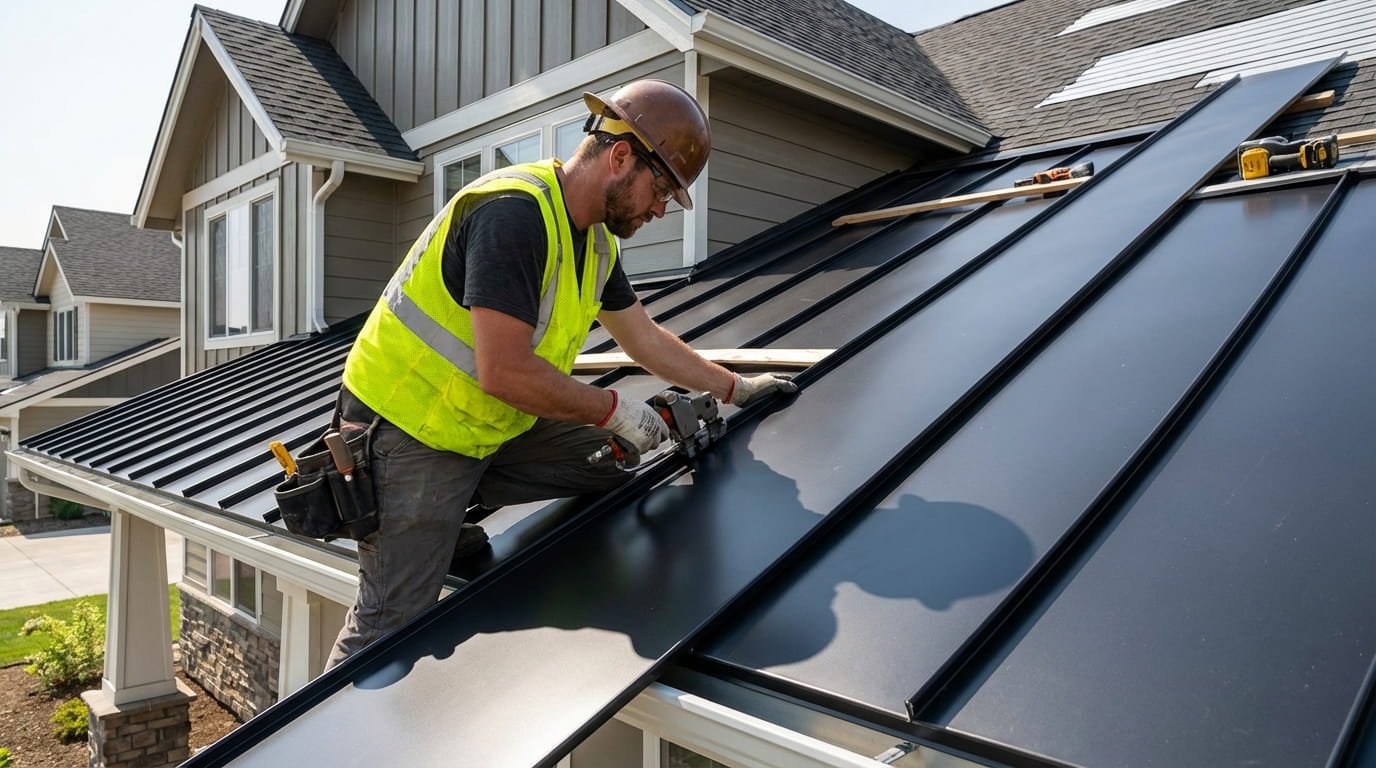
A black metal roof is not a bad idea, it’s a serious, long-term investment that pays off in durability, aesthetics, and lifecycle savings when planned correctly. Coating quality, insulation, proper ventilation, and expert installation are the variables that determine real performance. Get all of them right, and you have a roof that outperforms asphalt in virtually every category for 40 to 70 years.
If you’re ready to get a professional assessment for your home in Nassau or Suffolk County, EZ Roofing & Builders is here to help with transparent pricing, expert installation, and no-pressure guidance.
Get a Free Roof Consultation: https://ezbuildersny.com/contact-us/
Explore our metal roofing services: https://ezbuildersny.com/metal-roofing .
Frequently Asked Questions
Does a black metal roof make my house hotter?
Not when properly installed. Modern cool roof coatings with infrared-reflective pigments redirect solar heat at the surface level. Insulation and attic ventilation are the primary controls for indoor temperature, not roof color. A well-insulated black metal roof will not make your home significantly warmer than a lighter-colored roof with the same insulation system.
How long does a black metal roof last?
A properly installed metal roof lasts 40 to 70 years. Steel standing seam systems typically carry manufacturer warranties of 40 to 50 years. Stone-coated metal systems often carry lifetime warranties. Compare that to asphalt shingles at 15 to 25 years, and the durability advantage is substantial.
What is the best coating for a black metal roof?
PVDF, sold under brand names like Kynar 500 and Hylar 5000, is the industry gold standard for painted metal roofing. It provides superior UV resistance, color retention, and chalk resistance compared to standard polyester finishes. For black specifically, where fading is most visible, PVDF coating is worth the premium. Avoid polyester-based finishes on dark colors whenever possible.
Is a black metal roof energy efficient?
Yes, with the right specifications. Cool roof-rated metal panels reflect up to 70% of solar energy and re-emit a significant portion of the energy they absorb. Stone-coated metal re-emits up to 90% of solar radiation. When installed with proper ventilation and insulation, a black metal roof can meaningfully reduce cooling loads. Batten-mounted installations with an air gap below the panel perform best.
Are black metal roofs louder than shingles?
In a residential home with solid sheathing, underlayment, and insulation, the difference is minimal for most homeowners. Rain and hail noise is more pronounced in uninsulated structures. If noise is a concern, specify a high-density underlayment and ensure solid roof decking beneath the panels. You can read more about OSB roofing decking options for context.