
Flat roofs are one of the most practical roofing options for Long Island homes and commercial buildings, but they demand a different kind of care than a sloped roof. Because water drains more slowly across a low-slope surface, even minor neglect can turn a small crack or blocked drain into a costly repair or full replacement.
This guide covers everything Long Island homeowners need to know: how flat roofs are built, the unique challenges they face in New York’s climate, a complete seasonal maintenance checklist, how to identify and fix the most common problems, and when it is time to call a professional. Whether you have EPDM rubber, TPO, modified bitumen, or a built-up flat roof, these tips apply.
Why Flat Roofs Require More Attention Than Pitched Roofs
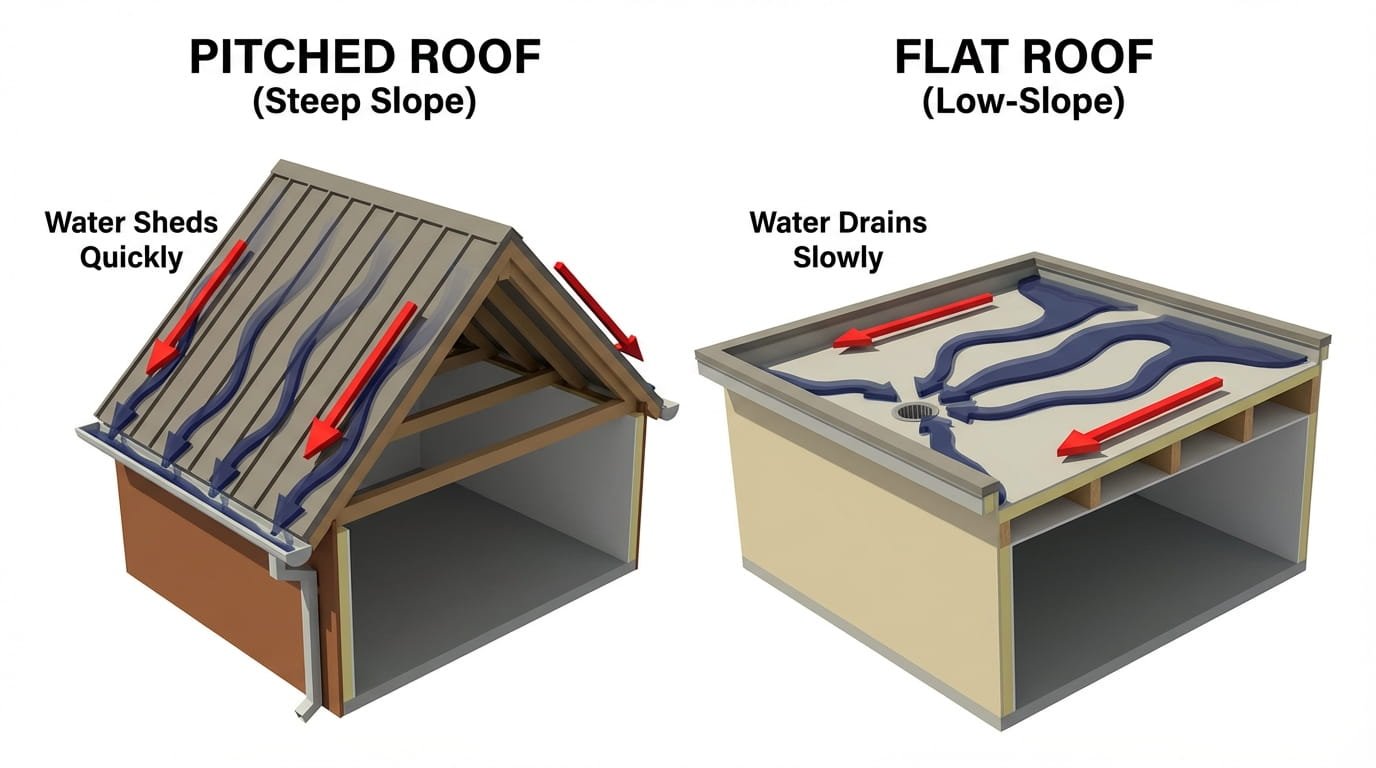
A pitched roof sheds rain and snow by gravity alone. A flat roof, more accurately called a low-slope roof, has a pitch of only 5 to 15 degrees. Water moves slowly across this surface, and if anything interferes with drainage, it pools. That standing water is the single biggest threat to a flat roof system.
On Long Island specifically, flat roofs face a combination of stresses that accelerate wear:
- Freeze-thaw cycles: Water trapped in seams or cracks freezes, expands, and widens those gaps every winter. Over multiple seasons, this opens pathways for serious water infiltration.
- Nor’easters and heavy rain: Intense storm rainfall can overwhelm drainage systems not kept clear, leading to rapid ponding.
- Humid summers: Heat and UV rays degrade membrane materials over time, especially older EPDM and modified bitumen systems.
- Snow load: Heavy snowfall can exceed the design load of some flat roof structures if not cleared promptly.
The good news: flat roofs are entirely manageable with the right maintenance routine. The problems that cause premature failure, ponding water, membrane tears, blocked drains, failed flashing, are almost always preventable with twice-yearly inspections and prompt small repairs.
Know Your Flat Roof Type: Maintenance Needs Vary by Material
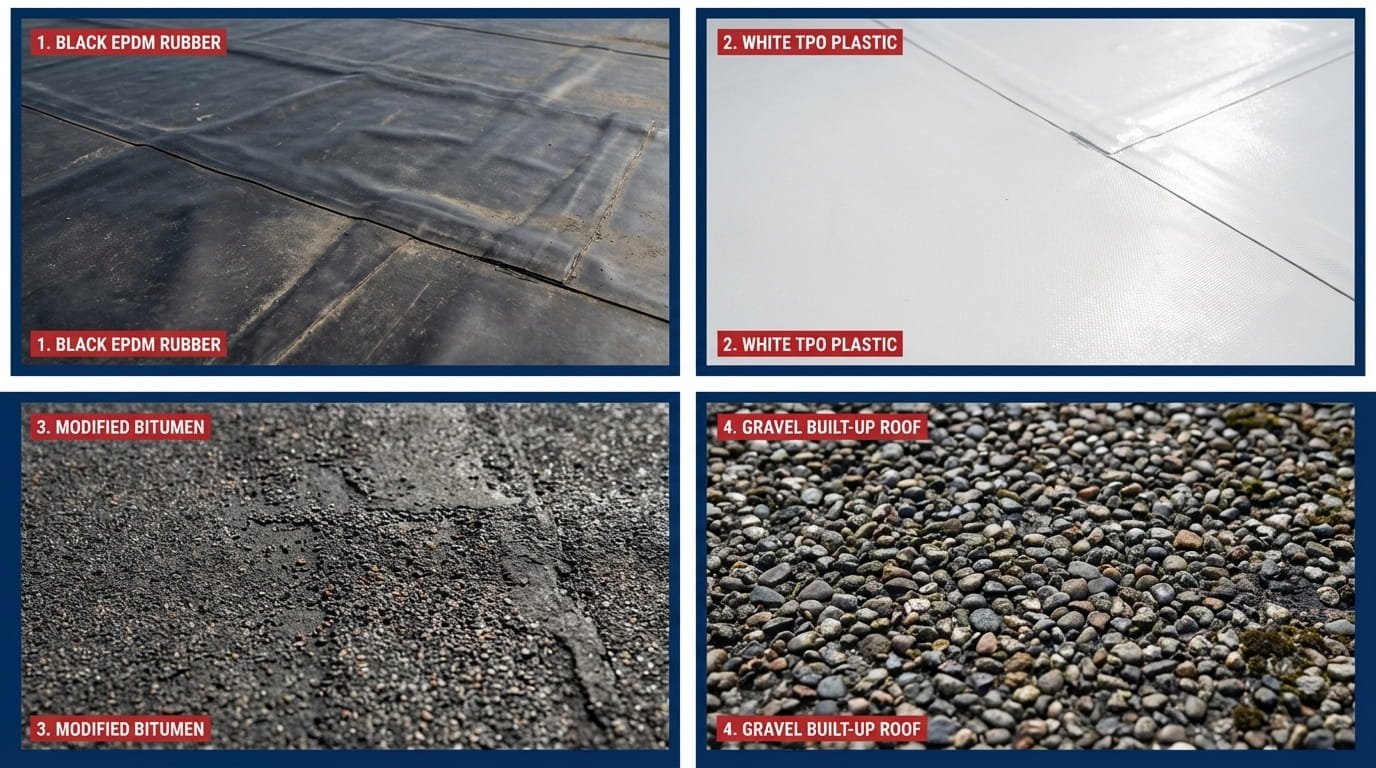
Before you can maintain a flat roof properly, you need to know what it is made of. Different membrane systems have different inspection priorities, compatible repair materials, and expected lifespans. Using the wrong repair product on the wrong membrane type can void warranties and cause additional damage.
| Roof Type | Expected Lifespan | Key Maintenance Focus | Common Failure Point |
|---|---|---|---|
| EPDM (Rubber) | 20 – 30 years | Seam adhesion, puncture checks | Shrinkage pulling at seams and edges |
| TPO | 15 – 25 years | Heat-welded seam integrity | Seam separation in extreme heat |
| Modified Bitumen | 15 – 25 years | Crack and blister inspection | UV degradation causing brittleness |
| Built-Up Roofing (BUR) | 20 – 30 years | Surface aggregate and membrane layers | Alligatoring (surface cracking pattern) |
| PVC | 20 – 30 years | Chemical and puncture resistance | Becoming brittle in cold over time |
If you are unsure what type of flat roof you have, our team can identify it during a professional roofing inspection. Using the right repair materials for your specific membrane is essential for lasting results.
How to Maintain a Flat Roof: 9 Essential Tips
These are not generic tips. Each one is grounded in what actually causes flat roofs to fail prematurely, with specific guidance for the conditions Long Island homeowners face.
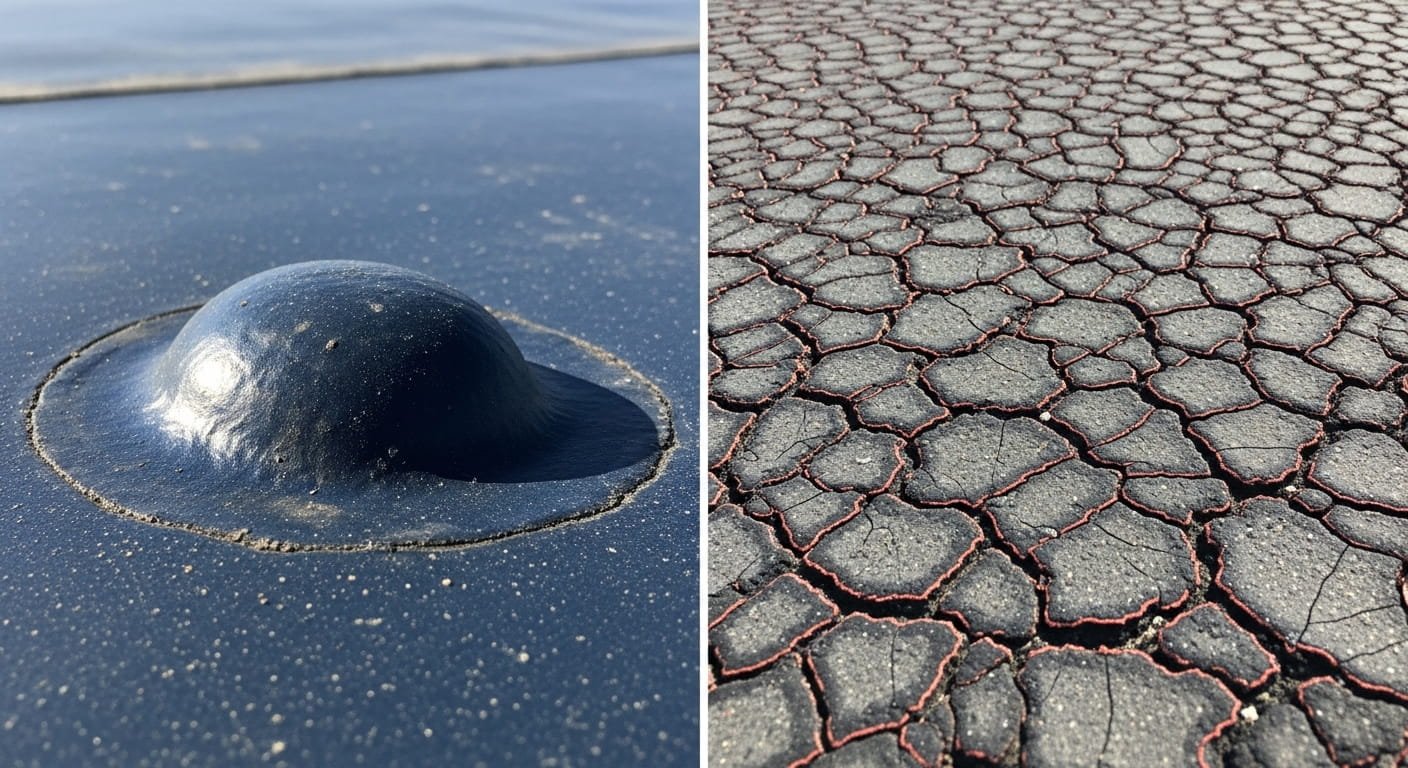
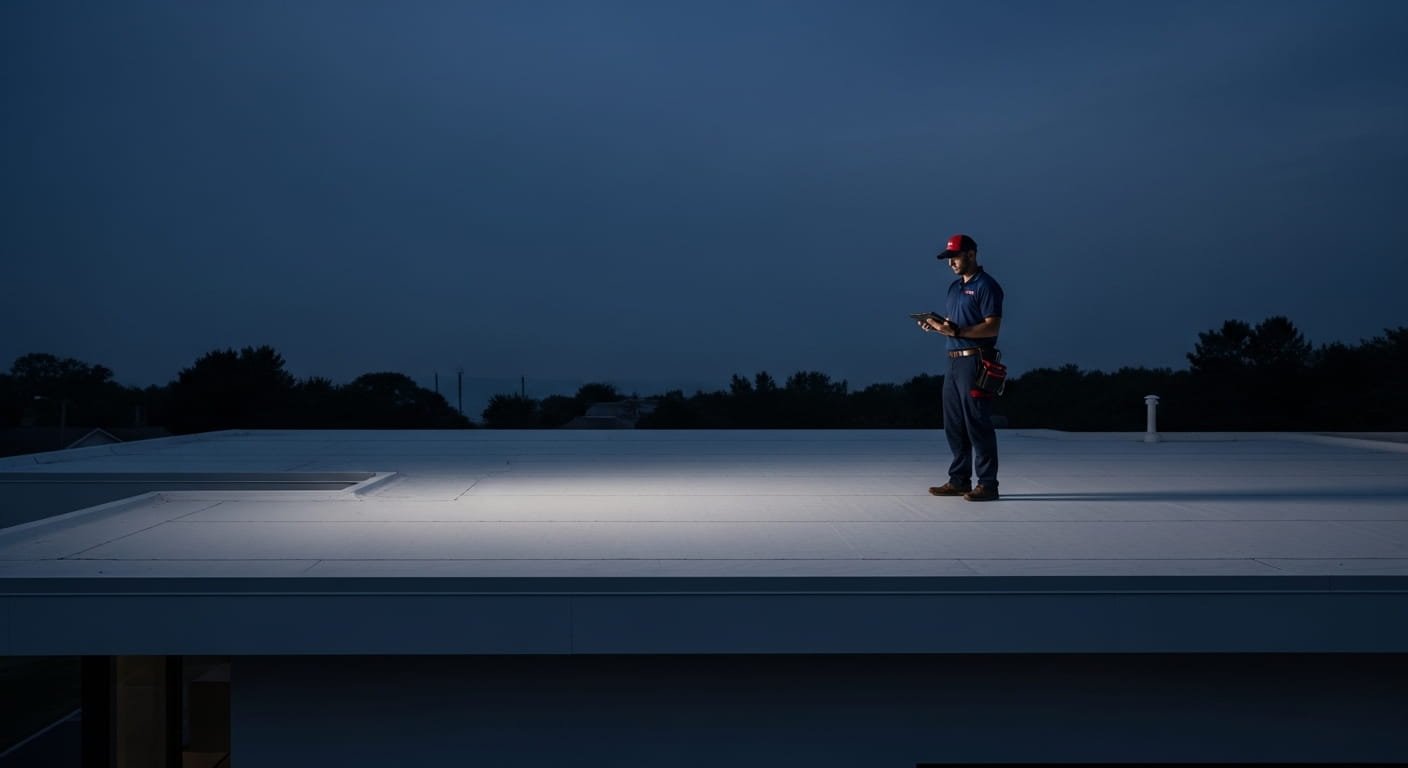
The most effective thing you can do for a flat roof is look at it regularly. Most problems that lead to expensive repairs, seam separation, flashing failure, early membrane cracking, are completely manageable if caught early and become catastrophic if ignored.
Schedule a professional roof inspection in spring (to assess winter damage) and in fall (to prepare for cold weather). Between those, do your own visual check from the roof surface or from ground level with binoculars after any significant storm.
What to look for during an inspection:
- Blisters, bubbles, or soft spots on the membrane surface
- Cracks, tears, or punctures anywhere on the surface
- Seams that have lifted, separated, or show signs of adhesive failure
- Flashing that has pulled away from walls, curbs, or penetrations
- Any area where water appears to be pooling or draining slowly
- Interior signs: water stains on ceilings, peeling paint, or musty odor
Photograph every finding with timestamps. This documentation is invaluable when filing an insurance claim after storm damage.
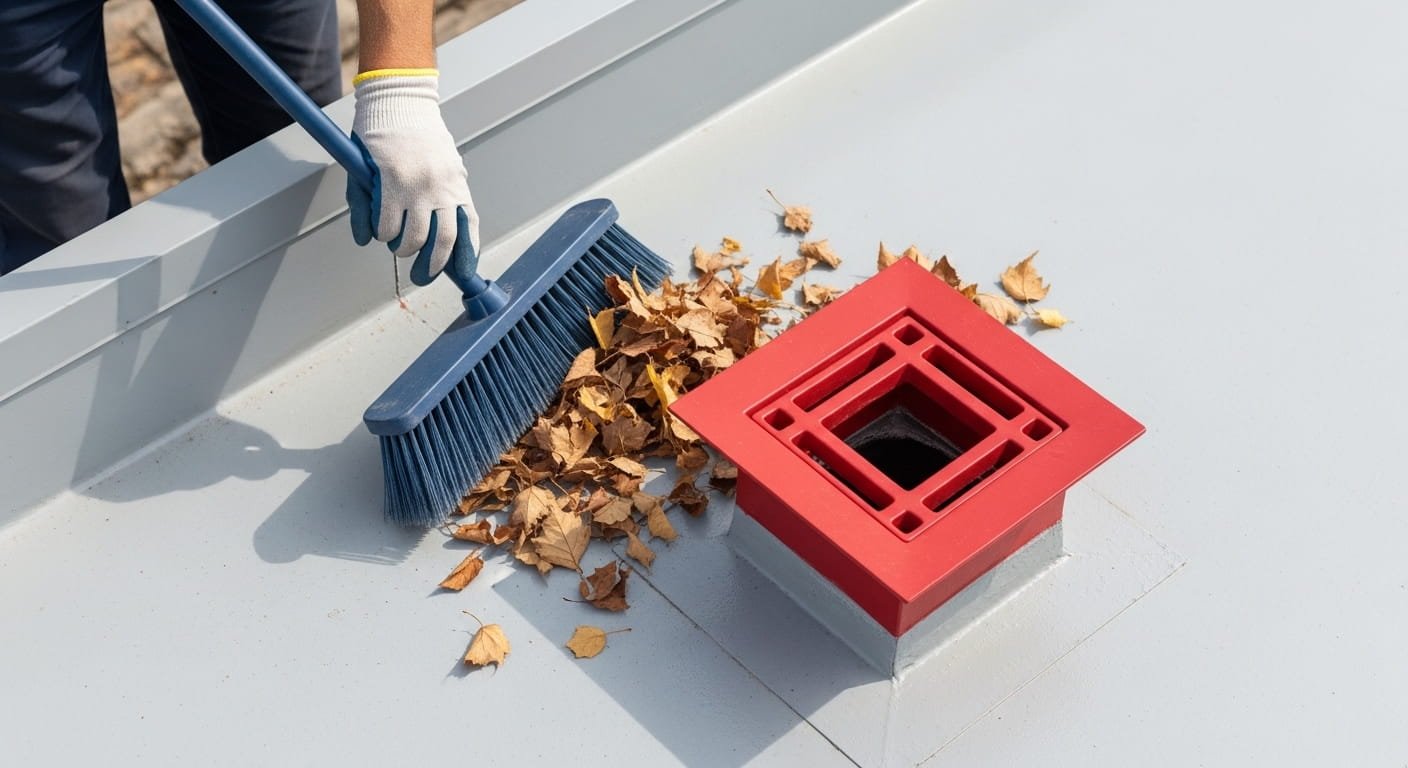
Leaves, twigs, dirt, and general debris accumulate on flat roofs faster than on pitched roofs because there is no slope to help wind clear the surface. On Long Island, autumn leaf fall and nor’easter debris can clog a roof drain or scupper completely within days.
- Sweep the roof surface with a soft broom or blower monthly during fall and after storms
- Never use metal tools or stiff-bristle brushes, these scratch and puncture membrane surfaces
- Trim any tree branches hanging within 6 feet of the roof to reduce ongoing debris and branch-fall risk
- Install mesh drain covers to catch debris before it enters the drainage system
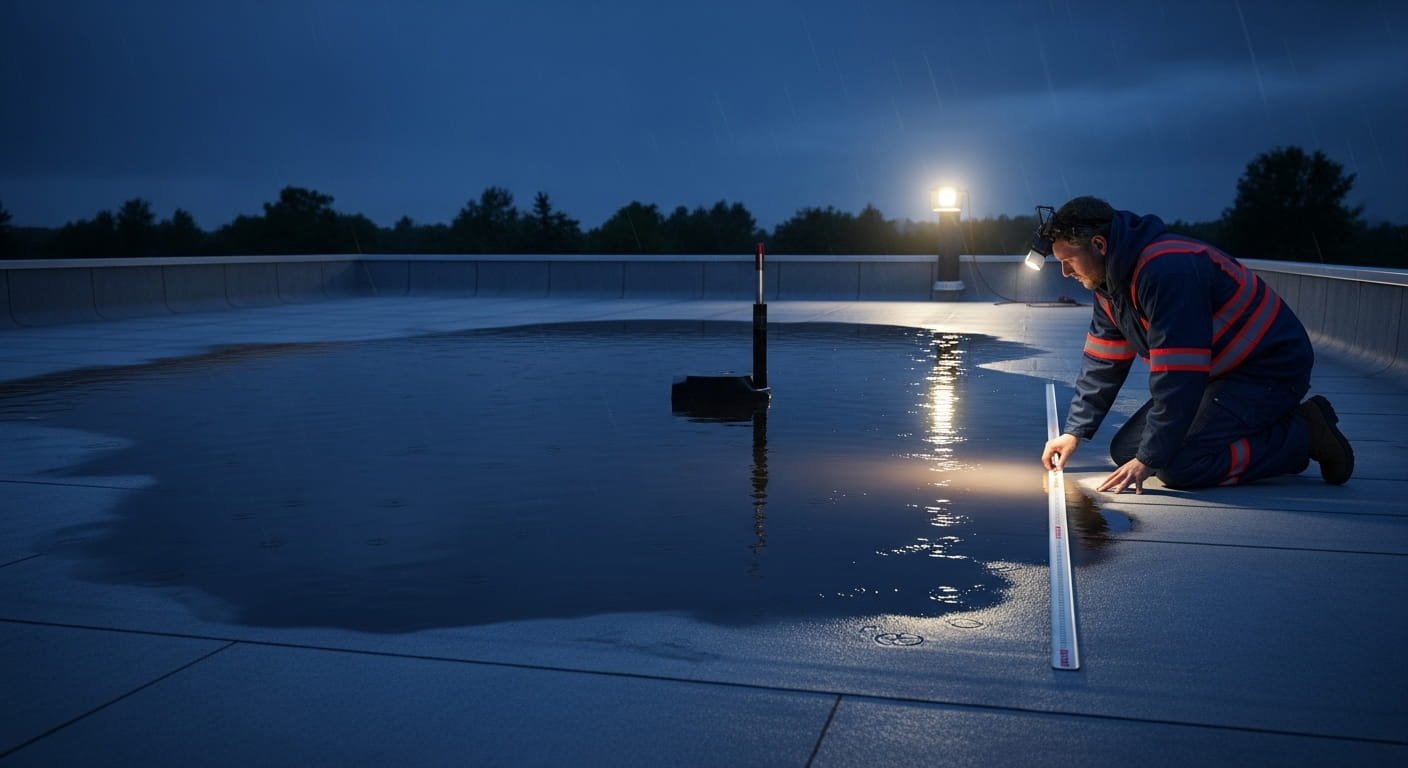
Proper drainage is not optional on a flat roof, it is the entire system’s most critical function. The industry standard is clear: if water is still standing on your roof 48 hours after rainfall, you have a ponding problem that needs immediate attention.
Standing water adds structural load (water weighs approximately 5 lbs per square foot per inch of depth), accelerates membrane breakdown, and creates prime conditions for moss and algae growth. A fully blocked drain after a heavy Long Island rainstorm can deposit hundreds of gallons of water on your roof within hours.
- Clean roof drains, scuppers, and internal downpipes at least four times per year
- Run water through the drainage system after cleaning to confirm clear flow
- Check that gutters and downspouts connected to the flat roof system are firmly attached and free of blockages
- If ponding persists after clearing drains, the issue may be a structural sag or inadequate slope, contact a professional to assess tapered insulation solutions
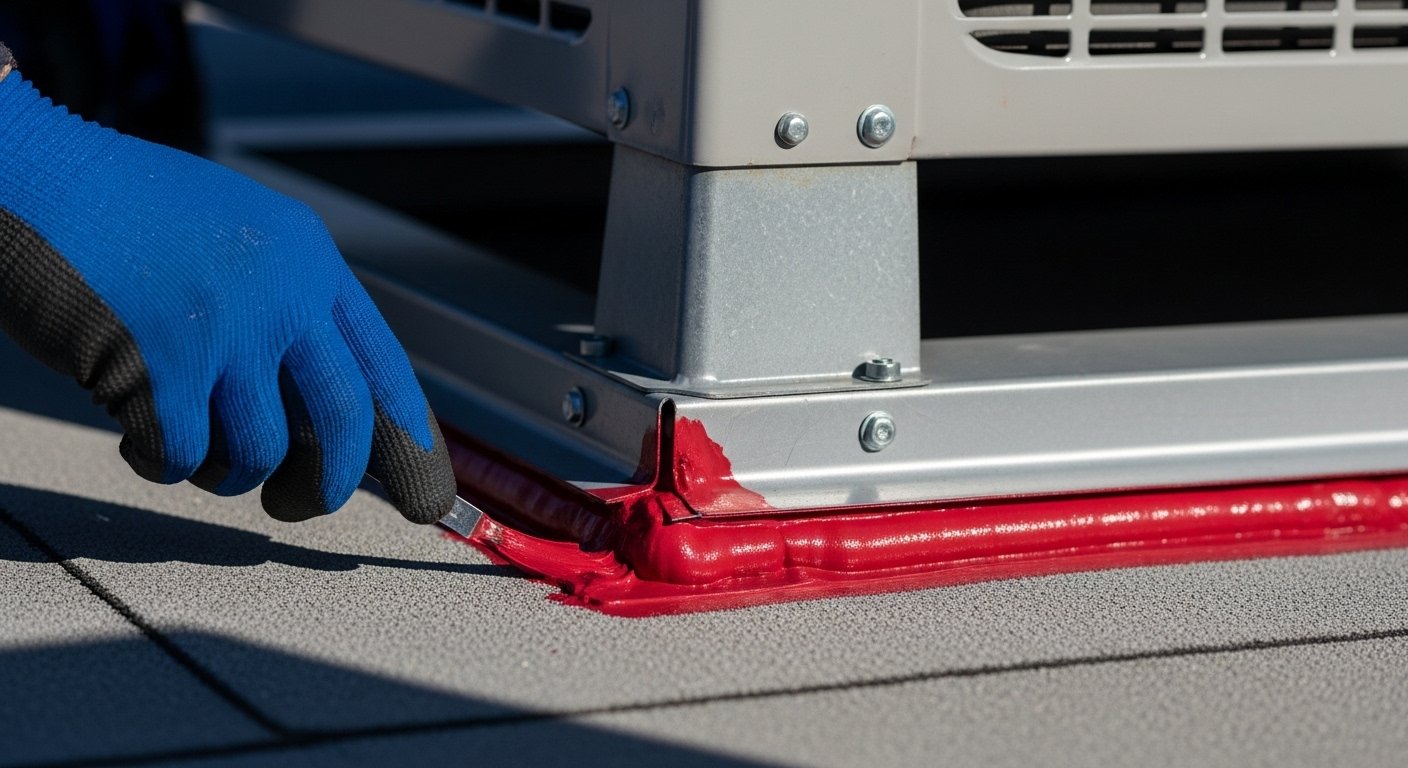
Flashing, the metal or membrane material that seals the edges of your flat roof and the areas around all penetrations, fails more frequently than the main membrane because it is constantly expanding and contracting with temperature changes. On Long Island, where temperatures swing from below freezing in January to over 90°F in July, this thermal stress is severe.
Inspect flashing around all of the following:
- Parapet walls: where the roof meets a raised wall, a common separation point
- HVAC units: curb-mounted units shift over time, stressing the surrounding membrane
- Pipe penetrations and vents: rubber boots harden and crack; sealant dries out
- Skylights: frame seals and counter-flashing are frequent water entry points
- Roof edges and drip edge: improper termination at the perimeter allows wind-driven water to get under the membrane
Reseal any area where the sealant is cracked, dried out, or pulling away. Use materials compatible with your roof type. If metal flashing is corroded or warped, replace it entirely, patching corroded metal is a temporary fix at best.

No aspect of flat roof maintenance has more financial impact than the speed of repair. A small crack or 2-inch puncture that costs $150 to patch today will cost $1,500 to $5,000 to repair if water infiltrates the insulation and decking over one winter season. If the decking rots, a full roof replacement may be necessary years ahead of schedule.
| Issue | DIY or Pro? | Approx. Cost If Fixed Early | Cost If Left 1+ Season |
|---|---|---|---|
| Small puncture (<2 in) | DIY patch possible | $50 – $200 | $1,500 – $5,000+ |
| Separated seam (short run) | Pro recommended | $200 – $500 | $3,000 – $8,000+ |
| Failed flashing section | Pro required | $300 – $700 | $4,000 – $10,000+ |
| Blocked drain causing ponding | DIY clearing | $0 – $150 | Structural damage possible |

Roof coatings are one of the most cost-effective long-term investments for flat roof maintenance. Applied directly over the existing membrane, they add a waterproof, UV-reflective layer that slows material degradation and can extend a roof’s serviceable life by 5 to 10 years. For Long Island homes, reflective coatings also reduce summer cooling costs by reflecting solar heat rather than absorbing it.
Choosing the right coating matters:
| Coating Type | Best For | Reapplication | Avg. Cost per sq ft |
|---|---|---|---|
| Silicone | Ponding water areas, UV resistance | 10 – 15 years | $0.75 – $2.50 |
| Acrylic | General protection, reflectivity | 5 – 10 years | $0.50 – $1.50 |
| Elastomeric | Crack bridging, flexibility in cold | 5 – 10 years | $0.75 – $2.00 |
Coatings must be applied to a clean, dry, structurally sound surface. Applying a coating over existing moisture, damaged membranes, or active leaks will trap the problem rather than solve it. Have your roof assessed before any coating application.
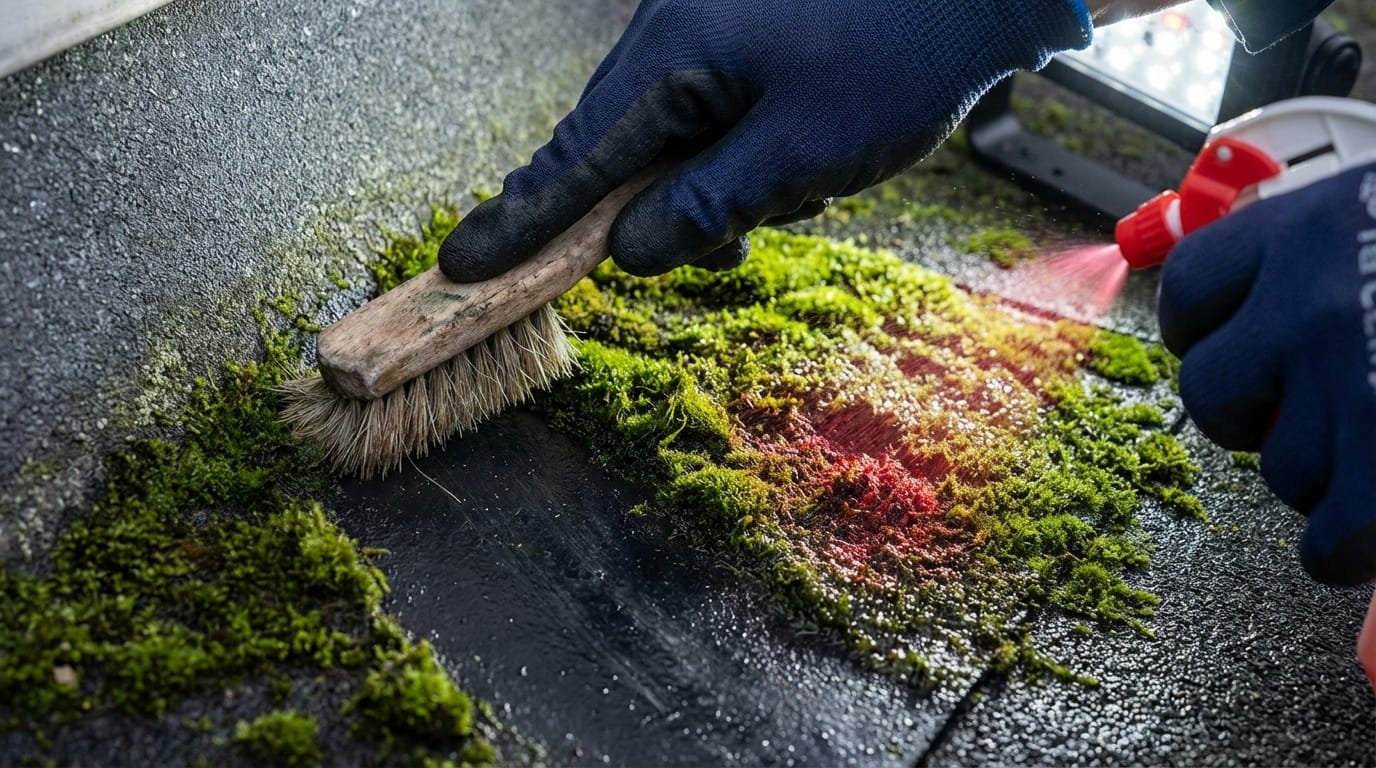
Long Island’s humid summers create ideal conditions for moss and algae growth on flat roof surfaces, especially in shaded areas. Organic growth retains moisture against the membrane surface, accelerates degradation, and can block drains if left unchecked.
- Remove moss carefully using a soft brush and a roofing-compatible biocide solution. Avoid power washing, the pressure can dislodge granules and damage seams.
- Install zinc or copper strips along the high edge of the roof. When it rains, trace amounts of metal wash down and inhibit moss and algae regrowth.
- Trim trees to improve sunlight and airflow over the roof surface, which naturally discourages growth
- Never use bleach or harsh chemicals directly on roofing membranes, check product compatibility with your roof type before application
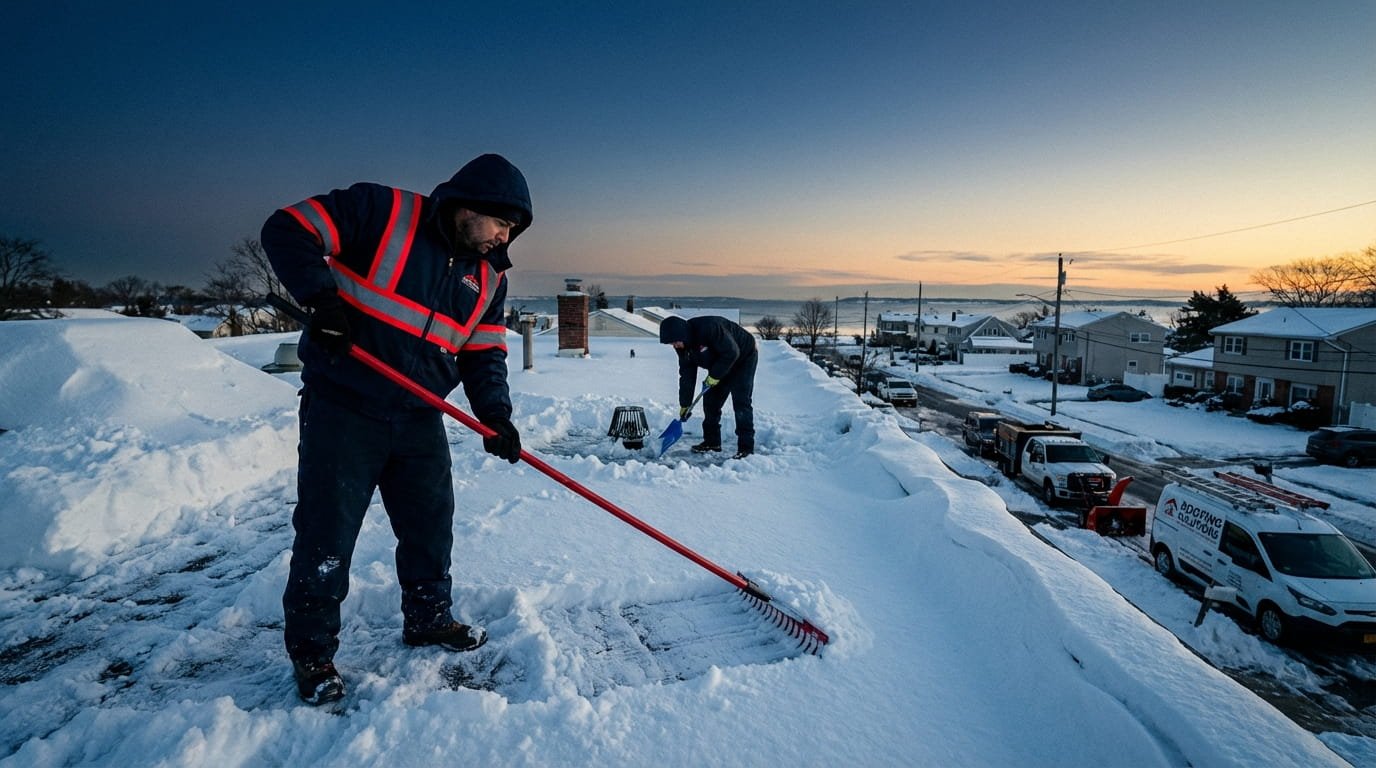
Long Island winters bring snowfall that can accumulate rapidly on a flat roof. Unlike a pitched roof where snow slides off, flat roofs hold it. Fresh snow weighs approximately 20 lbs per square foot per foot of depth. Wet, compacted snow can weigh 60 lbs per square foot or more, well above what most residential flat roofs are designed to sustain long-term.
- Remove snow after any accumulation exceeding 6 inches using a plastic snow rake or plastic shovel, never metal tools
- Always leave a 2-inch base of snow on the surface to avoid accidentally puncturing the membrane with tools
- Check roof drains immediately after snowmelt begins, ice can form over drain openings and prevent melted snow from flowing off
- For heavy accumulations or structural concerns, contact our emergency roofing team rather than attempting removal yourself
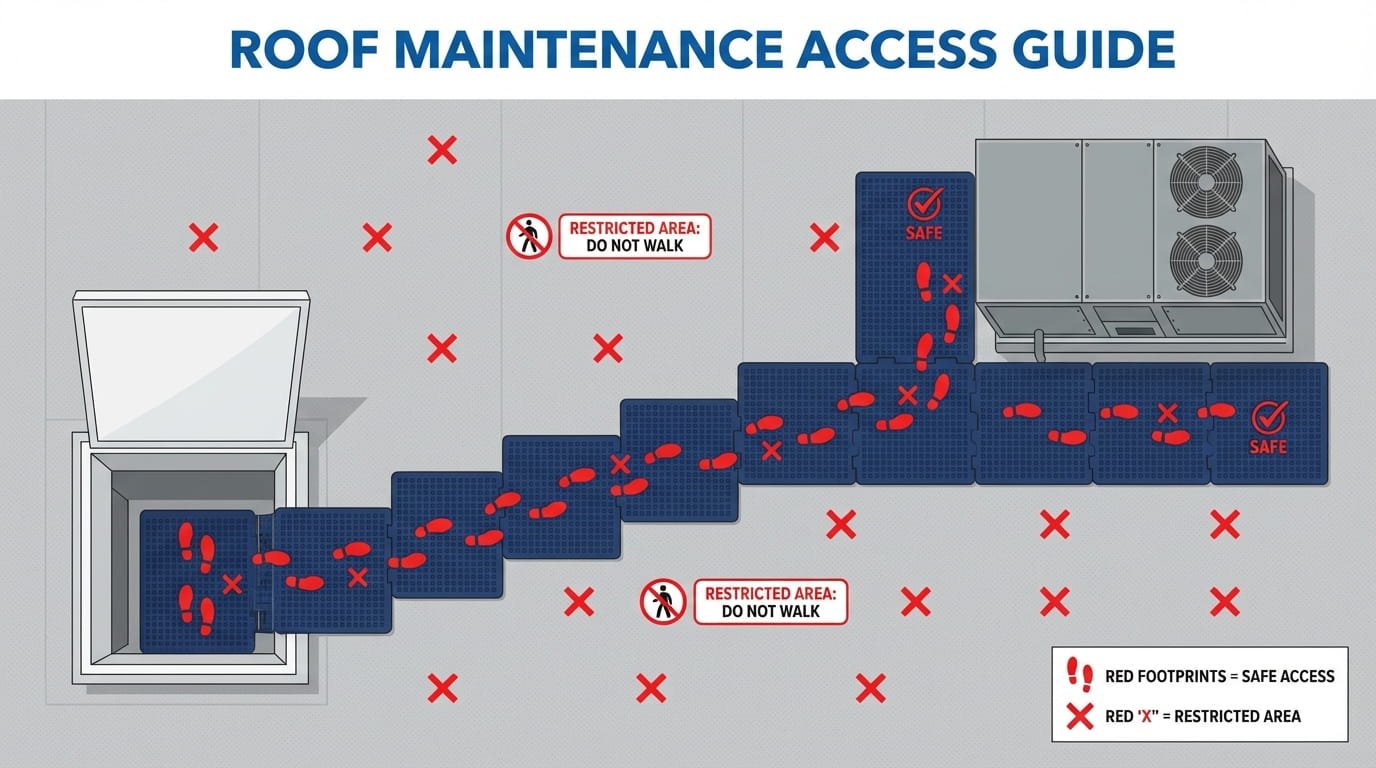
Every person walking on a flat roof adds mechanical stress to the membrane. HVAC technicians, satellite dish installers, and cleaning crews accessing your roof without proper protection are a common source of unexpected punctures and damage.
- Install rubber walkway pads along any access routes that are used regularly
- Brief any contractor working on or around your roof about the membrane type and safe access procedures
- Inspect the roof after any third-party access, contractor foot traffic is one of the leading causes of flat roof punctures
- Keep a written log of all inspections, repairs, and maintenance performed. Date each entry and note what was done. This record supports warranty claims and demonstrates proper maintenance if an insurance dispute arises.
Seasonal Flat Roof Maintenance Checklist for Long Island
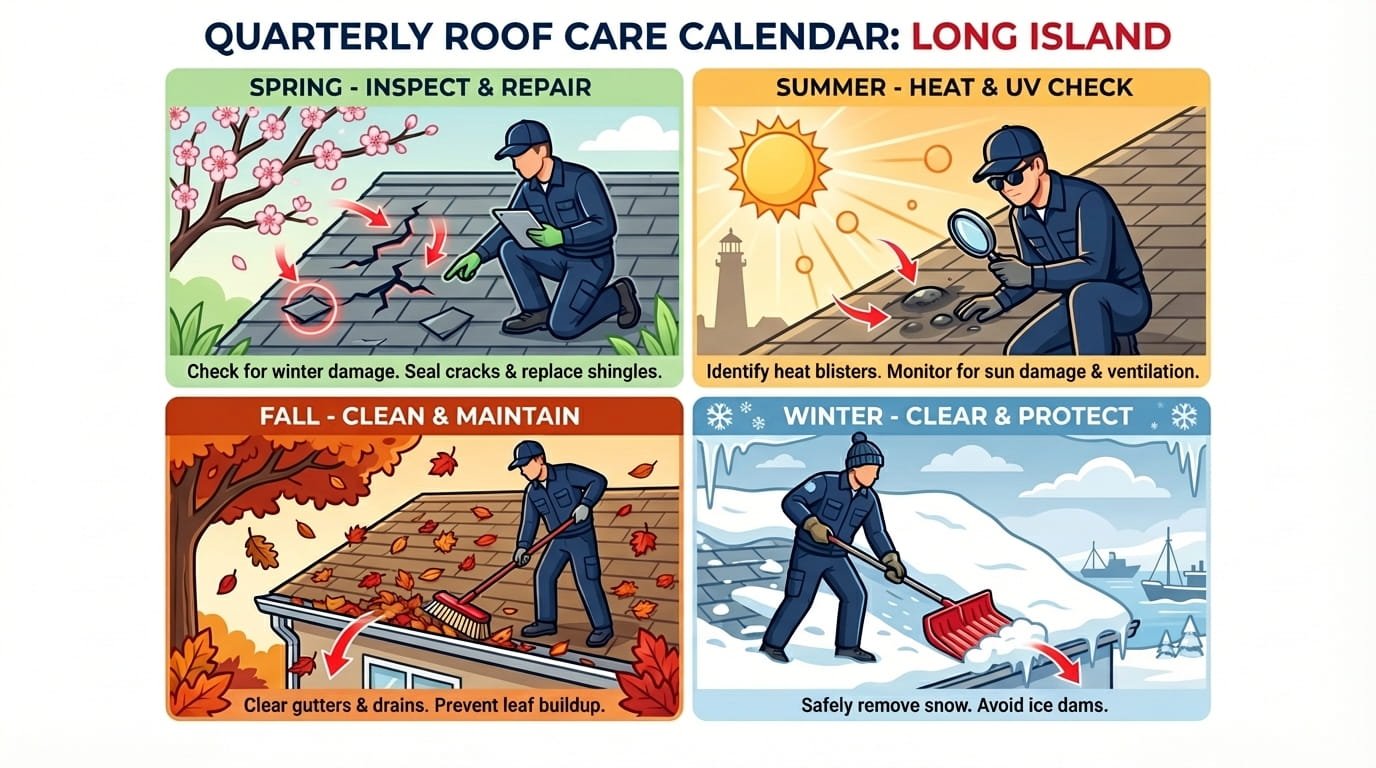
Long Island’s four distinct seasons each bring unique demands. Use this checklist as your maintenance calendar:
| Season | Primary Tasks | Long Island Specific Focus |
|---|---|---|
| Spring (Mar – May) | Professional inspection; assess winter damage; clear debris; test all drains; repair any freeze-thaw cracks | Check for seam separation caused by freeze-thaw cycling over winter |
| Summer (Jun – Aug) | Check for blistering and UV cracking; reseal penetrations; consider coating application if membrane is aging | High heat can soften adhesives and cause blistering on older modified bitumen roofs |
| Fall (Sep – Nov) | Professional inspection; clear all leaf buildup; clean and test drains; reseal any gaps before freeze season; trim overhanging branches | Nor’easters in October and November can rapidly clog drains with leaves and debris |
| Winter (Dec – Feb) | Monitor snow accumulation after each storm; remove snow over 6 inches; check drain openings for ice blockage | Heavy nor’easters can drop 12+ inches; flat roofs need prompt clearing after major snow events |
Warning Signs: When Maintenance Is Not Enough, Repair vs. Replace
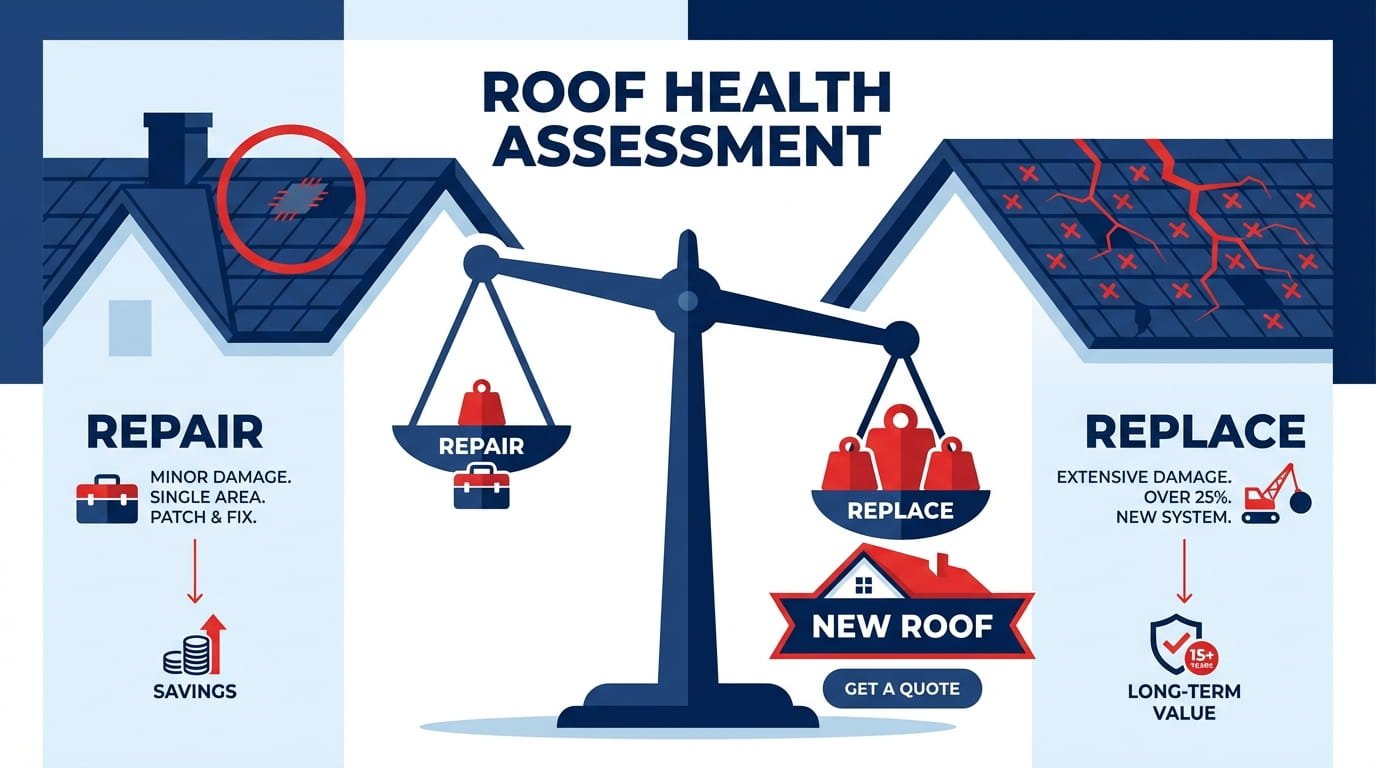
Not every flat roof problem can be solved with maintenance or a patch. Knowing when to repair versus when to replace is one of the most important decisions a flat roof owner faces, and getting it wrong in either direction is expensive.
- Damage is isolated to a small area (under 25% of total surface)
- The membrane is generally sound and under 15 years old
- Decking beneath the membrane is dry and structurally intact
- A single flashing section or penetration seal has failed
- The roof is over 20 years old with recurring leaks
- The membrane shows widespread cracking, shrinkage, or alligatoring
- Wet insulation has been confirmed beneath the membrane
- You have made multiple repairs to the same areas and leaks return
Many roofing contractors use a general industry guideline: when more than 25% of the flat roof surface has been repaired or needs repair, replacement is typically more cost-effective than continued patching. At that point, ongoing repair costs often exceed the price of a new flat roof installation over a 5-year horizon.
How Flat Roof Maintenance Affects Your Insurance Coverage
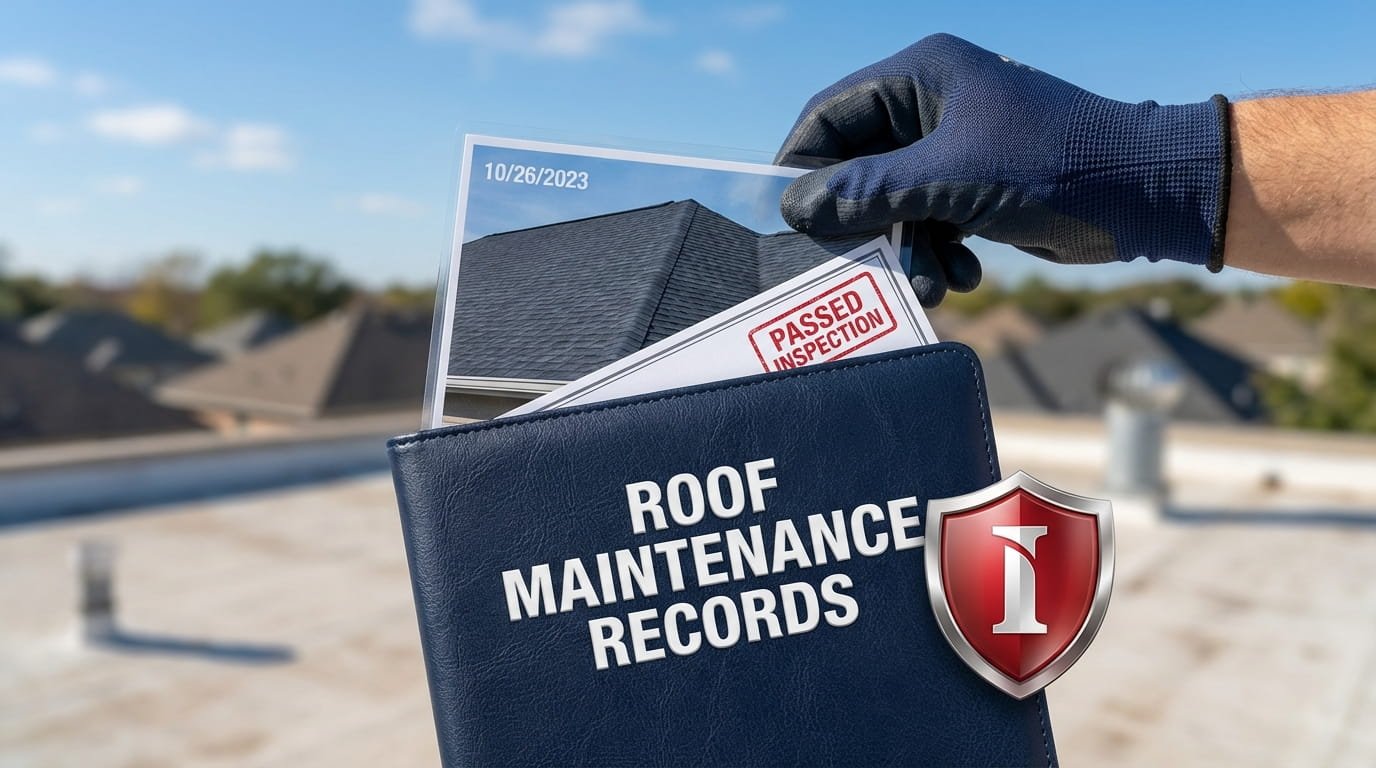
This is a point that competitors consistently miss: your maintenance habits directly affect whether your homeowners insurance will pay out after roof damage. Most standard policies exclude damage that results from or is worsened by deferred maintenance or neglect.
Practical steps to protect your coverage:
- Keep your inspection records. Dated records of professional inspections and repairs are your best defense if an insurer tries to attribute storm damage to pre-existing neglect.
- Photograph the roof annually in good condition. These baseline images prove pre-storm condition if you need to file a claim.
- Understand your policy’s flat roof clause. Some insurers have specific exclusions or age-based limitations for flat roofs. A flat roof over 15 years old may require an inspection for coverage to remain valid.
- Report damage promptly. Most policies require notification of damage within a specific window. Delayed reporting can be used to deny claims.
If you are unsure whether your current roof’s condition meets your insurer’s requirements, our professional inspection provides written documentation that satisfies most insurance company requests.
Frequently Asked Questions
How often should a flat roof be inspected?
At minimum, twice a year, once in spring to assess winter damage, and once in fall to prepare for cold weather. On Long Island, it is also advisable to do a visual check after any major storm, nor’easter, or heavy snowfall. A professional inspection at least once annually ensures that problems not visible to the untrained eye are caught before they escalate.
How long does a flat roof last with proper maintenance?
A well-maintained flat roof typically lasts 20 to 30 years. Premium membranes like PVC or thicker EPDM systems can exceed 30 years with consistent care. The biggest factors are the quality of original installation, how quickly small repairs are addressed, and whether drainage is kept clear throughout the roof’s life.
What is the most common flat roof problem?
Ponding water from blocked or inadequate drainage is the most frequent cause of premature flat roof failure. When water sits for more than 48 hours after rainfall, it accelerates membrane breakdown and adds structural load the roof was not designed to carry long-term. Keeping drains clear is the single highest-impact maintenance task for a flat roof.
How often should a flat roof be sealed or recoated?
Sealant around penetrations and flashing should be inspected annually and reapplied whenever cracking or separation is found, typically every 3 to 5 years. Protective coatings over the membrane surface last 5 to 15 years depending on the product, with silicone coatings generally lasting the longest. A professional can assess whether your roof is ready for recoating or whether membrane repairs are needed first.
Can I walk on my flat roof to inspect it myself?
Yes, with care. Flat roofs are designed to accommodate some foot traffic, but you should wear soft-soled shoes, step carefully, and avoid any areas that feel soft or spongy (which could indicate wet insulation beneath). Walk on walkway pads if they are installed. Avoid walking on the roof in freezing temperatures when membranes are more brittle. If you are unsure about the structural condition, inspect from the roof edge or schedule a professional evaluation instead.
Does homeowners insurance cover flat roof repairs?
Standard homeowners insurance covers sudden storm or wind damage to flat roofs. What it typically does not cover is damage attributable to deferred maintenance, wear and tear, or neglected repairs. This is why maintaining inspection records and acting promptly on small repairs is so important, documented maintenance makes it much harder for an insurer to attribute damage to neglect. Some insurers also have age restrictions on flat roof coverage, so check your policy.
What is the best flat roofing material for Long Island?
For Long Island’s climate, hot, humid summers and cold winters with significant freeze-thaw cycling, EPDM and TPO are both strong choices for residential flat roofs. EPDM has an excellent track record in cold climates and remains flexible at low temperatures. TPO offers good UV reflectance, which helps with summer cooling costs. Modified bitumen is also widely used and has a proven history in the Northeast. The best choice depends on your specific roof structure, budget, and how the roof is used. Our team at EZ Roofing & Builders can walk you through the options for your specific home.
Conclusion: Consistent Care Is the Best Investment in Your Flat Roof
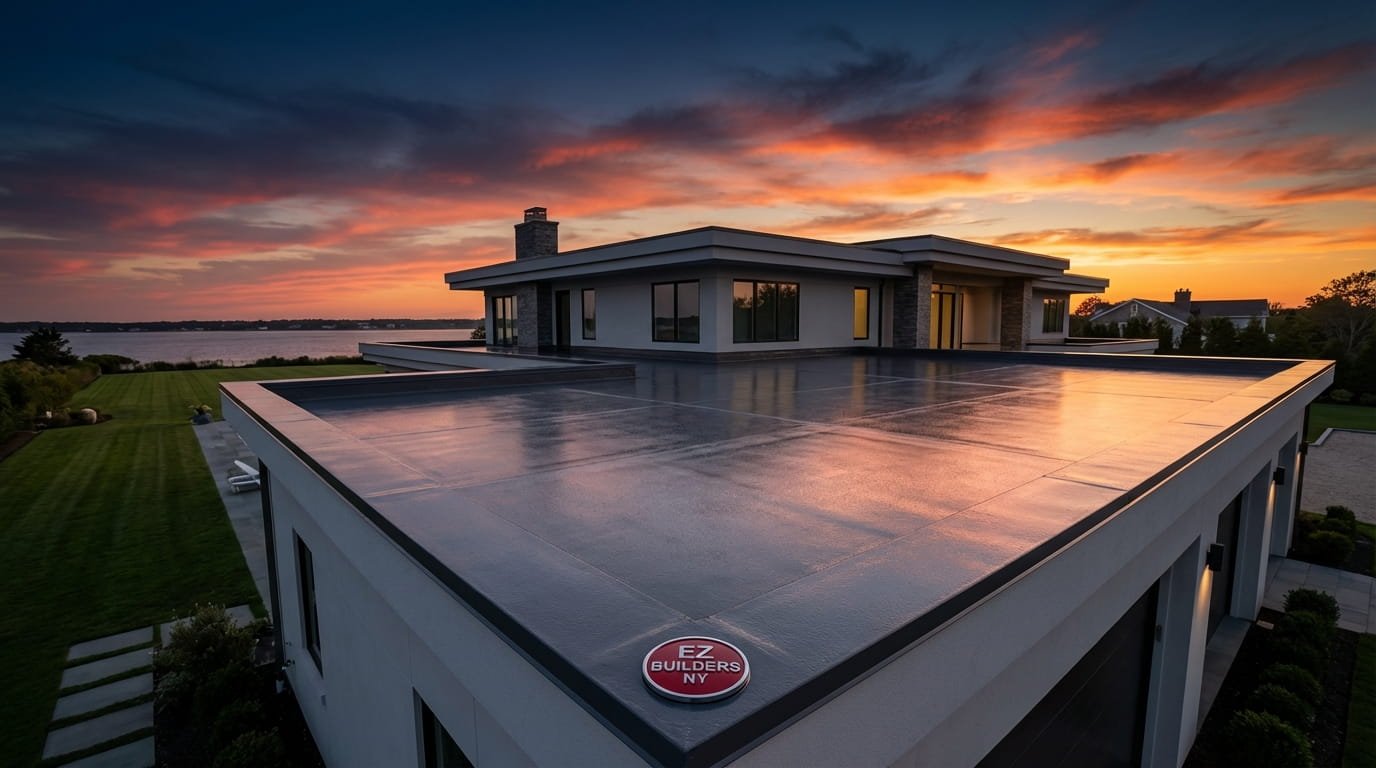
Maintaining a flat roof is not complicated, but it does require consistency. The homeowners who get 25 to 30 years from a flat roof are not lucky, they inspect it regularly, clear the drains, fix small problems before they grow, and work with professionals who know what to look for.
The homeowners who replace a flat roof at 12 years are almost always dealing with the consequences of deferred maintenance: a leak ignored for one season, a drain left blocked through winter, or flashing that was never resealed after it first started pulling away.
- Inspect twice a year and after every major storm
- Keep drains and gutters clear year-round, especially through fall and winter
- Fix small punctures and failed sealant immediately, do not wait
- Apply a protective coating on the right schedule for your membrane type
- Know your roof type and use compatible repair materials only
- Keep maintenance records to protect your insurance coverage
- Follow a year-round roof maintenance plan with a trusted local contractor
EZ Roofing & Builders serves homeowners across Nassau and Suffolk County with professional flat roofing inspection, repair, and installation. Whether you need a routine maintenance check, an emergency repair, or guidance on when to replace a flat roof, our team is here to help. We serve Nassau County, Suffolk County, and the surrounding areas. Contact us today for a free estimate.