Winter can be beautiful, but for homeowners in snow-prone regions, a heavy blanket of white on the roof is a source of anxiety. As the snow piles up, you might hear the house creak and wonder: How much snow can my roof hold before it becomes dangerous?
This is not just a theoretical question, it is a matter of structural safety. A collapsed roof can cost tens of thousands of dollars and endanger your family. In this guide, we will break down the science of snow weight on roofs, explain how to calculate your specific load, and determine if your roof pitch is safe for the coming storm.
Understanding Snow Weight on Roofs: Why It Matters
Most building codes require residential roofs to support a minimum “live load”, variable weight like snow, wind, and workers. However, these codes vary wildly based on where you live. For general disaster safety regarding winter storms, you can refer to the FEMA Winter Weather Safety Guide.
Roof snow load capacity refers to the maximum weight per square foot (PSF) your roof structure can support before it begins to deflect (sag) or fail. When snow weight on a roof exceeds this limit, the trusses can fracture, or the walls can bow outward. Understanding these limits is crucial because snow is deceptive; a foot of fluffy powder weighs significantly less than a few inches of wet slush.
How Much Does Snow Actually Weigh?
To understand how many inches of snow a roof can hold, you first need to understand that not all snow is created equal. The water content (density) of the snow determines the danger.
Fresh, Fluffy Snow: 3-5 Pounds Per Cubic Foot
This is the “champagne powder” skiers love. It is filled with air. You can pile a significant amount of this on a roof with minimal risk.
Packed Snow: 15-20 Pounds Per Cubic Foot
As snow sits on your roof, gravity and wind pack it down. The air is squeezed out, making the snow denser. What started as 12 inches of fluff might compress down to 4 inches of packed snow, but the total weight remains the same.
Wet, Heavy Snow: 20-30 Pounds Per Cubic Foot
This is the “heart attack snow” that is difficult to shovel. It usually falls when temperatures are near freezing (30°F – 34°F). It is incredibly heavy and poses the highest risk to residential structures.
Ice: 57 Pounds Per Cubic Foot
Ice is the silent killer of roofs. It weighs nearly as much as water (62.4 lbs/cubic foot). Just one inch of ice is equivalent to a foot of fresh, dry snow.
How to Calculate Snow Load on Your Roof
To get a rough estimate of the stress your roof is under, you can use a simple calculation.
- Formula: Depth (ft) × Density (lbs/ft³) = Load (PSF)
- Example: If you have 2 feet of packed snow (approx. 20 lbs/ft³), your load is: 2 × 20 = 40 PSF.
This is at the very limit of most standard residential roofs.
How Many Inches of Snow Can a Roof Hold?
The golden question: How many inches of snow can a roof hold? While there is no single number for every house, we can look at averages based on building standards.
Average Residential Roof Capacity: 20-40 PSF
Most standard residential roofs in the US are built to withstand 20 pounds per square foot (PSF). In snowier northern climates, codes often mandate 40, 50, or even 70 PSF.
Converting PSF to Inches of Snow
If your roof is built to the standard 20 PSF limit, here is what that looks like in actual snow depth:
- Fresh, Dry Snow: You can safely hold about 4 feet (48 inches).
- Packed/Old Snow: You can hold about 1 to 1.5 feet (12-18 inches).
- Wet, Heavy Snow: You can only safely hold about 8 to 10 inches.
- Ice: You can only hold 3 to 4 inches of solid ice.
Why Inches Alone Don’t Tell the Full Story
If you look out the window and see 2 feet of snow, you might think you are safe. However, if that snow fell, partially melted, refroze into ice, and then was covered by rain, the weight could be double what you expect. Always assume the snow is heavier than it looks.
Roof Pitch and Snow Load Capacity
The angle of your roof, known as the “pitch,” is the most critical factor in how well your home handles winter.
What is Roof Pitch and Why It Matters
Roof pitch is measured by how many inches the roof rises for every 12 inches it runs horizontally. A 4:12 pitch rises 4 inches for every foot of width. Gravity helps steeper roofs shed snow naturally, while flatter roofs trap it.
Minimum Roof Pitch for Snow: 4:12 Recommended
For areas with regular snowfall, a minimum roof pitch for snow of 4:12 is generally recommended. This creates enough of an angle for snow to slide off once it begins to melt, reducing the sustained load on the structure.
Is a 2:12 Roof Pitch OK for Snow?
Many homeowners with additions, porches, or sheds ask: Is a 2:12 roof pitch ok for snow?
- The Risks: A 2:12 pitch is considered a “low-slope” roof. It is nearly flat to the naked eye. Snow will not slide off a 2:12 roof naturally. It will accumulate, pack down, and potentially turn to ice.
- The Verdict: While a 2:12 pitch can be engineered to handle snow, it requires significantly stronger rafters and waterproofing than a steep roof. If you have a standard 2:12 roof in a heavy snow region, you must be vigilant about removing snow manually, as the risk of collapse is much higher than on the main part of your house.
Optimal Roof Slope for Snow Shedding
The slope of roof for snow shedding effectiveness peaks at around 6:12 to 12:12. At these angles, the weight of the snow often overcomes friction, causing it to slide off in sheets (especially on metal roofs).
Average Snow Load Capacity by Roof Type
Standard Residential Roofs: 20-40 PSF
As mentioned, this is the industry standard. It accounts for the weight of the shingles, the plywood decking, and the temporary snow load.
Commercial and Flat Roofs: 40-100 PSF
Commercial buildings often have flat roofs with large spans. Because flat roofs cannot shed snow, codes often require them to hold significantly more weight, sometimes up to 100 PSF in mountainous regions.
How to Find Your Roof’s Design Load
You cannot guess your roof’s limit by looking at it. To find the exact number:
- Check your blueprints: Look for the “Design Snow Load” on the structural pages.
- Contact your local building department: They can tell you the code requirement for the year your house was built.
- Hire a structural engineer: This is the only way to get a guaranteed number for an existing home.
Special Case: How Much Snow Can a Camper Roof Hold?
If you own an RV, travel trailer, or motorhome, you need to be extra careful. How much snow can a camper roof hold? far less than a house.
RV and Camper Roof Construction
Camper roofs are lightweight. They are typically made of thin luan plywood, Styrofoam insulation, and a rubber or fiberglass membrane. They are designed for fuel efficiency and highway travel, not heavy static loads.
Typical Camper Roof Load Capacity: 10-20 PSF
Most campers are rated for roughly 10 to 20 PSF.
- Travel Trailers/Fifth Wheels: Usually closer to 20 PSF.
- Pop-up Campers: Very low capacity. The lift system cannot support any snow load.
When to Remove Snow from Your Camper Roof
Because the limit is so low, you should clear snow from a camper roof once it reaches 6 inches of fresh snow or 3 inches of wet snow. Never wait for a foot of snow to accumulate on an RV; it can crack the roof seals, causing leaks that destroy the interior come spring.
Warning Signs Your Roof Is Overloaded
Do not wait for the roof to collapse. Watch and listen for these warning signs:
- Audible Creaking: Popping, cracking, or moaning sounds coming from the attic or ceiling are immediate red flags.
- Sticking Doors: If interior doors that usually open freely begin to stick or won’t latch, the door frame is being compressed by the weight above.
- Visible Sagging: Look at the ridge line (the very top) of your roof from the street. It should be perfectly straight. If it dips in the middle, it is overloaded.
- Drywall Cracks: New cracks appearing in the plaster or drywall around ceiling corners.
- Leaks: Water spots appearing on the ceiling (caused by ice dams forcing water under shingles).
How Roof Design Affects Snow Capacity
Gable vs. Hip Roofs
- Gable Roofs (A-frame): Excellent for shedding snow, but can be prone to “unbalanced loads” where wind piles snow on just one side, stressing the trusses.
- Hip Roofs: These slope down on all four sides. They are structurally stronger and more aerodynamic, providing better stability under heavy snow loads.
Complex Roofs: The Danger of Valleys
If your roof has dormers, valleys, or varying elevations, you are at higher risk. Drifting snow accumulates in these “traps,” creating localized loads that can be 2x or 3x heavier than the rest of the roof.
When and How to Remove Snow from Your Roof
Safe Removal Thresholds
A good rule of thumb for homeowners: Consider removal if you have more than 6 inches of heavy, wet snow or 12 inches of light, powdery snow, especially if your roof has a low pitch.
DIY Roof Rake Method (From the Ground)
The safest way to remove snow is to stay on the ground. Use a roof rake, a long, telescoping pole with an aluminum blade.
- Stand back from the house.
- Extend the rake to the eaves.
- Gently pull the snow down.
- Do not scrape the shingles bare: Leave an inch or two of snow to avoid damaging the granule coating on your shingles.
Why You Should NEVER Walk on a Snow-Loaded Roof
It is incredibly dangerous. Not only is the surface slippery, but you also add your body weight to an already stressed structure. If the roof is near its breaking point, your weight could trigger a collapse. For professional safety standards on this topic, refer to the OSHA Snow Removal Guidelines.
Professional Snow Removal Services
If the snow is too high for a rake, hire professionals. They use harnesses, safety lines, and specialized steamers to melt ice dams. Expect to pay $200 to $600 depending on the severity.
Metal Roofs and Snow: Superior Performance
Why Metal Roofs Excel in Snow Country
Metal roofs are the gold standard for heavy snow regions. The surface creates very little friction. As the sun warms the metal (even through the snow), the bottom layer melts slightly, creating a water slide for the snow to slide off.
Snow Guards: Controlling the Slide
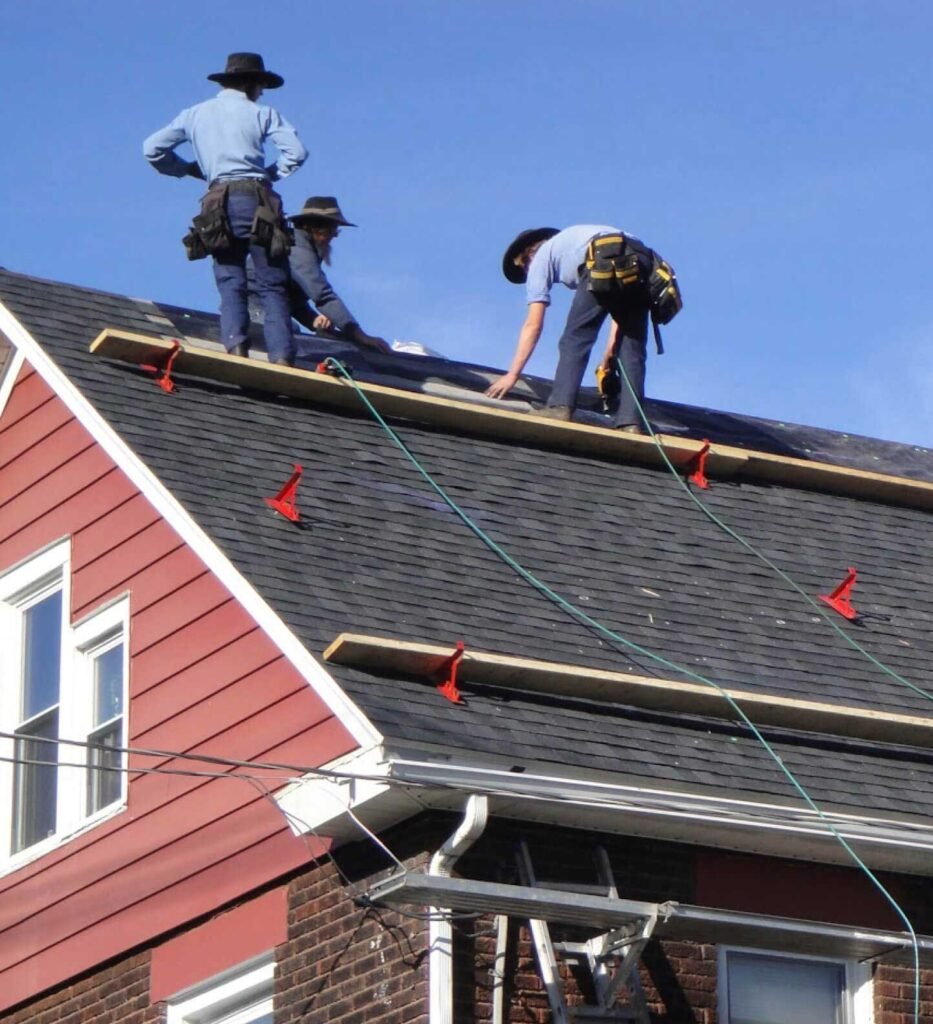
Because metal sheds snow so violently, it can be dangerous for people walking below or for gutters. Snow guards are small clamps installed on metal roofs to hold the snow in place, allowing it to melt gradually rather than avalanching all at once.
Factors That Increase Snow Load Risk
Sometimes, it isn’t just the snow amount, but the weather sequence that causes failure.
- Rain on Snow: This is the worst-case scenario. Snow acts like a sponge. If 6 inches of snow falls, and then it rains, the snow absorbs the rain. The weight can triple instantly without the depth changing.
- Ice Dams: When attic heat melts roof snow, it runs down to the cold eaves and refreezes. This creates a ridge of ice that traps water. To learn more about preventing this, read the University of Minnesota Extension guide on preventing ice dams.
- Poor Insulation: If your attic is poorly insulated, heat escapes, melts the bottom layer of snow, and creates ice sheets, which are much heavier than snow.
Building Codes and Snow Load Requirements
Ground Snow Load vs. Roof Snow Load
Building codes use two numbers:
- Ground Snow Load (Pg): How much snow piles up on the ground.
- Roof Snow Load (Pf): How much of that snow is expected to stick to the roof.
- Note: The roof load is usually calculated as 70% of the ground load, assuming some will blow off or slide away.
Checking Compliance for Older Homes
Homes built before the 1970s may not meet current snow load codes. If you have an older home in a snow belt, a structural inspection is highly recommended.
Prevention: Preparing Your Roof Before Winter
The best time to worry about snow load is July, not January.
- Inspect Trusses: Look for cracked wood or rusted connector plates in the attic.
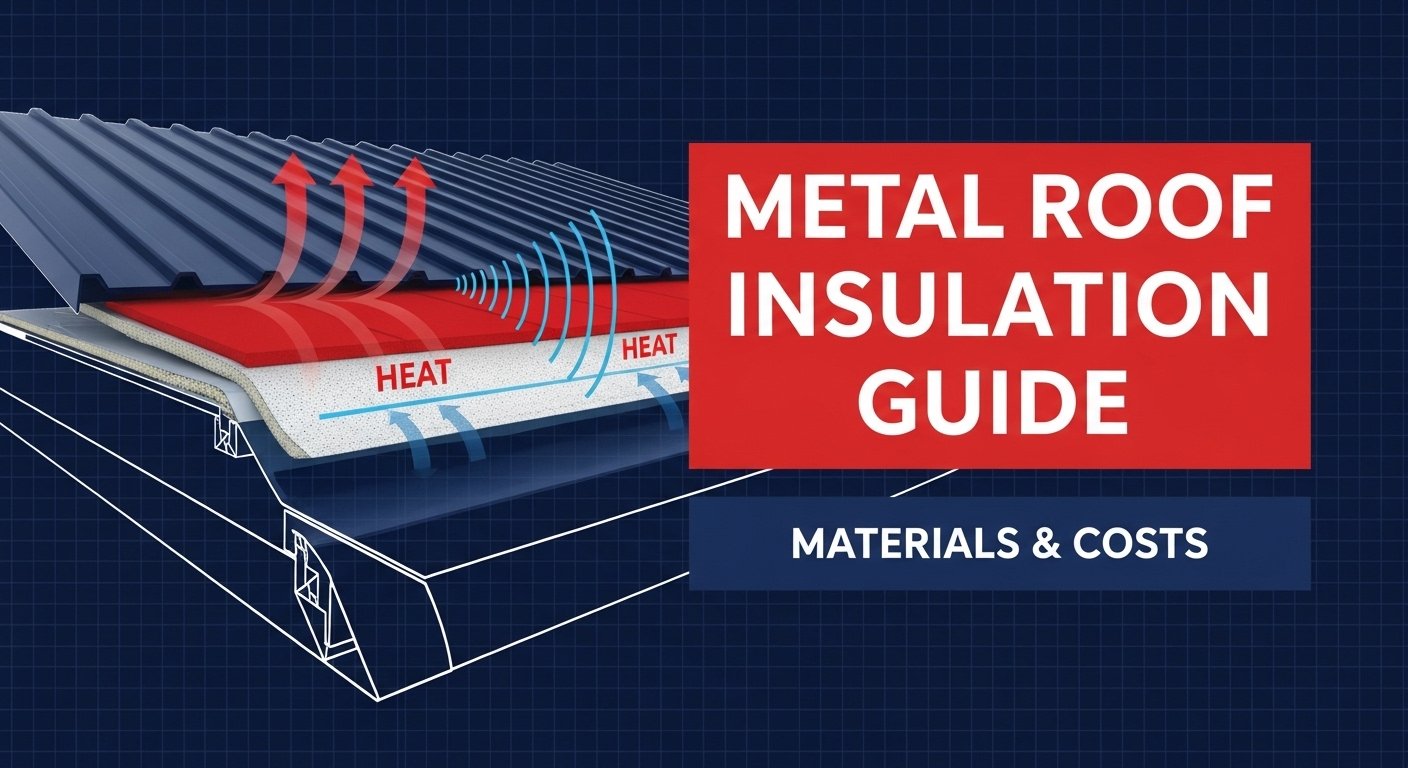
- Add Insulation: Bringing your attic insulation up to R-50 or R-60 keeps the heat in your house and prevents the melt-freeze cycle on the roof.
- Install Heat Cables: Zig-zagging heat cables along the eaves can create channels for meltwater to drain, preventing heavy ice buildup.
Conclusion: Protecting Your Home from Snow Load Damage
Knowing how much snow your roof can hold is about more than just numbers; it’s about vigilance. While most modern homes can easily handle a standard winter storm, the combination of heavy wet snow, ice, and low-slope roofs can create a recipe for disaster.
Remember the key takeaways:
- Standard roofs hold about 20 PSF (approx. 4 feet of fresh snow or 10 inches of wet snow).
- 2:12 pitch roofs require extra attention and frequent clearing.
- Camper roofs are fragile, clear them often.
- Never climb on a snowy roof; use a roof rake from the ground.
If you hear your house creaking or see the roof line sagging, evacuate the house and call emergency services immediately. Your roof can be replaced; your family cannot.
Frequently Asked Questions
How many inches of snow is too much for my roof?
Generally, if you have more than 20-24 inches of packed snow or 6-10 inches of heavy, wet snow or ice, you are approaching the danger zone for a standard residential roof.
What roof pitch is best for snow?
A pitch of 6:12 to 12:12 is ideal. It is steep enough to shed snow naturally but not so steep that it becomes difficult to install roofing materials.
Can a 2:12 pitch roof handle snow?
Yes, but it holds snow longer than steeper roofs. It must be built with stronger rafters and tighter waterproofing to handle the sustained weight and potential for standing water.
How do I calculate snow weight on my roof?
Multiply the depth of the snow in feet by the density of the snow. (e.g., 1.5 ft of snow × 18 lbs/ft³ = 27 PSF).
Should I remove snow from my camper roof?
Yes, absolutely. Remove snow once it exceeds 6 inches. Use a soft-bristled brush or a plastic shovel to avoid tearing the rubber roof membrane.
What is the minimum slope for a snow roof?
While there is no illegal “minimum,” a slope of 4:12 is the widely accepted minimum for effective snow shedding in residential construction.
How much does 6 inches of snow weigh?
- Fresh/Fluffy: ~1.5 to 2.5 lbs per square foot (Very light).
- Wet/Heavy: ~10 to 15 lbs per square foot (Significant weight).